
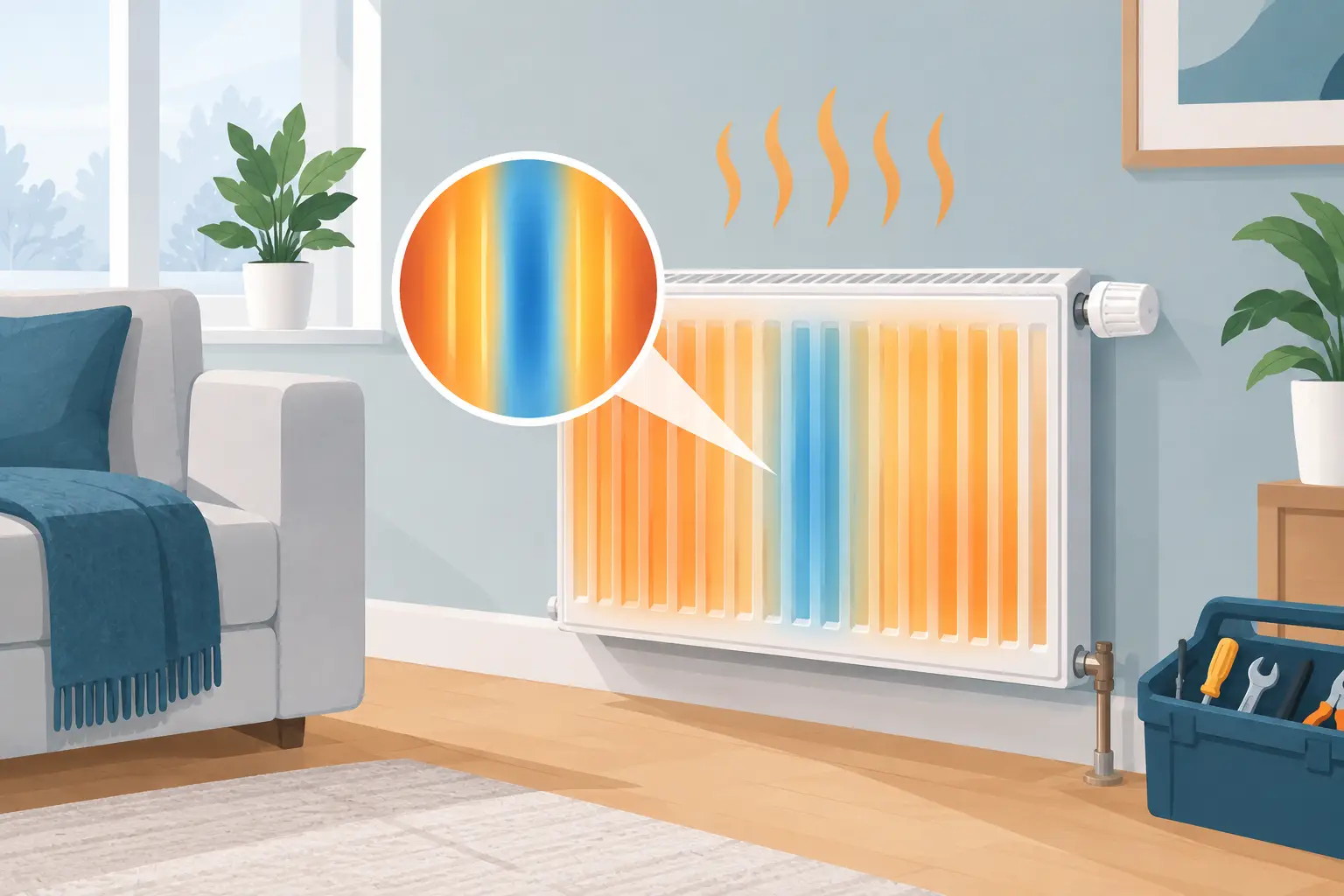
A radiator that is hot at one end and cold at the other is more than an annoyance on a chilly morning. It can leave rooms slow to warm up, make your boiler work harder and point to an issue within the heating system. Knowing how to reduce radiator cold spots starts with recognising the pattern of coldness, as this usually reveals the underlying cause.
Some problems are straightforward for a confident homeowner to check, while others need a qualified heating engineer. The right approach can restore even heat, improve comfort and help protect your central heating system from avoidable strain.
Start by checking where the radiator is cold
Run your hand carefully across the front of the radiator once the heating has been on for a while. Avoid touching pipework or the radiator surface if it feels excessively hot. The location of the cold patch matters.
A radiator that is cold at the top but warm at the bottom usually has trapped air inside. Air rises through the system and gathers at the highest point of the radiator, preventing hot water from reaching that area.
If the radiator is warm at the top but cold along the bottom, sludge or debris is more likely. Over time, corrosion inside pipework and radiators can create a dark, magnetite-rich sludge. It settles in the lower section of the radiator and restricts water flow.
Cold vertical strips, a completely cold radiator, or one that only gets warm near the valve can suggest a stuck valve, poor system balance, a circulation problem or a closed lockshield valve. These faults require a little more investigation than simple bleeding.
Bleed a radiator with cold spots at the top
Bleeding releases trapped air, allowing hot water to fill the radiator properly. Before you begin, switch off the heating and let the system cool. This reduces the risk of hot water escaping and gives a more reliable pressure reading afterwards.
Place a cloth or small container beneath the bleed valve, which is usually located at the top corner of the radiator. Using a radiator key, turn the valve slowly anti-clockwise. You should hear a hiss as air escapes. Keep the key steady and wait until water begins to appear, then close the valve gently by turning it clockwise. Do not overtighten it.
Repeat this process on other radiators if more than one has cold tops. In a two-storey property, it is often sensible to start downstairs and work upwards, although the main priority is to bleed the radiators showing symptoms.
Once finished, turn the heating back on and check the boiler pressure. Many sealed systems should sit around 1 to 1.5 bar when cold, but always follow your boiler manufacturer’s guidance. If the pressure has dropped below the recommended level, it may need topping up using the filling loop. If you are unsure how to do this, or pressure regularly falls, arrange for a Gas Safe registered engineer to inspect the system.
Deal with sludge causing cold patches at the bottom
Bleeding will not remove sludge. If the bottom of a radiator stays cold after bleeding, the restriction is likely to be inside the radiator or elsewhere in the system.
A single affected radiator may sometimes be removed and flushed outside by a competent person. However, this involves isolating both valves, draining the radiator safely and refitting it without creating leaks. It can be messy, especially where black heating water has built up, and older valves do not always reseal reliably once disturbed.
Where several radiators are cold at the bottom, the more effective solution is usually a professional system clean. Depending on the age and condition of the installation, an engineer may use a chemical flush or powerflush to circulate cleaning solution and dislodge debris. The system is then thoroughly rinsed, refilled and protected with inhibitor.
A powerflush is not automatically the answer for every property. Very old, fragile systems or radiators with existing weak points need assessing first. A good engineer will check the condition of the boiler, pipework and radiators before recommending the most suitable cleaning method rather than treating every cold radiator as the same problem.
Check radiator valves and system balance
Every radiator normally has two valves. The thermostatic radiator valve, or TRV, controls the room temperature, while the lockshield valve on the opposite side helps regulate water flow around the system.
If one radiator is cold or only partially warm, first make sure its TRV is turned up. Thermostatic valves can stick, particularly after being left in the same position over summer. With the heating off, a heating professional can remove the TRV head and check whether the small pin beneath it moves freely. Forcing the pin or dismantling a valve without experience can cause damage or leaks, so it is better to stop if it does not move easily.
The lockshield valve should also be open enough to allow flow. These are generally set during balancing and should not be adjusted at random. Turning one radiator fully open may improve that radiator temporarily but starve others of heat.
Balancing is the process of setting each lockshield so hot water is distributed evenly. It is often needed after a new radiator has been fitted, after pipework changes or where rooms near the boiler heat quickly while more distant rooms remain cool. An engineer will use temperature readings across the radiators to make controlled adjustments. It is a worthwhile job because an unbalanced system can feel unreliable even when the boiler itself is working correctly.
Look beyond the radiator if the problem keeps returning
Recurring cold spots can be a symptom rather than the main fault. If you bleed radiators regularly, there may be a small leak, a failing automatic air vent or an issue allowing air into the system. Constantly repressurising a sealed heating system is not normal and should be investigated.
Poor circulation can also create uneven heating. A tired pump, blocked filter, partially closed valve or undersized pipework may stop enough hot water reaching the farthest radiators. In commercial premises, larger systems may also require more detailed checks of pumps, controls and zoning valves.
Dirty system water is another warning sign. If water released from a bleed valve is very dark, or radiators repeatedly develop cold bottoms, ask about fitting or servicing a magnetic filter. These filters collect metallic debris before it reaches sensitive boiler components. They work best alongside proper cleaning and the correct level of inhibitor, not as a substitute for either.
Prevent radiator cold spots from coming back
A little planned maintenance can make a noticeable difference to heating performance. Have the boiler serviced annually, particularly before the colder months, and ask the engineer to check system pressure, filters and general water condition as part of the visit.
Keep furniture, heavy curtains and radiator covers from blocking heat output. This will not cause internal cold spots, but it can make a working radiator feel ineffective and encourage unnecessary thermostat adjustments. Set TRVs sensibly for each room rather than turning every radiator to maximum.
If you are replacing radiators or renovating a property, consider whether the existing system has been properly sized and balanced. Larger extensions, converted rooms and improved insulation all change the way a heating system performs. Matching radiator output to the room and heat loss is more effective than repeatedly increasing the boiler temperature.
When to call a heating engineer
Call for professional help if bleeding does not solve the problem, several radiators are cold at the bottom, boiler pressure keeps dropping, valves are leaking or stuck, or the system makes persistent banging and gurgling noises. These are signs that a wider diagnosis may be needed.
For homeowners and property managers, early attention is usually cheaper and less disruptive than waiting for a complete heating failure. A qualified engineer can identify whether the answer is a valve adjustment, balancing, cleaning, circulation repair or a more significant upgrade.
Warm, even radiators should be something you can rely on rather than work around. If cold spots are becoming a regular feature, LCA Maintenance can provide a clear assessment and professional heating support, helping you restore comfort before the next cold spell puts the system under pressure.