
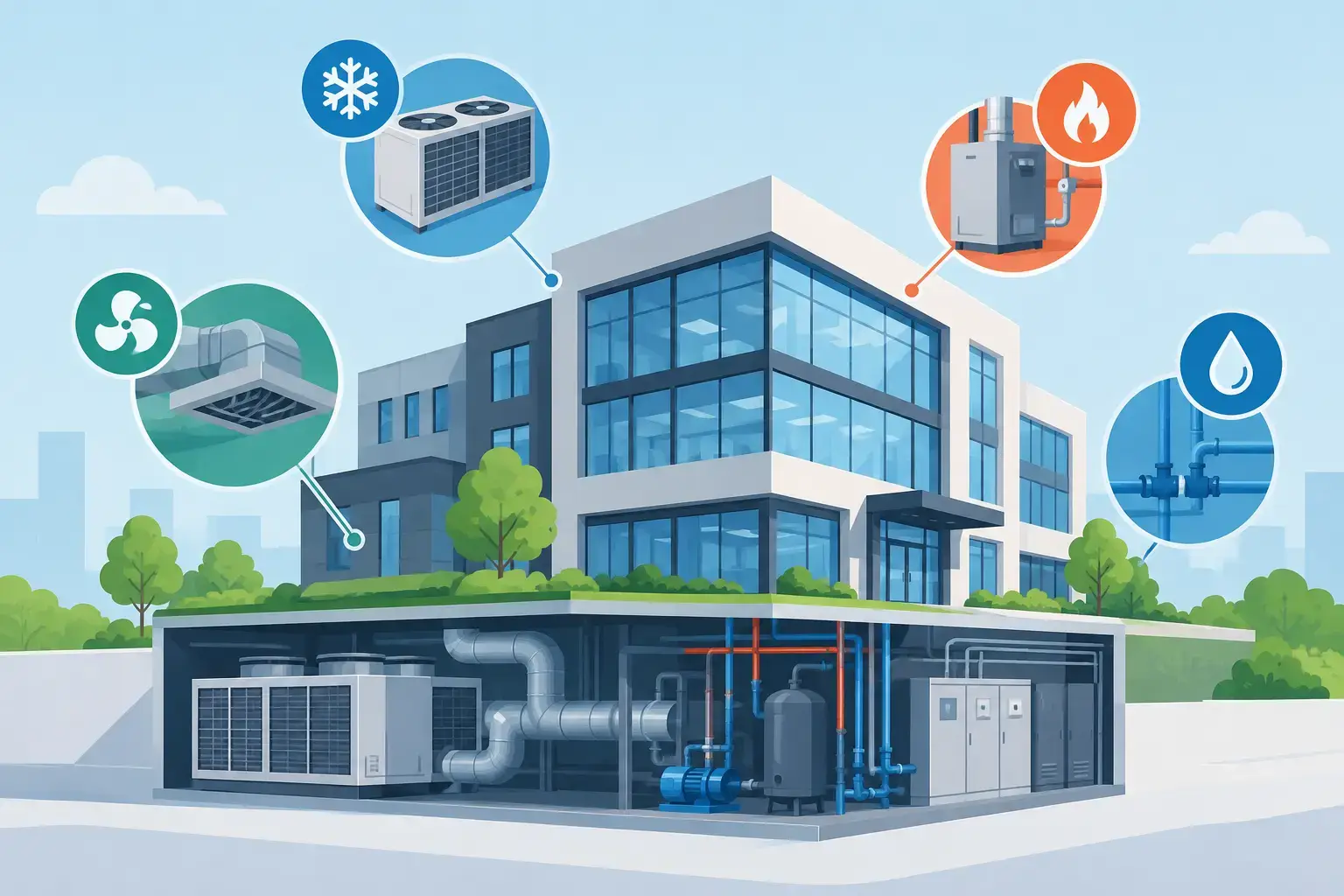
A boiler that repeatedly loses pressure, an office that is too hot in summer, or a commercial washroom with unreliable hot water can quickly disrupt a property. Mechanical services bring these essential systems together, providing the installation, repair and maintenance needed to keep buildings safe, comfortable and operational.
For homeowners, landlords and businesses, the value is practical: fewer unexpected failures, better control of running costs and a qualified team to call when a system needs attention. The right approach depends on the building, how it is used and the equipment already in place – but leaving core services to chance is rarely the economical option.
What do mechanical services include?
Mechanical services cover the systems that make a building work day to day. This can include heating, plumbing, hot and cold water, ventilation, air conditioning, drainage and energy-efficiency improvements. In commercial settings, it may also involve plant rooms, pumps, controls, pipework, safety checks and the planned servicing required to support compliance.
The scope is wider than a single repair. A qualified engineer may diagnose a boiler fault one day, advise on improving heating controls the next, then carry out scheduled maintenance to reduce the likelihood of another breakdown. For a property manager, using one capable provider can make maintenance easier to organise and give a clearer picture of the condition of the building.
Domestic requirements are usually more focused, but no less important. A leaking pipe, ineffective radiator, ageing boiler or poorly performing shower can affect comfort, energy use and the risk of water damage. Professional assessment helps identify whether a straightforward repair is sensible or whether an upgrade would offer better long-term value.
Why planned mechanical services matter
Breakdowns are inconvenient at home and can be costly in a workplace. Lost heating can make a property uncomfortable or unusable, while a water leak can damage finishes, stock and equipment. In premises open to staff, tenants or customers, an issue with hot water, ventilation or drainage can become an operational problem very quickly.
Planned maintenance gives engineers the opportunity to spot warning signs before they become urgent. That may include worn seals, corrosion, poor water pressure, a system that is cycling inefficiently, blocked condensate routes or controls that no longer match the way the building is used. Small adjustments made at the right time can prevent a larger repair later.
There is also an efficiency case. Heating and cooling systems consume significant energy when they are not set up or maintained correctly. A service visit can highlight problems such as uneven heat distribution, faulty controls, sludge in a heating system or equipment operating outside its intended range. Not every older system needs replacing, but evidence-based advice helps owners make a decision with realistic costs and benefits in mind.
For landlords and commercial operators, scheduled visits also make budgeting more predictable. Rather than reacting only when something fails, maintenance can be prioritised around equipment condition, occupancy and the needs of the site.
Reactive repairs still have their place
A planned programme cannot prevent every fault. Components can fail unexpectedly, pipes can leak and heavy use can expose weaknesses that were not apparent at an earlier inspection. Fast reactive support remains essential, particularly where there is no heating, no hot water, an active leak or a fault affecting business operations.
The difference is that a well-maintained system is generally easier to diagnose because its service history is known. It may also be less likely to suffer the secondary damage that turns a manageable repair into a major disruption.
Choosing the right level of support
There is no single mechanical maintenance package that suits every property. A family home with a modern boiler may need an annual service, occasional plumbing support and advice when upgrading. A multi-let building, retail site or office may require a more structured plan covering heating, cooling, water systems and mechanical plant.
The sensible starting point is to consider the consequences of failure. If a boiler serves one household, a prompt repair may be enough. If it serves several flats, staff areas or customer-facing premises, downtime has wider implications. In these cases, planned inspections, service records and clear escalation arrangements can provide worthwhile reassurance.
Age matters too. Older equipment can continue to perform well when it has been looked after, but spare parts may become harder to obtain and efficiency may fall behind newer alternatives. Replacing equipment simply because it is old is not always necessary. Equally, repeatedly repairing an unreliable system can cost more than choosing a carefully specified replacement. A trustworthy engineer should explain both routes plainly, including the likely disruption, running-cost implications and expected lifespan.
What good service looks like on site
Technical capability is essential, but the customer experience matters just as much. Whether work is taking place in a home, school, office or managed property, the engineer should arrive prepared, explain the issue in clear terms and treat the premises with care.
Good mechanical services begin with proper diagnosis rather than assumptions. A recurring heating fault, for example, might be caused by the boiler itself, system pressure, controls, circulation, pipework or a wider design issue. Replacing parts without identifying the root cause can lead to repeat visits and unnecessary expense.
Clear communication should continue throughout the job. Customers need to understand what has been found, what work is recommended, what it will cost and whether there are any sensible alternatives. Transparent pricing is particularly valuable when a fault is urgent, as it allows the customer to make an informed decision without added pressure.
For gas appliances, work must be carried out by a suitably qualified Gas Safe registered engineer. Specialist systems may require further manufacturer training or specific technical knowledge. These credentials are not just badges – they support safe workmanship, correct commissioning and reliable performance once the work is complete.
Mechanical services for commercial properties
Commercial buildings often have more interconnected systems and more stakeholders to consider. A fault may affect employees, tenants, visitors, production, hygiene arrangements or legal responsibilities. That calls for a contractor who can work professionally around site operations and communicate clearly with facilities teams, landlords and managing agents.
A structured commercial service may include routine plant checks, boiler servicing, heating and cooling maintenance, pump and control inspections, leak investigation, drainage support and certification where required. The exact schedule should reflect the equipment, manufacturer guidance, occupancy and risk level rather than follow a one-size-fits-all timetable.
Records matter. Accurate service documentation helps managers track recurring issues, plan capital expenditure and demonstrate that essential maintenance has been addressed. It also gives incoming contractors a useful history if responsibility for a site changes.
For organisations across Bedfordshire and the wider South East, local responsiveness can be especially useful when an urgent issue needs attendance. At the same time, a provider needs sufficient capability to manage planned work properly, not just respond to the next call-out.
When to arrange an inspection
Do not wait for a complete failure if there are signs that a system is struggling. Unusual boiler noises, cold radiators, inconsistent hot water, unexplained pressure drops, persistent damp patches, poor airflow or rising energy bills all justify investigation. In commercial premises, repeated occupant complaints about comfort can also point to an underlying controls, ventilation or distribution problem.
It is also wise to seek advice before a refurbishment, extension or change of use. Mechanical systems designed for a smaller household or lightly occupied office may not be suitable once demand increases. Reviewing pipework, heating capacity, ventilation and cooling early can prevent expensive alterations after finishes have been installed.
LCA Maintenance supports domestic and commercial customers with qualified, friendly service across plumbing, heating, cooling and wider mechanical work. The aim should always be the same: make the building safer, more comfortable and easier to run.
A dependable property rarely stays that way by accident. Give essential systems the attention they need, ask clear questions when work is recommended, and act on early warning signs before they become a disruption.