
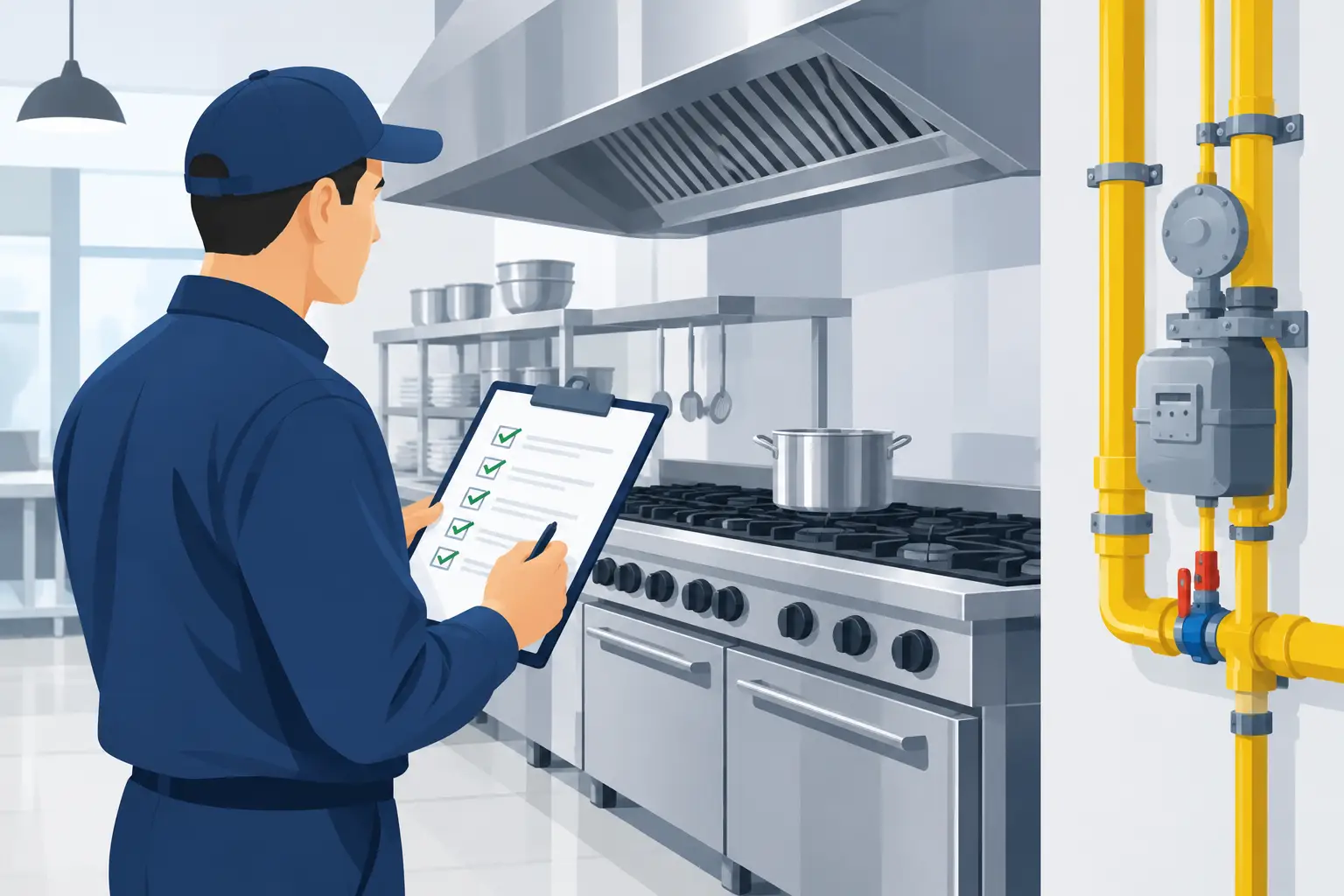
A commercial gas safety inspection is not simply a box-ticking exercise. For a business, it is a practical check that the gas appliances, pipework and safety controls your team relies on are working safely. A fault in a boiler, commercial kitchen appliance or warm-air heater can put people at risk, interrupt trading and create expensive repairs that planned maintenance could have prevented.
Whether you manage an office, school, retail unit, warehouse, restaurant, care setting or multi-site property portfolio, the right inspection gives you clear evidence of the condition of your gas installation and the actions required to keep it safe.
What does a commercial gas safety inspection cover?
The exact scope depends on your premises and the appliances installed. A small office with one boiler needs a different approach from a restaurant with several gas cooking appliances, extraction systems and multiple meters. The engineer should assess the full gas installation rather than concentrating on a single appliance.
A thorough inspection will normally include checks on the gas meter and accessible pipework, gas tightness, appliance condition, combustion performance, flues, ventilation and safety devices. The engineer will also look at whether controls are operating correctly, including emergency isolation valves and any gas detection or interlock system where fitted.
For commercial catering equipment, the relationship between gas supply and kitchen extraction is especially important. In many settings, the gas supply should be prevented from operating if the extraction system is not running correctly. This is a critical safety measure, not an optional extra.
The inspection may also identify signs of poor installation, deterioration, inadequate ventilation, blocked flues, unsuitable appliance positioning or a lack of access for safe servicing. These issues are not always obvious to staff using the building each day.
The checks that matter most
A Gas Safe registered engineer with the correct commercial qualifications will check that appliances are burning gas correctly and safely. Poor combustion can create carbon monoxide, which is colourless, odourless and potentially fatal. Flue checks confirm that combustion products are being safely removed from the building.
Gas soundness testing helps identify leaks in the installation. The engineer will also confirm that pipework is suitably supported and protected, isolation valves can be used when needed, and safety controls operate as intended. If an appliance is unsafe, it may need to be turned off, labelled and disconnected from the gas supply until repairs are completed.
That can be inconvenient, particularly where heating or catering is central to your operation. However, leaving unsafe equipment in use is never the lower-cost option.
Who is responsible for commercial gas safety?
Responsibility usually sits with the person or organisation controlling the premises and its gas installation. This may be the business owner, employer, facilities manager, landlord or managing agent. In leased properties, responsibility can be shared or set out in the lease, so it is worth checking rather than assuming the other party is handling it.
Employers have a duty to protect staff and others affected by their work activities. Gas equipment must be maintained in a safe condition, and work must be carried out by a suitably qualified Gas Safe registered engineer. If you are a landlord, further duties may apply depending on the type of tenancy and premises.
Keep a clear record of inspections, servicing, repairs and any recommendations made. These documents support your compliance position, help with handovers between property managers and provide useful evidence for insurers or auditors if an incident occurs.
How often should a commercial gas safety inspection be carried out?
There is no single timetable that suits every commercial site. The required frequency can depend on the appliance manufacturer’s instructions, the type and intensity of use, the age and condition of the system, your insurer’s requirements and any sector-specific rules.
Many businesses arrange an annual service and safety inspection for boilers and other gas appliances. High-use commercial kitchens, plant rooms and complex heating systems may need more frequent planned visits. A site with a history of faults or heavy daily demand should not be treated in the same way as a lightly used office unit.
The key point is to follow a planned maintenance schedule based on your actual risks. Waiting until a boiler fails, staff report fumes or a kitchen has to close usually means greater disruption and fewer options for a cost-effective repair.
Inspection, servicing and repair are not the same thing
These terms are often used interchangeably, but they have different purposes. A safety inspection focuses on whether the installation and appliances are safe to use. A service goes further into cleaning, adjustment and routine maintenance according to the manufacturer’s instructions. A repair addresses a known fault or failed component.
In practice, an experienced commercial engineer may carry out inspection and servicing work during the same visit. If faults are found, repairs may be possible straight away where parts and access allow. For larger issues, you should receive a clear explanation of the problem, the recommended remedy and the likely impact on your operation before work proceeds.
Preparing your premises for an inspection
Good preparation helps the engineer work efficiently and reduces the chance of a return visit. Make sure there is safe, clear access to boilers, plant rooms, meters, kitchen appliances, flues and isolation valves. If equipment is located above ceilings, behind fixed units or in locked rooms, arrange access in advance.
Let the engineer know about previous breakdowns, recurring error codes, unusual smells, inconsistent heating, pilot-light issues or staff concerns. Even a detail that seems minor can help trace a developing fault.
For occupied sites, it is sensible to tell staff when testing may take place. Some checks may require appliances to be switched off briefly, and a commercial kitchen may need to be inspected outside peak service hours. The best timing depends on the building and its use. A school, restaurant and 24-hour care setting will each need a different plan.
You should also have previous service records available where possible. They can show recurring defects, past remedial work and equipment age, allowing the engineer to make more informed recommendations.
Choosing the right engineer for commercial work
Domestic gas experience alone is not enough for every commercial system. Commercial appliances and installations can be more complex, with higher gas rates, specialist controls, larger flues and different ventilation requirements. Always confirm that the engineer is Gas Safe registered and qualified for the specific appliances and work involved.
Ask what the visit includes, whether testing and documentation are provided, and how urgent remedial work is handled. Transparent pricing and clear reporting make it easier to budget, demonstrate compliance and avoid confusion over what has or has not been checked.
For businesses across Bedfordshire and the wider South East, LCA Maintenance can support planned commercial gas safety work alongside reactive repairs and ongoing mechanical maintenance. Having one trusted team familiar with your site can make future servicing, fault diagnosis and compliance planning more straightforward.
Common warning signs not to ignore
Do not wait for a scheduled inspection if you notice a strong gas smell, visible damage to pipework or appliances, soot or staining around a boiler, repeated pilot-light failures, unusual burner flames, headaches or nausea among occupants, or a carbon monoxide alarm sounding. Turn off the gas supply if it is safe to do so, ventilate the area, keep people away and seek urgent professional advice.
A gas smell or suspected leak should always be treated seriously. Do not operate electrical switches, use naked flames or attempt a repair yourself. Your immediate actions should follow your site emergency procedure and the advice of the relevant gas emergency service.
Build safety into your maintenance plan
The most effective commercial gas safety arrangements are planned, recorded and reviewed. Keep an up-to-date asset list, schedule inspections around operating hours, act promptly on remedial recommendations and review recurring faults rather than repeatedly treating the symptom.
A well-managed inspection programme protects people first, but it also supports business continuity. When your heating, hot water or catering equipment is essential to daily operations, planned care is one of the simplest ways to avoid an avoidable closure.