
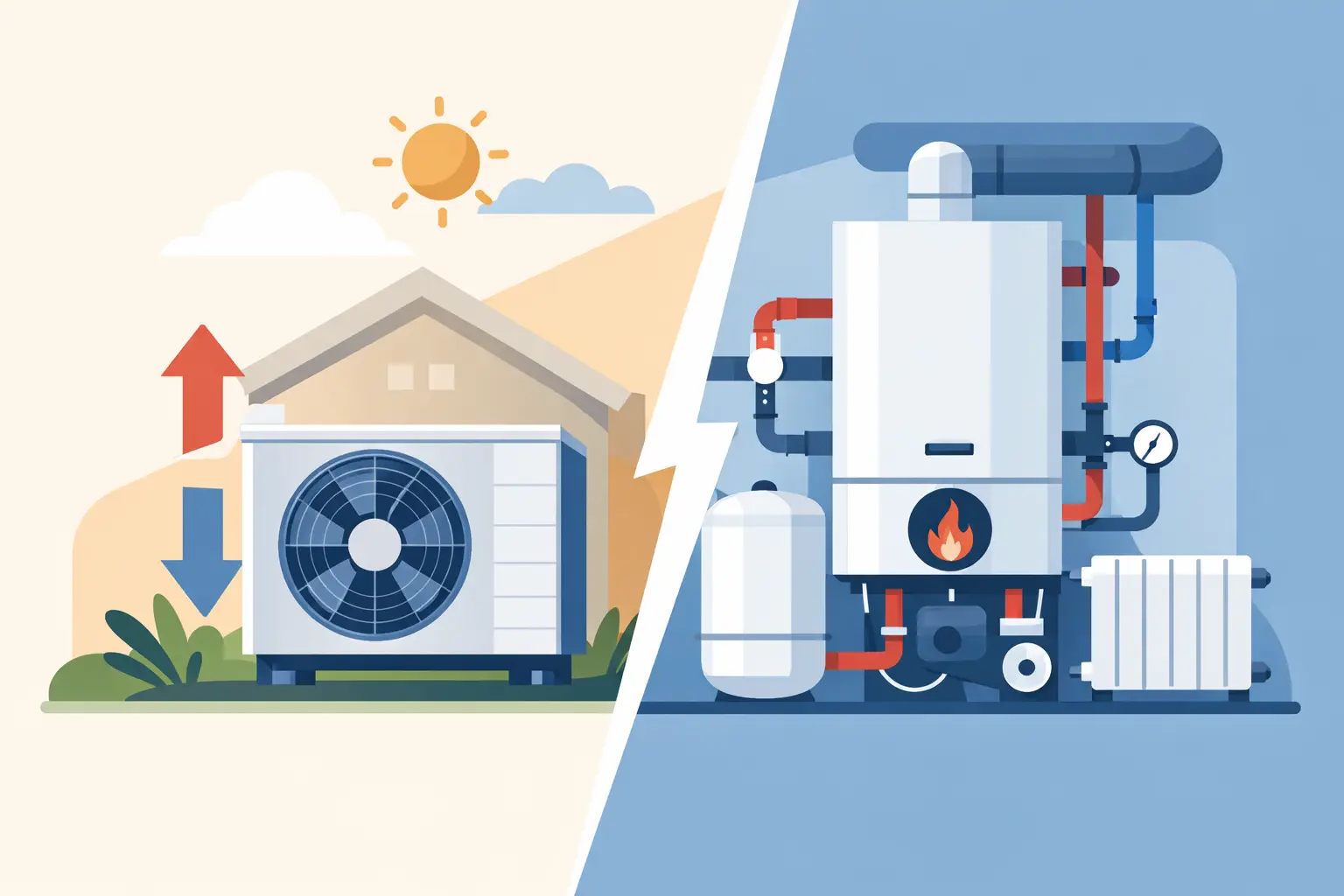
If your current heating system is ageing, noisy or becoming expensive to run, the air source heat pump vs boiler question quickly stops being theoretical. It becomes about comfort, bills, installation disruption and whether the system you choose will actually suit your building.
For homeowners, landlords and property managers, there is no single winner in every case. A heat pump can offer excellent efficiency and lower carbon emissions, but a modern boiler still makes strong sense in many properties. The right choice depends on insulation levels, heat loss, hot water demand, available space and your budget for the initial works.
Air source heat pump vs boiler: what is the real difference?
A boiler generates heat, usually by burning gas, and sends that heat into your radiators and hot water system. It works at relatively high flow temperatures, which is why boilers can heat rooms quickly even in properties with smaller radiators or older insulation standards.
An air source heat pump works differently. It extracts heat from the outside air and upgrades it for use inside the building. Rather than creating heat in the same way as a boiler, it moves heat, which is why it can be very efficient. In the right conditions, it can produce several units of heat for every unit of electricity used.
That difference affects everything else – running costs, radiator sizing, cylinder requirements, noise, installation design and how the system feels day to day. Boilers tend to provide a faster, higher-temperature response. Heat pumps are usually at their best when they run steadily over longer periods and when the property can retain heat well.
Running costs depend on more than the appliance
A lot of people start with the monthly bill, which is understandable. But comparing a heat pump with a boiler is not as simple as comparing the price of gas with the price of electricity.
A modern condensing gas boiler is efficient, often well above 90% in normal use when properly installed and maintained. Gas has also traditionally been cheaper than electricity per unit. That gives boilers a clear advantage in some homes, especially where the property loses heat quickly or the heating is used in short, sharp bursts.
A heat pump can offset higher electricity prices through efficiency. If the system is well designed and the home is suitably insulated, running costs can be competitive and in some cases lower. The problem comes when a heat pump is installed into a property that is not ready for it. Poor insulation, undersized pipework, badly matched controls or radiators that are too small can force the system to work harder and reduce the savings people were expecting.
For landlords and commercial operators, usage patterns matter too. A building that needs constant background heat may suit a heat pump better than one with highly variable occupancy and sudden demand peaks.
Installation cost and disruption
This is often where the gap becomes most obvious.
Replacing an existing boiler with a new boiler is usually the simpler project. If the system layout already works, the change can be relatively straightforward. There may still be upgrades needed, especially if pipework, controls or the flue are outdated, but in most cases the work is familiar, quicker and lower in upfront cost.
A heat pump installation is more involved. You need an external unit, enough outdoor space, and usually a hot water cylinder if the property does not already have one. Many systems also need radiator upgrades, changes to controls and a proper assessment of heat loss room by room. In some buildings, pipework alterations are also needed to help the system run efficiently at lower temperatures.
That does not mean heat pumps are impractical. It means they need to be designed properly. A rushed install is where problems begin.
Which works better in older UK properties?
This is one of the most common concerns across Bedfordshire and the wider South East, because much of the housing stock is not new build.
A boiler is often the easier fit in older homes. If the property has solid walls, patchy insulation or existing radiators sized around higher temperatures, a boiler can usually slot into the system with fewer changes. It is often the least disruptive route if the priority is restoring dependable heating quickly.
A heat pump can still work well in an older property, but the house needs to be assessed honestly. Some period homes perform very well after insulation improvements and careful system design. Others may need substantial upgrades before a heat pump delivers the expected comfort levels. That is why blanket advice is unhelpful. Two houses on the same road can need completely different solutions.
Air source heat pump vs boiler for comfort and hot water
People do not just buy heating systems for efficiency figures. They buy them because they want the building to feel warm and the hot water to be reliable.
Boilers usually win on familiar performance. They heat up fast, recover quickly and cope well with high hot water demand, particularly in larger households or buildings where several taps or showers may be used close together. Combi boilers, in particular, remain popular because they provide hot water on demand without a cylinder.
Heat pumps are different. They can provide very comfortable, consistent heating, but they are not about rapid bursts of high heat. The best results come when the property is kept at a stable temperature rather than being allowed to cool down and then reheated quickly. Domestic hot water is also handled differently, often through a cylinder, and recovery times can be slower than some occupants expect if the system is not sized correctly.
None of that is a fault. It is simply a different operating style, and one that suits some households much better than others.
Space, noise and practical constraints
A boiler is compact and easy to accommodate. In many homes, it lives in a kitchen cupboard, loft or utility room and takes up minimal space.
A heat pump needs more planning. The outdoor unit has to be positioned carefully, with attention to airflow, access for maintenance and noise considerations. Modern units are much quieter than many people assume, but placement still matters, especially near boundaries, bedrooms or sensitive commercial areas.
Inside, the need for a hot water cylinder can be a deciding factor. In a larger house or commercial setting, that may be manageable. In a smaller flat or compact rental property, it may be a deal-breaker.
Maintenance and lifespan
Both systems need regular servicing.
A gas boiler should be serviced annually to keep it safe, efficient and compliant with manufacturer requirements. Well-maintained boilers can be dependable for many years, although key components will wear over time.
Heat pumps also need maintenance, but the service requirements are different. The system should be checked to make sure controls, refrigerant circuit performance, filters and overall operation remain in good order. Because heat pumps often run for longer periods, overall system condition matters a great deal.
For landlords and commercial operators, planned maintenance is especially important whatever system you choose. Breakdowns are costly, disruptive and rarely arrive at a convenient time.
Carbon, future-proofing and regulation
If reducing carbon emissions is high on your list, a heat pump has a clear advantage. It does not burn fuel on site, and as the electricity grid continues to decarbonise, its environmental performance improves further.
That matters to businesses with sustainability targets and to homeowners thinking longer term. It may also influence future property expectations, particularly where buyers, tenants or investors are increasingly alert to energy performance.
That said, future-proofing is not only about emissions. It is also about choosing a system that the building can support properly. Installing a heat pump in the wrong property without addressing fabric performance can be an expensive compromise rather than a smart upgrade.
So which should you choose?
If you want the shortest path to reliable heating, lower upfront cost and familiar performance, a modern boiler often remains the practical choice. That is particularly true where the property already has a gas connection, the existing system is suited to boiler temperatures, or the budget does not stretch to wider upgrades.
If your property is well insulated, you are planning a larger refurbishment, or you want to reduce carbon emissions and invest for the longer term, a heat pump may be the better fit. It can work exceptionally well when the design is right and the building is ready for it.
For many customers, the smartest decision starts with the property rather than the product. A proper assessment of heat loss, emitters, controls and hot water demand will tell you far more than a headline comparison ever could. That is the kind of practical advice trusted engineers should give – clear, honest and based on how the building actually performs.
If you are weighing up a new heating system, focus less on what is fashionable and more on what will keep your property comfortable, efficient and dependable for years to come.