
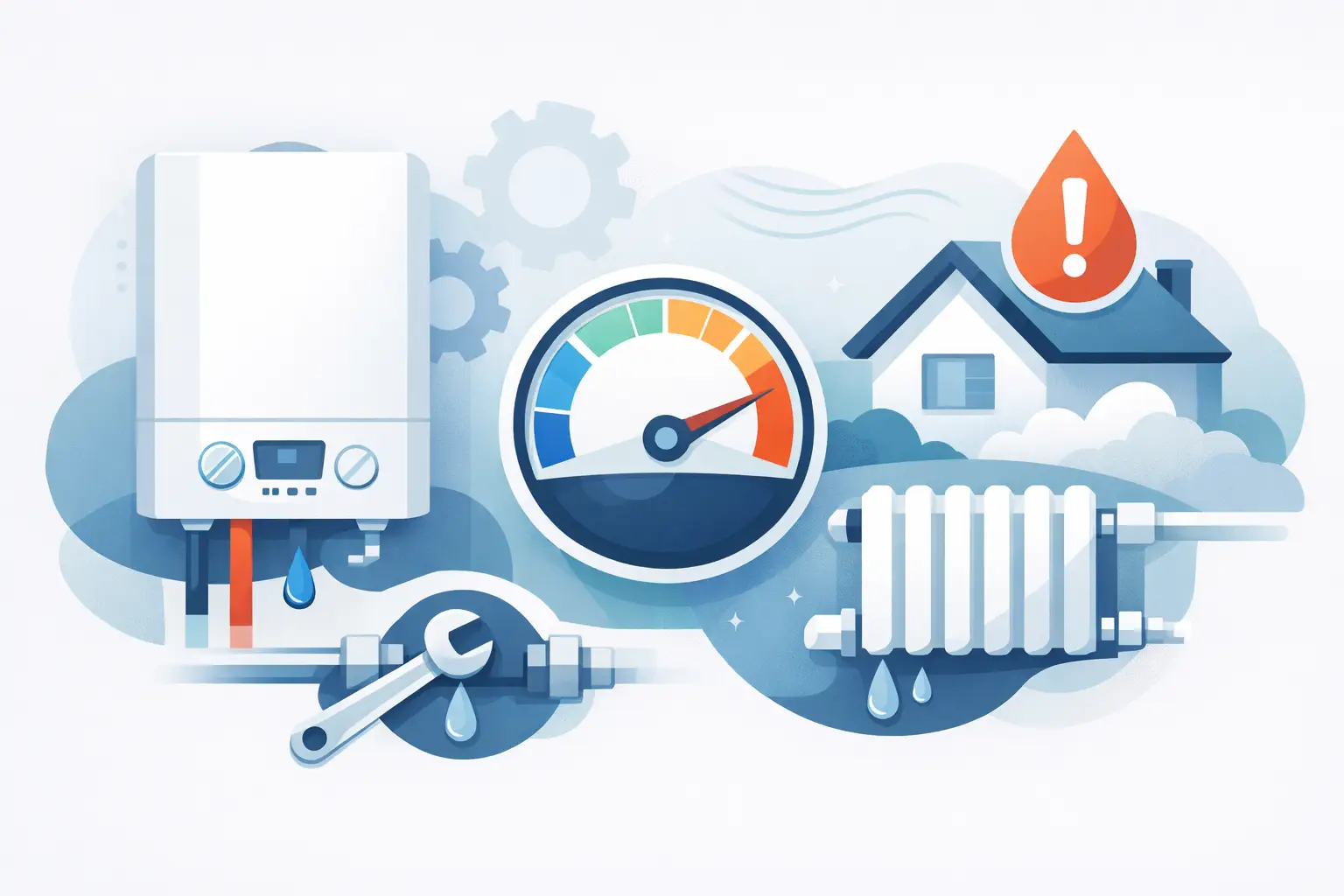
You look at the boiler and the pressure gauge has dropped again. The heating may still be working, or it may have cut out altogether, but the question is the same: what causes low boiler pressure, and is it something simple or a sign of a bigger fault?
In many cases, low pressure is a symptom rather than the root problem. Modern sealed heating systems rely on the right water pressure to circulate heat properly. When that pressure falls too far, radiators can stay cold, hot water performance may suffer, and some boilers will lock out for safety. The good news is that a pressure drop is often traceable. The less helpful news is that the cause can range from routine maintenance to a hidden system issue.
What causes low boiler pressure in a sealed system?
Most domestic boilers are part of a sealed central heating system. That means the water in the system is kept under pressure, usually shown on a gauge at the front or underside of the boiler. As a rough guide, many systems sit around 1 to 1.5 bar when cold, though the correct setting can vary by manufacturer and system design.
If the gauge keeps falling below the recommended level, the system is losing pressure somewhere. Sometimes that loss is obvious. Sometimes it is slow enough to go unnoticed until the boiler stops working.
A recent radiator bleed
One of the most common causes is bleeding radiators. Releasing trapped air helps your system heat more evenly, but it also lets out a small amount of water and reduces pressure. If you have recently bled several radiators and the gauge has dropped afterwards, that may be the only issue.
This is usually straightforward to put right by topping the system up using the filling loop, if your boiler instructions allow for this and you are comfortable doing it. If pressure returns to normal and stays there, there may be no wider fault.
A leak somewhere in the heating system
If pressure keeps dropping, a leak is high on the list. That leak could be at the boiler itself, on a radiator valve, around exposed pipework, or under floors where it is not immediately visible. Even a small weep can cause a gradual pressure loss over time.
Look for damp patches, staining, corrosion around valves, or marks on ceilings beneath pipe runs. Not every leak announces itself clearly, especially in enclosed pipework. That is why repeated topping up is not a fix. It only masks the problem while allowing it to worsen.
A faulty pressure relief valve
Boilers are fitted with a pressure relief valve, often called a PRV, to discharge water if the system pressure rises too high. If that valve has opened due to overpressure, or if it no longer seals properly afterwards, it can continue letting water escape. This may happen externally through a copper discharge pipe, so the water does not always show up indoors.
A failed PRV is not something to guess at. If pressure drops and there are signs that water has been discharged outside, an engineer should inspect it.
Expansion vessel problems
The expansion vessel plays a key role in maintaining stable pressure as water heats up and cools down. Inside, it has an air charge that allows for expansion. If that charge is lost, or the vessel diaphragm fails, the system pressure can fluctuate sharply – often rising when hot and dropping when cold.
This is a common reason for boilers that seem fine one day and lose pressure the next. It can also lead to the PRV opening, which then creates a second issue. In other words, one fault can trigger another.
Why low pressure is not always just low water
It is easy to assume a low reading simply means the boiler needs more water. Sometimes that is true. But if you have to refill the system more than occasionally, it is worth treating the pressure loss as a fault rather than a routine task.
Repeatedly topping up introduces fresh water into the system, and that water contains oxygen. Over time, extra oxygen can increase internal corrosion, which is bad news for radiators, valves, and boiler components. What feels like a quick reset can shorten the life of the system if it becomes a habit.
A filling loop left open
This is less common, but worth mentioning because it can confuse the diagnosis. If a filling loop has been left slightly open, the system pressure may rise too high when in use, which can trigger the pressure relief valve. Once that happens, the system may then start losing pressure. The final symptom is low pressure, but the chain of events started with overfilling.
Air trapped in the system
Airlocks and trapped air do not always directly cause low pressure, but they often go hand in hand with it. If the system has been drained, refilled, repaired, or has a slow leak, air can enter and collect in high points. That affects circulation and may lead homeowners to bleed radiators, which then lowers pressure further.
This is one of those situations where it depends on the bigger picture. A one-off bleed after maintenance is normal. Ongoing air in the system usually points to another issue that needs attention.
What you can safely check yourself
Before calling for help, there are a few basic checks that make sense. First, look at the pressure gauge when the system is cold and then again when it has been running. A big swing between cold and hot can suggest an expansion vessel fault.
Next, check around radiators, valves, and visible pipework for drips or damp spots. Take a look outside too, especially near the boiler discharge pipe. If there are signs of water escaping there, that is useful information for the engineer.
If you have recently bled radiators and the pressure has simply fallen slightly, you may be able to repressurise the boiler using the filling loop in line with the manufacturer instructions. Go carefully. Overpressurising the system can create another problem.
What you should not do is keep topping it up week after week without finding out why it is dropping. You should also avoid removing the boiler casing or attempting repairs on gas appliances unless you are fully qualified and authorised to do so.
When low boiler pressure needs an engineer
If the pressure falls repeatedly, there is a leak, the boiler locks out, or you can see signs of discharge from the relief pipe, it is time to get the system checked properly. The same applies if the gauge behaves erratically or climbs too high when the heating is on.
A qualified heating engineer can test the expansion vessel, inspect the PRV, assess for hidden leaks, and confirm whether the issue sits with the boiler or elsewhere in the heating system. That matters because replacing the wrong part wastes both time and money.
For landlords and commercial property managers, a recurring pressure problem should be treated promptly. Small heating faults have a habit of becoming larger and more disruptive, especially in colder weather or in buildings where downtime affects tenants, staff, or customers.
Can low boiler pressure damage the boiler?
Low pressure itself does not always mean immediate damage, but it can stop the boiler operating as intended. If circulation is poor, the system can become inefficient, parts can be put under stress, and heating performance will suffer. More importantly, the cause of the low pressure may be damaging the system already.
A hidden leak can affect building fabric. Corrosion from repeated topping up can shorten component life. Pressure fluctuations caused by an expansion vessel fault can put strain on other boiler parts. So while the pressure reading is the visible symptom, the risk usually sits behind it.
Preventing pressure problems in the future
Regular boiler servicing gives you the best chance of catching pressure-related issues early. An annual service will not solve every hidden pipe leak, but it can identify worn components, poor pressure behaviour, and early signs of system trouble before they turn into breakdowns.
It also helps to keep an eye on the gauge from time to time, especially after bleeding radiators or carrying out any work on the heating system. You do not need to obsess over it, but knowing what is normal for your property makes changes easier to spot.
If your boiler pressure keeps dropping and you are not sure why, a proper diagnosis is worth far more than repeated guesswork. A trusted heating engineer can get to the cause, make the right repair, and help keep the system running safely and efficiently. That is always better than waiting for a cold morning when the boiler refuses to start.