
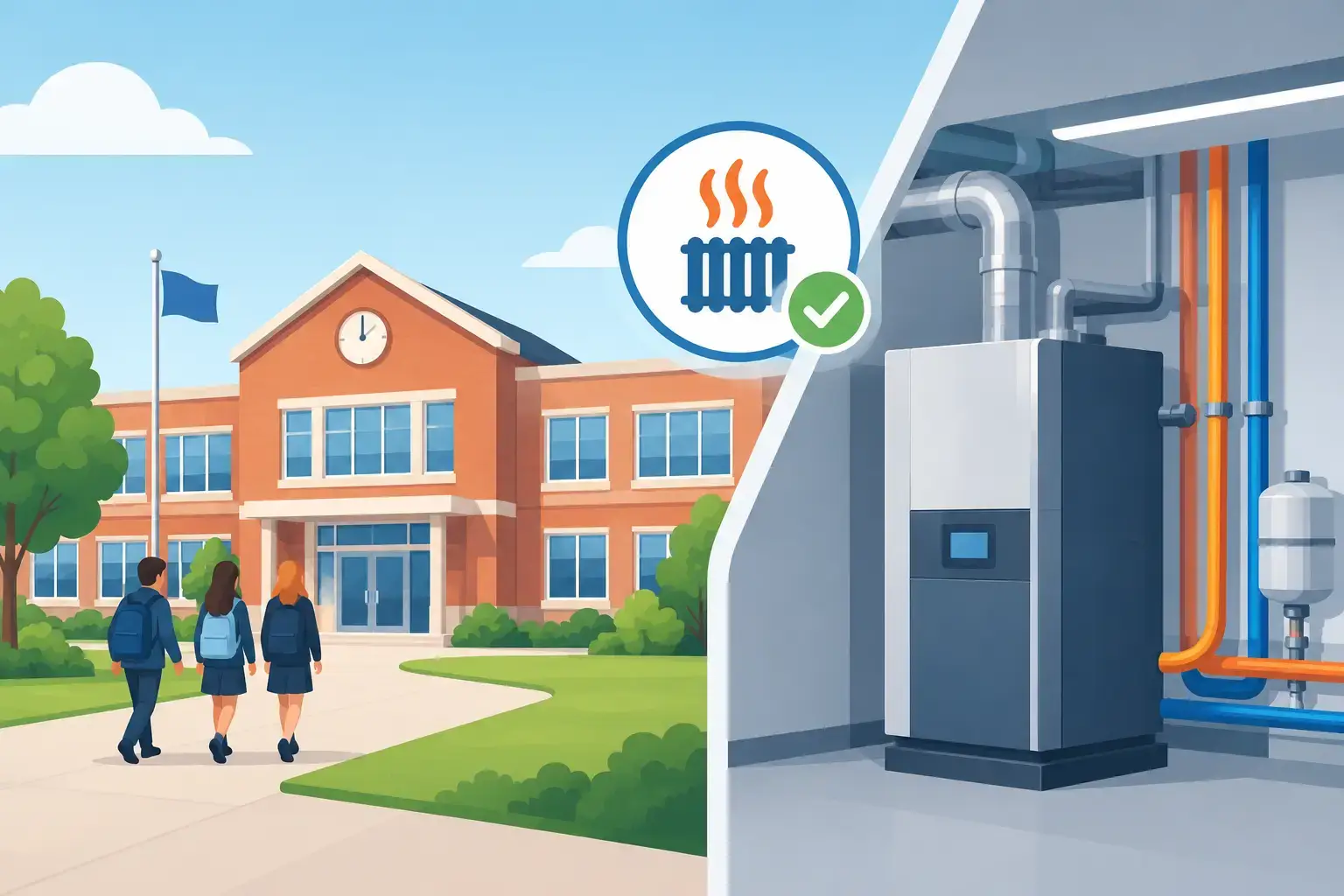
A cold classroom is not a minor comfort issue. It affects concentration, staff wellbeing and the school’s ability to operate normally. A well-planned school boiler upgrade can replace unreliable heating, reduce avoidable energy waste and give site teams more confidence through the winter – but only when the system is designed around how the building is actually used.
For schools, colleges and academy trusts, the right answer is rarely just to replace an old boiler with a newer version of the same size. Building layouts change, extensions are added, rooms are repurposed and heating patterns differ between term time, evenings and holidays. The upgrade should begin with evidence, not assumptions.
Why a school boiler upgrade needs proper planning
Many education buildings are served by ageing plant that has been kept running through repairs, temporary fixes and careful attention from the site team. That approach may be necessary in the short term, but frequent breakdowns, uneven temperatures and rising fuel bills are clear signs that the heating system deserves a closer look.
A boiler can be inefficient because it is old, but age is only part of the picture. Poorly balanced circuits, outdated controls, damaged insulation, oversized plant and poorly performing pumps can all undermine performance. Replacing one component without considering the rest of the system can leave the school paying for an upgrade without seeing the expected benefit.
The stakes are also higher than in a typical small commercial property. Schools need a dependable supply of heat and hot water, clear safeguarding arrangements, safe contractor management and minimal interruption to teaching. A good project plan accounts for all of this before work begins.
Start with a detailed heating survey
The first stage of a school boiler upgrade should be a survey of the plant room, distribution pipework, controls and the spaces being heated. This creates a clear picture of what is working, what is not and where investment will deliver the strongest return.
An experienced commercial heating engineer will assess the condition and capacity of the existing boilers, flues, pumps, pressurisation equipment and valves. They should also look beyond the plant room. Classrooms that are regularly too warm, too cold or slow to heat may point to problems with zoning, radiator performance or controls rather than boiler capacity alone.
Heat-loss calculations are particularly valuable where the building has changed since the current system was installed. A converted office, new teaching block or refurbished hall may have very different heating requirements. Oversizing a replacement boiler wastes capital and can reduce efficiency through excessive cycling. Undersizing it risks poor comfort in cold weather and a system that is always working at its limit.
The survey should also consider hot water demand. A primary school, secondary school, sports facility and catering kitchen each place different demands on the system. A solution that handles space heating well may need additional measures to provide reliable hot water at busy times.
Look at the controls, not just the boilers
Modern boiler controls can make a significant difference when correctly commissioned. Zoned heating allows different areas to run to different schedules, so an occupied classroom block is not heated in the same way as a sports hall, office area or rarely used meeting room.
Weather compensation adjusts flow temperatures in response to external conditions. Optimum start controls help the building reach the required temperature by opening time without running the heating unnecessarily early. These measures are practical, proven and often more valuable when paired with a boiler replacement than treated as an afterthought.
Controls must still be simple enough for the site team to manage. Overly complicated systems can be overridden or ignored if staff have not received clear handover training. The best setup balances energy efficiency with day-to-day usability.
Choosing the right type of replacement system
For many schools, high-efficiency condensing gas boilers remain a sensible replacement option, particularly where an existing gas supply and radiator-based system are in place. Modern modular boiler arrangements can provide resilience: if one boiler needs maintenance, the remaining units may continue to provide some heating rather than leaving the whole site cold.
That said, a direct like-for-like replacement is not always the right long-term decision. Schools increasingly need to consider wider energy and carbon plans, future funding requirements and the condition of the wider heating network. Depending on the building, heat pumps, hybrid systems or staged improvements may be worth assessing.
Heat pumps can offer strong carbon-saving potential, especially in well-insulated buildings with lower-temperature heating systems. However, they are not a simple swap for every ageing boiler. They need careful design, adequate electrical capacity, suitable external space and a realistic assessment of radiator and pipework performance. In some older school buildings, a hybrid arrangement or improvements to fabric and controls may provide a more practical route.
The right choice depends on the school’s budget, building condition, energy strategy and timescale. A contractor should explain those trade-offs clearly rather than pushing a single technology for every site.
Plan the installation around the school calendar
A school heating project needs disciplined scheduling. Major works are often best carried out during school holidays, when contractor access is easier and disruption is lower. However, holiday windows can be tight, particularly when surveys, procurement, deliveries, asbestos checks and electrical works are all required.
Early planning is the best protection against rushed decisions. Where full replacement cannot be completed in one break, the contractor should set out a phased programme that protects critical areas and maintains safe access throughout the works.
Before installation starts, agree how the project will manage deliveries, parking, waste removal, noise, security and access to plant rooms. Clear communication with the school’s leadership team, estates staff and safeguarding lead is essential. Contractors working on site should follow the school’s visitor procedures and provide the appropriate documentation before work begins.
Temporary heating may be needed in some circumstances, especially where work extends into colder months. It should be planned carefully, with suitable electrical capacity, safe positioning and proper supervision. Temporary equipment is a contingency, not a substitute for a realistic project programme.
Protect the new system from day one
New boilers perform best when the system water is clean and the hydraulic setup is correct. If sludge, corrosion debris or magnetite remains in old pipework, it can quickly affect pumps, heat exchangers and valves. Flushing, water treatment and suitable filtration should be included in the specification where required.
Commissioning is equally important. This is the point at which boilers, pumps, control settings and safety devices are checked as a complete system. The contractor should verify that all zones heat correctly, temperatures are appropriate and the controls respond as intended.
A proper handover should include operating information, warranty details, commissioning records and a clear explanation of routine checks. The site team should know who to contact if there is a fault, what warning signs to look for and how to adjust agreed schedules without compromising performance.
Build planned maintenance into the budget
A replacement boiler does not remove the need for ongoing care. Commercial boilers require regular servicing and inspections to maintain safe, efficient operation and support manufacturer warranty conditions. A planned maintenance arrangement also gives engineers an opportunity to spot developing faults before they become a no-heating emergency.
For schools, planned servicing is easier to manage when it is scheduled around the academic year. A visit before the heating season can identify issues before autumn demand begins, while continued checks help keep the system dependable through winter.
Records matter too. Accurate service documentation supports compliance, helps inform future budgeting and gives estates teams a useful history of system performance. If faults begin to repeat, those records make it easier to decide whether a repair remains proportionate.
Questions to ask before appointing a contractor
The cheapest quotation is not always the lowest-cost project. A thorough proposal should explain the scope of work, boiler and control specification, allowance for associated repairs, programme, commissioning process and exclusions. Vague quotations can lead to unexpected variations once work is under way.
Ask whether the contractor has experience with occupied education sites, how they will maintain safe working areas and who will manage the project day to day. For gas work, use appropriately qualified Gas Safe registered engineers. It is also sensible to establish response arrangements after installation, particularly if the upgrade takes place close to the heating season.
LCA Maintenance supports commercial heating projects with qualified engineering, clear communication and professional on-site working practices. For schools across Bedfordshire and the wider South East, a careful survey and transparent scope can make the difference between a stressful replacement and a heating system that is ready for the years ahead.
A school boiler upgrade is an opportunity to make classrooms more comfortable, reduce avoidable disruption and give the site team a system they can rely on. Start early, assess the whole system and choose a contractor prepared to plan around the people who use the building every day.