
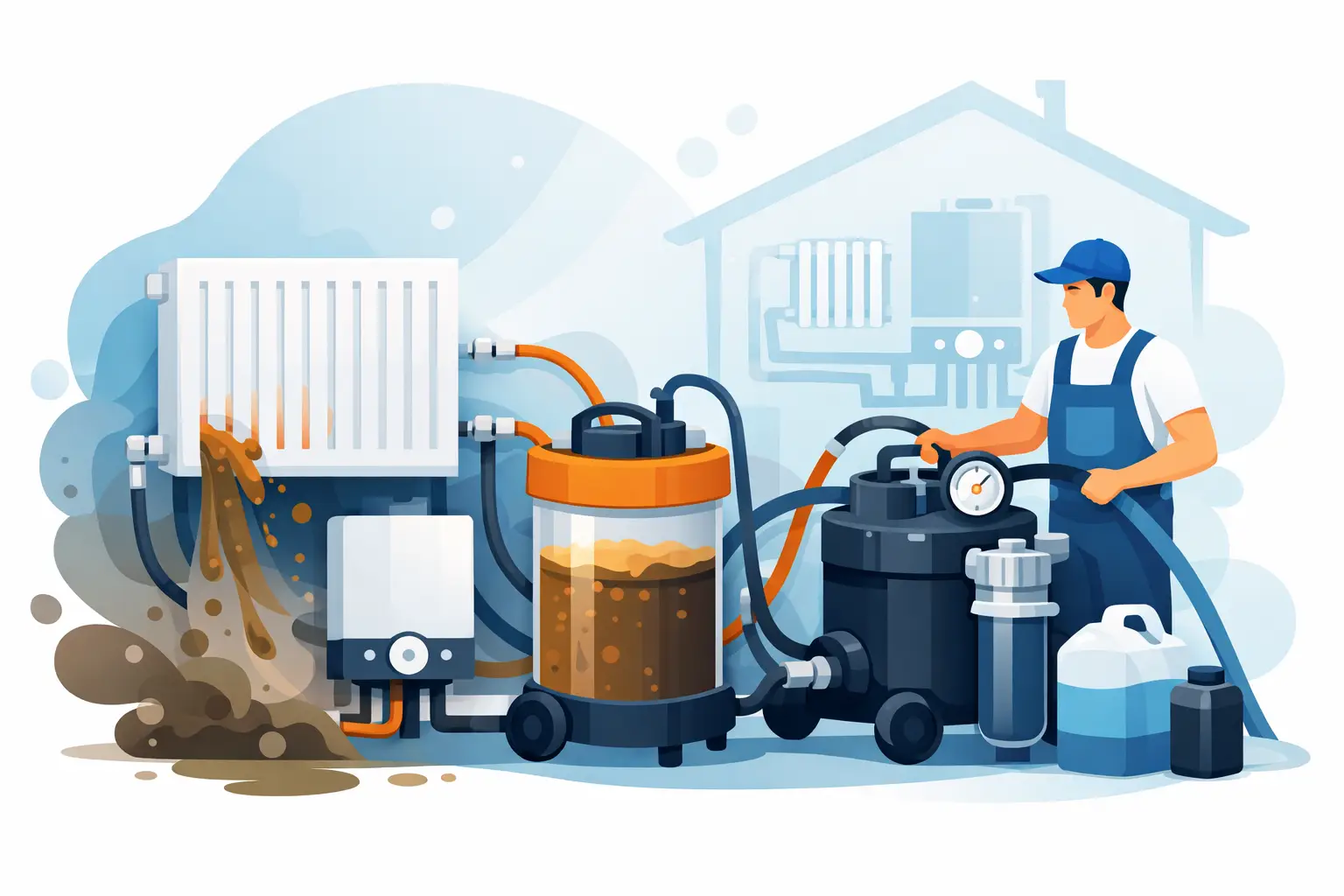
Cold patches on radiators, noisy pipework and a boiler that seems to work harder than it should are usually signs that something inside the system is not flowing as it ought to. In many homes and commercial properties, power flushing central heating system pipework is the most effective way to remove built-up sludge, rust and debris that gradually restrict performance.
What power flushing a central heating system actually does
A power flush is a specialist cleaning process carried out on a sealed heating system. Using a purpose-built machine, an engineer circulates water at high velocity through the radiators, pipework and other parts of the system. Cleaning chemicals are added to help break down sludge, corrosion deposits and magnetite, which is the black iron oxide residue often found in older systems.
The aim is not simply to make the water look cleaner. The real purpose is to restore circulation, reduce strain on the boiler and pump, and help each radiator heat up more evenly. Once the system has been cleaned, it is usually refilled with fresh water and treated with inhibitor to slow future corrosion.
That last step matters. Without proper chemical protection after the flush, the system can start to deteriorate again much sooner than it should.
Signs your system may need power flushing
Some heating problems are caused by faulty parts rather than dirty water, so diagnosis comes first. That said, there are several warning signs that often point to sludge and circulation issues.
If radiators are cold at the bottom but warm at the top, sludge has often settled inside them. If some radiators heat slowly while others stay lukewarm, there may be restricted flow through sections of the pipework. Repeated pump failures, boiler kettling noises, dirty water when bleeding radiators, and frequent bleeding requirements can all indicate contamination in the system.
In commercial buildings and larger domestic properties, poor circulation can show up as uneven heat across different zones. One area may feel comfortable while another struggles to reach temperature, even though the controls appear to be working correctly.
When power flushing central heating system pipework is worth it
Power flushing is not something every system needs as a matter of routine. In a relatively new installation that has been commissioned properly and protected with inhibitor, a full flush may be unnecessary for years. On the other hand, older systems with recurring heating issues often benefit significantly.
It is commonly recommended before fitting a new boiler onto an existing system, especially if the old pipework and radiators are staying in place. That is because a new boiler connected to dirty system water can quickly develop faults or reduced efficiency. Many manufacturers expect the heating system to be clean and properly treated as part of good installation practice.
It can also be worthwhile after repeated breakdowns linked to poor circulation, or where radiators are heavily sludged and standard bleeding has not solved the problem. For landlords and property managers, it may make sense as part of a broader system recovery plan if tenants have reported ongoing heating imbalance across a property.
What happens during the job
A proper power flush starts with inspection. An engineer should assess the age and condition of the system, identify obvious leaks or weak points, and confirm whether flushing is suitable. If the system is in very poor condition, this conversation is important. A flush can improve performance, but it is not a substitute for replacing pipework or radiators that are already at the end of their serviceable life.
The flushing machine is then connected to the heating circuit, often across the pump or another suitable point. Water and cleaning chemicals are circulated through the system, usually one radiator at a time where practical, to dislodge debris. Engineers may agitate individual radiators to help loosen stubborn sludge.
As contaminants are removed, the waste water is discharged safely and the system is repeatedly rinsed until it runs clean. Once complete, inhibitor is added and system performance is checked. In some cases, a magnetic filter may also be recommended to capture future debris before it reaches sensitive boiler components.
The job can take several hours and, on larger properties or more contaminated systems, longer. A realistic timeframe depends on the number of radiators, the layout, and how badly the system is affected.
The benefits and the limits
When it is the right solution, a power flush can make a noticeable difference. Radiators often heat faster and more evenly, boiler noise may reduce, and circulation through the system can improve considerably. Better water flow can also help reduce unnecessary strain on pumps and heat exchangers.
There may be an efficiency benefit too, though it should be viewed sensibly. A clean system generally allows the boiler and radiators to operate more effectively, but the scale of savings depends on the condition of the system beforehand. If the issue was severe sludge restricting heat output, the improvement can be obvious. If the system was already in fair condition, the gain may be more modest.
It is also worth being clear about what power flushing does not do. It does not fix faulty motorised valves, damaged pumps, failed thermostats or leaking components. It will not compensate for undersized radiators or poor original system design. In some cases, customers expect a flush to solve every heating complaint, when the real answer is a combination of cleaning, repair and adjustment.
Is power flushing always the best option?
Not always. Some systems are better suited to alternative cleaning methods such as a chemical flush or targeted remedial work. If pipework is fragile, heavily corroded or already leaking, a high-velocity clean may not be the best first step. A qualified heating engineer should assess the risks rather than treating every job the same way.
There is also a cost question. If a system has multiple failing radiators, an unreliable boiler and old controls, investing in a power flush alone may not be the most cost-effective route. In that situation, it may be better to plan a wider upgrade and include proper system cleaning as part of the installation work.
For newer systems with a localised issue, a full power flush could be more than is needed. A careful diagnosis can prevent unnecessary expense.
Choosing the right engineer for a power flush
This is one of those jobs where equipment and experience matter. A quick rinse and a proper flush are not the same thing, and customers are right to ask what is included. A trusted engineer should explain how the system will be tested, how long the work is likely to take, whether inhibitor is included, and what results are realistic.
For homeowners, landlords and site managers, transparent pricing and clear communication are just as important as the flush itself. If there are risks because of the age or condition of the system, those should be explained before work starts. That is part of professional service, not an afterthought.
In areas such as Milton Keynes, Luton, Bedfordshire and the wider South East, older housing stock and mixed-age heating systems are common, so experience with both modern and ageing installations can make a real difference.
How to keep the system clean afterwards
Once a system has been cleaned properly, ongoing protection is straightforward but important. The inhibitor level should be maintained, leaks should be dealt with promptly, and the system should be checked during routine boiler servicing. If a magnetic filter is fitted, it needs periodic cleaning to remain effective.
Repeatedly topping up a sealed system with fresh mains water can introduce more oxygen and minerals, which encourages corrosion. If pressure keeps dropping, the answer is to find and fix the underlying issue rather than continually refilling it.
It also helps to act early when symptoms appear. A radiator that starts developing cold spots or a boiler that becomes noisier than usual is easier to investigate before contamination spreads further through the system.
A well-maintained heating system should be quiet, responsive and consistent. If yours is not delivering that, power flushing may be the right next step – but only after a proper assessment. The best outcome comes from matching the solution to the condition of the system, not from assuming every heating problem needs the same fix.