
A radiator that is hot at the bottom but cold at the top is usually telling you exactly what is wrong – trapped air is stopping hot water from circulating as it should. If you want to know how to bleed radiators properly, the good news is that it is often a straightforward job. The key is doing it safely, in the right order, and knowing when a simple bleed is not the whole answer.
Bleeding a radiator removes pockets of air from your heating system. That air can build up over time, especially after boiler work, system draining, or natural circulation changes. When it does, radiators heat unevenly, rooms take longer to warm up, and your boiler can end up working harder than necessary.
Why bleeding radiators matters
A small amount of trapped air might not look urgent, but it affects comfort and efficiency. If one or two radiators are only partly warm, your thermostat may keep calling for more heat while the system struggles to deliver it evenly. That can mean higher running costs and a house that never feels quite right.
There is also a difference between a radiator that needs bleeding and one with a different fault. Cold at the top usually points to air. Cold at the bottom is more likely to be sludge, debris, or poor circulation. That distinction matters because bleeding alone will not clear a sludge problem.
What you need before you start
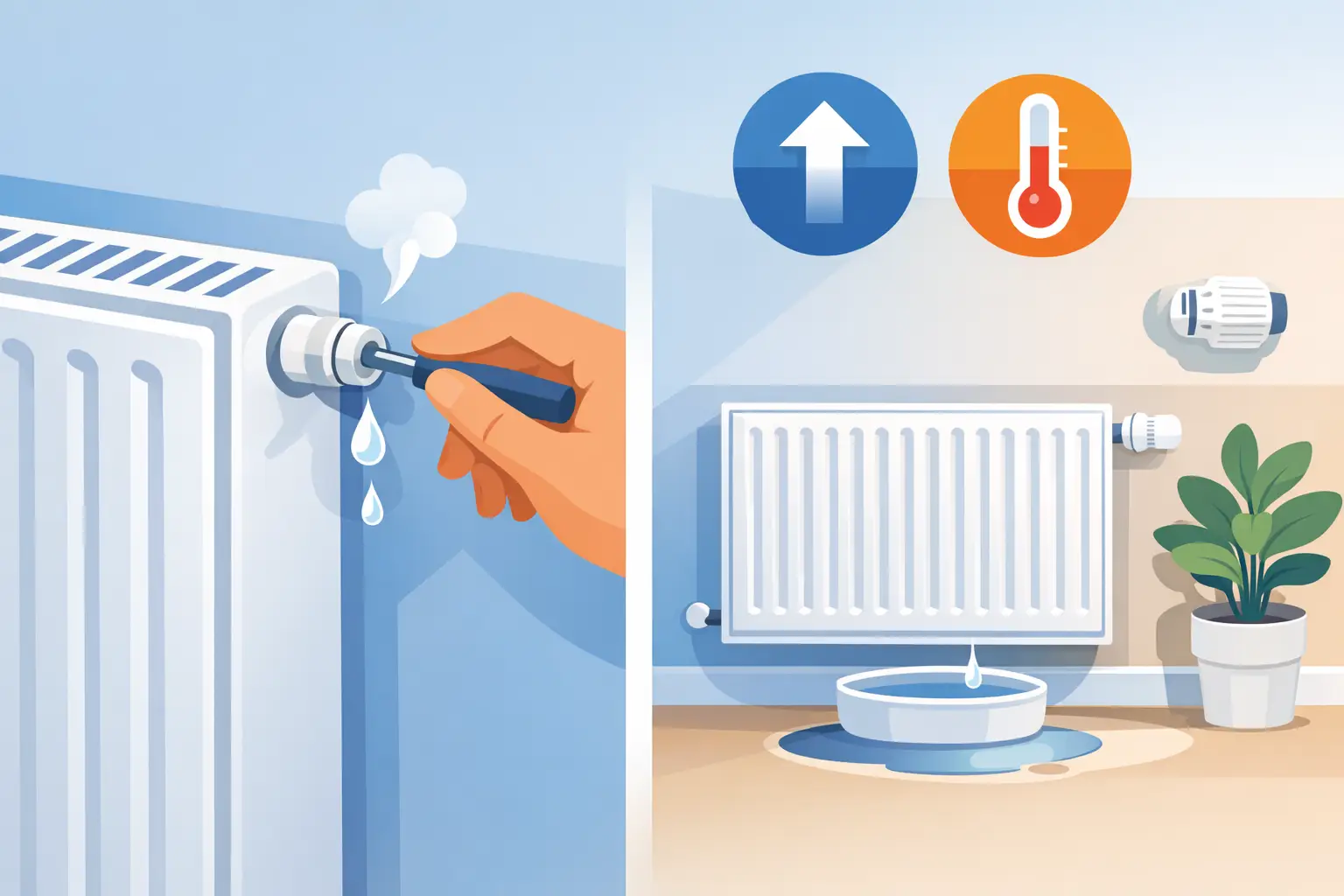
Most homeowners only need a radiator bleed key, a dry cloth or towel, and a small container to catch any drips. Some modern radiators use a flat-head screwdriver style vent, but many still need the standard key.
Before you start, make sure the heating is off and give the radiators time to cool. Trying to bleed them while the system is running is messy at best and unsafe at worst. Hot water can escape quickly, and you will not get a reliable result.
If your system has a pressure gauge on the boiler, it is worth checking where the pressure sits before you begin. On many sealed systems, bleeding radiators can reduce pressure slightly. That is normal, but it means you may need to top the system back up afterwards.
How to bleed radiators properly step by step
Start by identifying which radiators need attention. Walk around the property once the heating has been on and note any that are colder at the top, making gurgling noises, or taking longer than the rest to warm through.
Once the heating is switched off and the radiators are cool enough to work on, place your towel and container under the bleed valve. This is usually found at the top corner of the radiator, opposite the thermostatic radiator valve or manual control valve.
Insert the bleed key and turn it slowly anti-clockwise – usually no more than a quarter to half turn. You should hear a hissing sound as trapped air escapes. Keep the valve open just long enough for the air to release.
As soon as water starts to come out in a steady stream, close the valve by turning the key clockwise. Do not overtighten it. It only needs to be firm enough to stop leaks.
Wipe the valve dry and move on to the next radiator if needed. Once you have finished, check the boiler pressure. If it has dropped below the manufacturer’s recommended range, you may need to repressurise the system using the filling loop. If you are not confident doing that, it is sensible to ask a qualified heating engineer.
Turn the heating back on and check the radiators again after they have warmed up. In many cases, they should now heat more evenly from top to bottom.
Which radiators should you bleed first?
This is where advice can vary slightly because system layout matters. In a typical two-storey home, it often makes sense to start downstairs and work your way up, bleeding the radiators that show the clearest signs of trapped air first. In some systems, engineers may work from the radiator furthest from the boiler to the nearest.
For a routine homeowner check, the practical approach is simple: focus on the radiators with symptoms rather than worrying too much about a perfect sequence. If several radiators need bleeding and the system has been underperforming for a while, a more methodical check across the whole property can help.
If you find yourself bleeding the same radiator repeatedly, that points to an underlying issue rather than bad luck. Air should not keep building up in a healthy sealed system.
Common mistakes to avoid
The most common error is opening the bleed valve too far. You are not trying to remove a lot of water, only release air. A small turn is usually enough.
Another mistake is bleeding radiators while the heating is on. Apart from the risk of hot water, it can pull more air through the system and make diagnosis less clear.
People also sometimes ignore the boiler pressure afterwards. If too much pressure is lost, the heating may not work properly once you switch it back on. Low pressure can trigger faults or leave parts of the system underperforming.
Then there is misdiagnosis. If a radiator stays cold at the bottom after bleeding, or remains fully cold despite no air coming out, you may be dealing with sludge, a stuck valve, balancing issues, or a circulation fault. That is the point where further DIY can waste time and sometimes make matters worse.
When bleeding radiators is not enough
Bleeding is maintenance, not a fix for every heating problem. If your radiators need frequent bleeding, there may be air entering the system somewhere. That can happen through small leaks, failing components, corrosion, or poor system pressure control.
If several radiators have cold patches at the bottom, sludge is a more likely cause. Over time, magnetite and debris settle in the system, reducing heat output and restricting flow. In those cases, a chemical clean, powerflush, or targeted system work may be needed, depending on the age and condition of the installation.
You should also be cautious if bleeding one radiator leads to repeated pressure loss across the boiler. That can indicate a larger issue with the sealed system, expansion vessel, or hidden leaks. For landlords and commercial sites especially, it is worth treating repeated heating faults promptly rather than waiting for a total breakdown.
How often should you bleed radiators?
There is no fixed schedule that suits every property. Many households only need to bleed a radiator occasionally, perhaps at the start of the colder months if they notice cold spots. Others may go much longer without needing to do it at all.
What matters more is the pattern. If bleeding is becoming a regular chore, your heating system is asking for attention. A one-off pocket of air is common. A repeat problem is a sign to look deeper.
For larger homes, rental properties, and commercial premises, regular heating maintenance is usually the better route. Catching circulation or pressure issues early is cheaper and far less disruptive than dealing with a failed boiler in winter.
When to call a professional
There is no harm in handling a simple radiator bleed yourself if you are comfortable doing so. But you should call a qualified engineer if the boiler pressure keeps dropping, radiators stay cold after bleeding, valves are leaking, or the system is making persistent banging and gurgling noises.
The same applies if you are dealing with an older system, a commercial heating setup, or a property where downtime is a genuine problem. In those cases, proper diagnosis matters more than trial and error.
For homeowners and property managers around Milton Keynes, Luton, Stevenage and surrounding areas, getting a heating engineer involved early can save time and prevent a small issue becoming a much larger repair.
How to bleed radiators properly and keep the system healthy
Once you know how to bleed radiators properly, it becomes a useful bit of home maintenance rather than a guessing game. Do it with the heating off, release the air carefully, stop as soon as water flows steadily, and always check the system pressure afterwards.
If the radiator heats up evenly afterwards, job done. If the same problems keep returning, treat that as a warning sign rather than something to keep patching. A well-maintained heating system should run quietly, warm rooms evenly, and not need constant attention.