
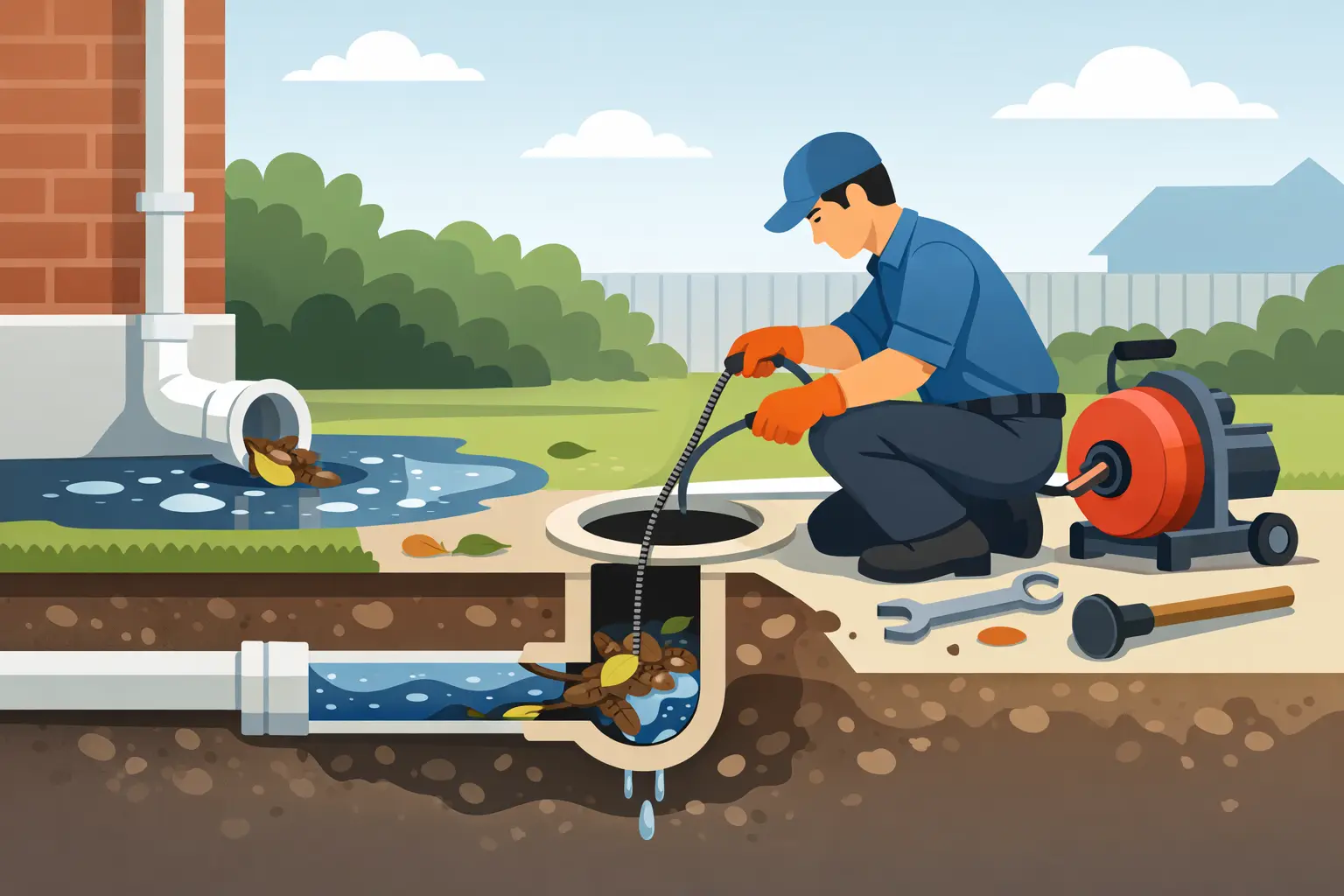
A blocked gully by the back door or a manhole that starts backing up after rain is never just an inconvenience. Blocked outside drain repair often starts as a simple clearance job, but if the problem keeps returning, there is usually more going on below ground. The key is knowing when a blockage can be cleared quickly and when the drain itself needs proper repair.
What blocked outside drain repair usually involves
People often use the word repair when they really mean unblocking. The two are related, but they are not the same thing. If leaves, silt, fat, wipes or debris are stopping water from flowing away, the first step is to remove the obstruction and test the line. If the drain is cracked, collapsed, poorly aligned or invaded by roots, clearing it only treats the symptom.
A proper blocked outside drain repair job looks at the full picture. That means identifying where the issue sits, whether the pipework has been damaged, and what method will restore reliable flow without unnecessary disruption. For a homeowner, landlord or site manager, that matters because repeated blockages usually mean repeated cost.
The signs the drain needs more than a quick clear
Some outside drains block because of seasonal debris. That can happen after heavy rain, autumn leaf fall or building work nearby. In those cases, a straightforward clean may be enough.
Other warning signs point to a repair issue rather than a one-off blockage. If water drains away slowly from multiple outlets, if bad smells keep returning around inspection covers, or if waste water rises back up through an external drain after use inside the building, the problem may be further along the line. Sinking ground, unusually lush patches of grass, or cracks around drain covers can also suggest damage underground.
Commercial sites and rental properties have an extra concern. If a drain repeatedly blocks, it can disrupt staff, customers or tenants very quickly. Acting early is usually cheaper than waiting for a complete failure.
Common causes of outside drain problems
Most outside drain issues fall into a handful of categories. Debris build-up is common, especially in gullies that collect leaves, moss, mud and roof run-off. Kitchen waste can also contribute if grease and food residue enter the drainage system and harden over time.
Structural defects are the bigger concern. Older pipework may crack as the ground shifts. Tree roots can enter through small joints and gradually create serious obstructions. In some cases the drain has partially collapsed, or sections have dropped out of line, creating a belly in the pipe where water and solids collect.
There is also the question of misuse. Wet wipes, sanitary products, paper towels and unsuitable cleaning materials are a frequent cause of stubborn blockages in both domestic and commercial properties. Even when the outside drain is where the problem shows up, the cause may start indoors.
How engineers diagnose the real problem
The difference between a temporary fix and a lasting repair usually comes down to diagnosis. A professional drainage engineer will normally begin by checking access points, flow direction and the severity of the blockage. High-pressure jetting may be used to clear the line safely and restore movement.
Once the immediate obstruction is removed, a CCTV drain survey is often the clearest way to assess the condition of the pipe. This matters because a drain can appear to be working again while still hiding root ingress, fractures or displaced joints. A camera inspection shows whether the line is sound or whether more work is needed.
For property owners, this approach gives clarity. You are not paying for guesswork. You are paying for an identified fault, an appropriate repair method and a better chance of avoiding repeat call-outs.
Blocked outside drain repair options
The right repair depends on the condition of the drain, the type of property and how severe the damage is. Not every repair requires excavation, and not every blockage needs major works.
Jetting and mechanical clearance
If the drain is structurally sound and the problem is mainly build-up, high-pressure jetting or mechanical rodding may be enough. This is often the fastest solution for silt, grease, soap deposits and organic material. It is effective, but only if the underlying pipework is in good condition.
Root removal and localised repair
Where roots have entered through a joint or crack, the blockage can be cut back and the damaged section repaired. The important point is that root cutting alone is rarely a permanent answer. Unless the entry point is addressed, the roots will usually return.
Drain lining
If the pipe is cracked but still largely intact, drain lining can often repair it from within. This creates a new internal surface without the need to dig up large areas. It can be a very practical option for driveways, patios and landscaped areas where excavation would be disruptive and expensive.
Excavation and replacement
If the drain has collapsed or the damage is too severe for lining, excavation may be necessary. No one wants digging as the first option, but sometimes it is the right one. A failed pipe section needs replacing properly if you want the system to perform reliably again.
How much disruption should you expect?
That depends on access and the repair method. A simple clearance and camera inspection can often be completed with minimal disturbance. Lining work is also relatively contained compared with excavation.
Digging becomes more involved if the damaged drain runs beneath hardstanding, extensions, access roads or high-use commercial areas. Even then, a good contractor will aim to keep disruption proportionate to the problem and explain the likely impact before work starts.
This is where experience matters. The cheapest option on day one is not always the cheapest over a year if the drain blocks again, flooding returns, or surfaces have to be reopened because the first repair did not deal with the fault properly.
When to call for blocked outside drain repair
If the drain is overflowing, if foul water is backing up, or if you suspect the blockage affects more than one outlet, it is sensible to call sooner rather than later. Standing waste water is unpleasant, but it can also become a hygiene issue and damage nearby surfaces.
For landlords and commercial operators, speed is especially important. Drainage faults can quickly become complaints, access issues or health and safety concerns. A responsive, fully qualified team can identify whether the issue is routine maintenance, an emergency blockage or a repair that needs planning.
If you are in Milton Keynes, Luton, Stevenage, Cambridge or surrounding areas, local response time can make a real difference when an outside drain starts causing immediate problems. Fast attendance helps limit overflow, odour and the risk of the issue spreading further through the system.
Can you prevent future drain repairs?
Often, yes. Prevention is not about eliminating every possible issue, because drains are buried systems and wear happens over time. It is about reducing the most common triggers.
Keeping outside gullies clear of leaves and mud helps surface water flow freely. Avoiding fat, wipes and unsuitable materials in the drainage system also makes a significant difference. On older properties or sites with recurring issues, periodic drain inspection can be worthwhile, particularly if there are trees nearby or a history of root intrusion.
For commercial premises, planned maintenance is often the smarter approach. Restaurants, managed blocks, offices and mixed-use buildings tend to place more demand on drainage systems, so scheduled checks can prevent avoidable call-outs and disruption.
Choosing the right contractor for the job
Drain repair is one of those services where clear communication matters as much as the technical work. You need to know what has been found, what actually needs doing, what can wait, and what the likely cost and disruption will be.
A dependable contractor should explain the fault in plain English, use the right diagnostic tools, and recommend repair work based on evidence rather than assumption. Transparent pricing, tidy workmanship and a professional approach all matter, especially when the work affects access, customers, tenants or day-to-day use of the property.
LCA Maintenance supports domestic and commercial customers with practical, professional drainage solutions, combining responsive service with the kind of qualified assessment that helps prevent repeat problems rather than simply masking them.
A blocked outside drain rarely improves by itself, and repeated clearing is often a sign that the pipework needs proper attention. The sooner the cause is identified, the easier it is to restore the system and move on without the stress of the next backup waiting around the corner.