
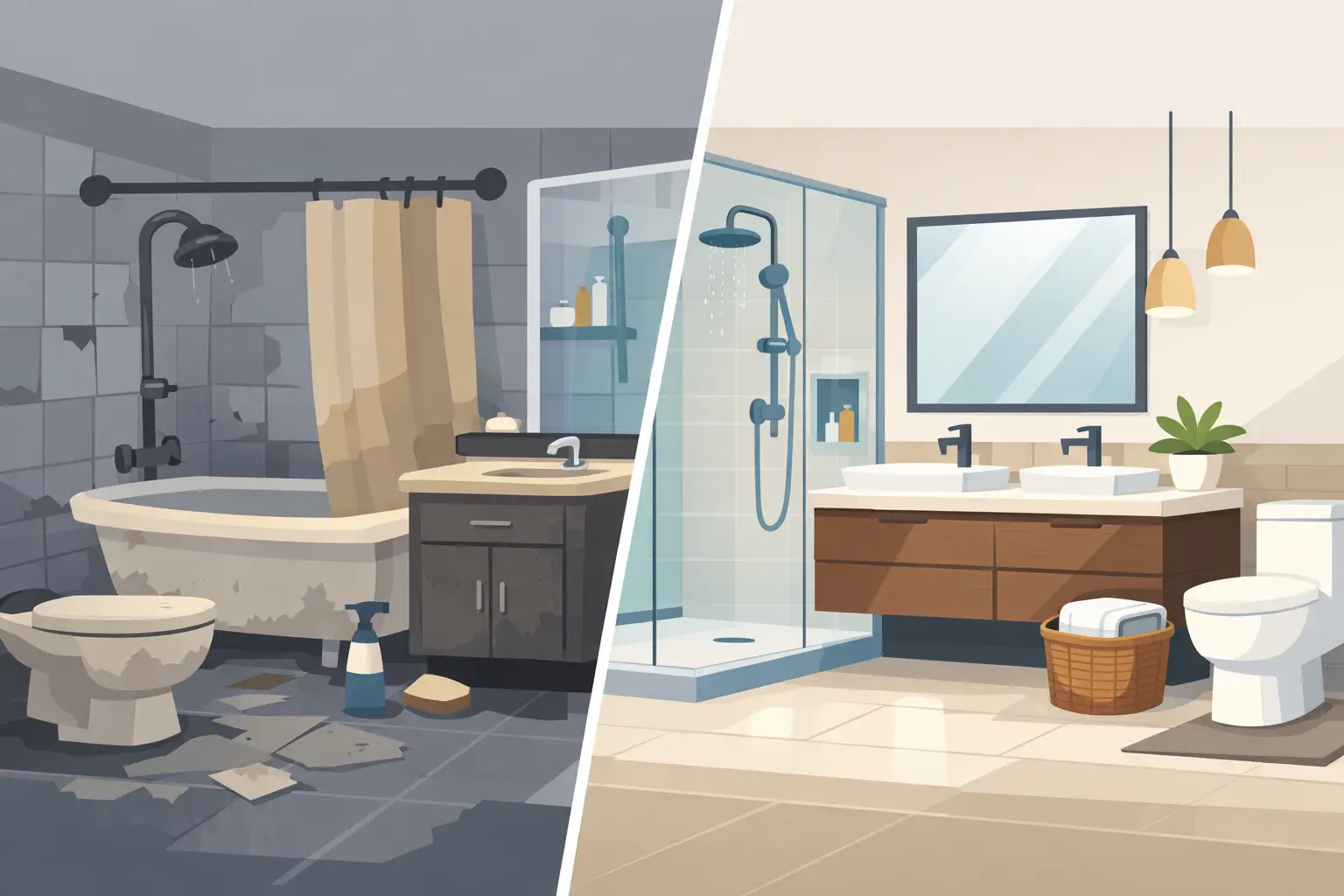
A good bathroom renovation before after rarely starts with tiles or paint samples. It usually starts with a problem that has been annoying you for months, sometimes years – poor layout, weak water pressure, dated fittings, lack of storage, or a room that never quite feels clean no matter how often it is scrubbed.
That is why the most successful transformations are not just cosmetic. The best before-and-after results come from solving how the room works first, then improving how it looks. For homeowners and landlords, that approach matters because bathrooms take daily wear, hold moisture, and rely on plumbing and drainage performing properly behind the scenes.
What makes a bathroom renovation before after look impressive
People often focus on dramatic photos, but the strongest bathroom renovation before after projects are usually built on practical decisions. A cramped room feels bigger because the layout has been rethought. A tired suite looks sharper because pipework has been hidden neatly. A bathroom that once felt cold and awkward becomes easier to use because lighting, ventilation and storage have all been handled properly.
In other words, the visual difference is only half the story. If the room looks better but still suffers from poor extraction, awkward clearances or unreliable fittings, the improvement will not last. A proper renovation should give you a bathroom that performs as well as it presents.
Before: the common problems hiding in plain sight
Older bathrooms tend to show the same patterns. The suite may still function, but the room can feel dated, worn and inefficient. Stained sealant, tired grout, cracked trays, weak flushes and slow drainage are all signs that the space is due more than a light refresh.
Layout is another major issue. Many bathrooms were fitted around what was easiest at the time rather than what works best now. A bulky bath in a room better suited to a shower, a basin with no surrounding surface, or a toilet placed awkwardly can all make the room feel tighter than it really is.
There is also the issue of hidden wear. Water damage behind tiles, ageing pipework, poor flooring preparation and inadequate ventilation often stay unnoticed until work begins. This is where a professional survey and honest advice matter. Not every old bathroom needs a complete strip-out, but many apparent surface issues point to deeper ones underneath.
After: what a well-planned result actually delivers
A successful after result should feel calmer, cleaner and easier to maintain. That may mean a walk-in shower replacing an unused bath, wall-hung furniture creating more visible floor space, or better zoning so the room works more smoothly during busy mornings.
The biggest improvement is often not the feature wall or the brassware. It is the sense that everything fits. Storage is where you need it. Lighting is practical as well as flattering. Surfaces are easier to wipe down. The room warms up properly. Moisture clears faster. These are the details that turn a renovation from a visual update into a worthwhile investment.
For landlords and property managers, the after picture should also be measured in durability. Finishes need to cope with regular use, fittings need to be reliable, and any installation should be completed to a standard that reduces call-backs and maintenance issues later.
Planning the transformation properly
The gap between before and after is decided long before installation starts. Good planning helps avoid wasted spend and prevents common compromises halfway through the project.
Start by being clear about the room’s purpose. A family bathroom has different priorities from an en-suite or a rental property upgrade. If it is the main household bathroom, practical storage, easy cleaning and resilient materials matter more than trend-led choices. If accessibility is a concern, step-free showers, sensible heights and wider access become more important than squeezing in every possible feature.
Budget should also be approached realistically. There is a difference between a cosmetic refresh and a full renovation. Keeping the existing layout can help control cost because major plumbing changes are often one of the biggest drivers of labour and materials. That said, holding on to a poor layout just to save money can be a false economy if the room still frustrates you every day.
Layout first, finishes second
One of the biggest mistakes in bathroom projects is choosing products too early. It is easy to get drawn into colours, taps and tile patterns before resolving whether the room is arranged in the best way.
A strong layout considers movement, clearances, drainage falls and practical use. Can the shower door open comfortably? Is there enough room around the basin? Will a vanity unit improve storage without making the room feel boxed in? Can pipe runs be concealed neatly? These questions have more impact on the final result than many people expect.
In smaller bathrooms especially, layout discipline is what creates that sharp before-and-after contrast. Even modest rooms can feel transformed when every fitting is sized correctly and placed with purpose.
The plumbing matters more than the photos show
Bathroom transformations are often judged by the finished look, but plumbing quality is what determines whether the room will still feel successful a year later. Reliable hot and cold feeds, proper waste installation, solid connections and suitable water pressure all matter.
This is particularly important when replacing older suites with more modern fittings. A rainfall shower, for example, may look excellent in the showroom but perform poorly if the system is not suitable. Likewise, concealed valves and boxed-in services can look clean and contemporary, but they still need to be installed in a way that allows proper maintenance access where required.
Working with fully qualified professionals helps avoid the sort of shortcuts that lead to leaks, poor flow, recurring drainage problems or costly remedial work. The best bathroom renovations are not only tidy on the surface – they are technically sound throughout.
Choosing materials that work in real life
A polished before-and-after image can make almost any finish look appealing. Daily use is a stricter test. Gloss surfaces show marks more easily, heavily textured tiles can be harder to clean, and fashionable fittings may not suit every water system or maintenance routine.
That does not mean playing it safe with every choice. It simply means balancing appearance with longevity. Porcelain tiles, quality sanitaryware, well-made shower screens and moisture-resistant furniture tend to offer better value over time than chasing the cheapest initial price.
It is also worth thinking about who will use the room. Households with children may prefer practical floors with grip and forgiving surfaces. A premium en-suite might justify more design-led finishes. In a rental property, durability and ease of replacement usually deserve priority.
Lighting, heating and ventilation change everything
Some of the most dramatic bathroom renovation before after improvements come from areas people initially overlook. Lighting can make a bathroom feel larger, warmer and more usable. Layered lighting around the mirror and ceiling creates a better result than relying on a single central fitting.
Heating makes a difference too. Towel radiators are popular, but they need to be selected for output as well as style. In some cases, underfloor heating adds comfort and frees wall space, though it is not always the most cost-effective option depending on the room and existing setup.
Ventilation is essential. Without adequate extraction, even a beautifully finished bathroom can quickly suffer from condensation, mould and premature wear. A room that looks excellent on day one needs the right airflow to keep it that way.
It depends: when to refurbish and when to start fresh
Not every project needs a complete overhaul. If the existing layout works, pipework is in good condition and there is no sign of concealed damage, a partial refurbishment may deliver a strong result. Replacing sanitaryware, retiling, updating lighting and fitting better storage can still create a notable before-and-after improvement.
A full renovation is usually the better route when several issues overlap – tired finishes, poor layout, ageing plumbing, ventilation concerns and ongoing leaks or damage. In those cases, trying to patch one element at a time often costs more in the long run and leaves you with an inconsistent finish.
For homeowners in places such as Milton Keynes, Bedford or Cambridge, where property styles vary widely, the right approach often comes down to the age of the home, the condition of existing services and how long you plan to stay. A short-term refresh and a long-term investment are not the same job.
Why professional installation pays off
Bathrooms are one of the few rooms where aesthetics, plumbing, heating, electrics and moisture management all meet in a compact space. That creates very little room for error. A reliable installer helps coordinate those elements properly, keeps work to standard, and spots issues before they become expensive.
That is especially valuable when timelines matter. Homeowners want disruption kept to a minimum, while landlords and commercial operators often need rooms returned to use quickly and safely. A dependable contractor brings structure to the process – clear communication, transparent pricing, tidy workmanship and realistic advice about what the room can achieve.
The most satisfying before-and-after result is not the one with the boldest styling. It is the one that still feels like a smart decision every morning, because the room works properly, looks right and has been built to last.