
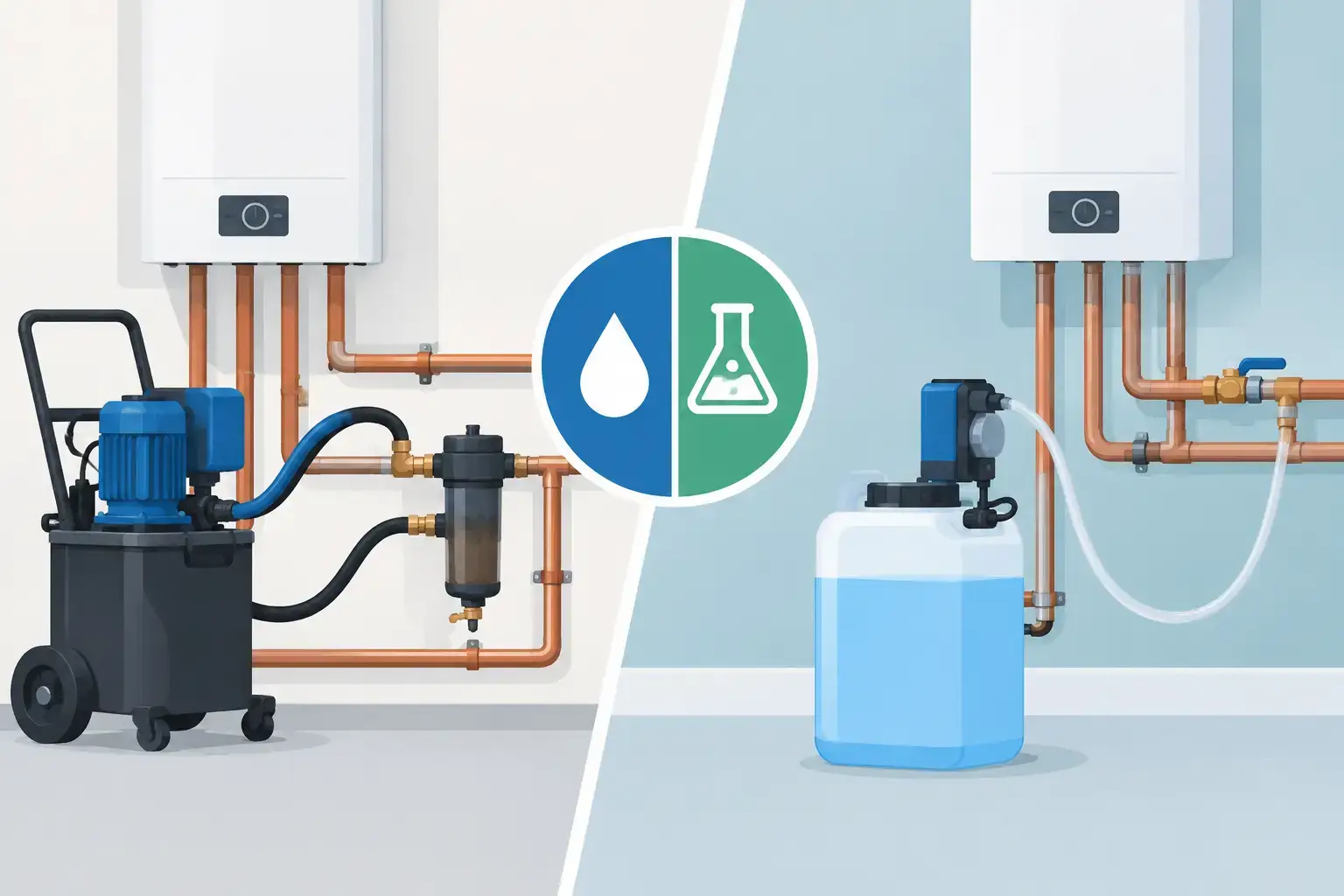
A heating system can appear to be working while quietly losing efficiency. Radiators may be cold at the bottom, some rooms may take far longer to warm up, or the boiler may become noisy and unreliable. When deciding between a power flush vs chemical flush, the right choice depends on what is inside the system, how severe the contamination is and whether there are underlying faults to address first.
Both treatments are designed to remove sludge, scale and debris from central heating pipework and radiators. They are not interchangeable in every situation, however. A qualified heating engineer should assess the condition of the system before recommending either option, particularly where an older boiler, vulnerable pipework or repeated breakdowns are involved.
What builds up inside a central heating system?
Most central heating systems contain water and metal components. Over time, oxygen can enter the system through small leaks, poor-quality water or certain older system designs. This can cause internal corrosion, producing a dark, magnetic sludge known as magnetite.
That sludge settles in radiators, bends in pipework, pumps, valves and the heat exchanger inside the boiler. It restricts circulation, so the boiler has to work harder to deliver the same level of warmth. In practical terms, this can mean higher energy use, uneven heat around the property and a greater risk of expensive component failures.
Limescale can also be a concern in hard-water areas, especially in hot water components. While sludge is usually the main reason for a heating-system clean, an engineer will consider both issues when choosing the treatment.
What is a chemical flush?
A chemical flush uses a purpose-made cleaning chemical that is added to the heating system. The chemical circulates with the existing system water, usually using the boiler’s pump, to loosen corrosion deposits and suspended debris. Once it has had sufficient time to work, the system is drained, rinsed and refilled with clean water and a corrosion inhibitor.
This method is often suitable where contamination is relatively light or moderate, the system is still circulating reasonably well and there are no major cold spots across the property. It may be used as part of routine maintenance, after minor heating work, or before fitting a new component where the rest of the system is in fair condition.
A chemical flush is generally less aggressive than a power flush. That can be an advantage for a system that does not need intensive cleaning, and it is often the more proportionate option for well-maintained systems. It should not be treated as a shortcut, though. The cleaning chemical needs the correct concentration, circulation time and thorough rinsing to do its job properly.
What is a power flush?
A power flush uses a specialist machine connected to the heating system. The machine circulates water and cleaning chemicals at a higher flow rate than the system’s normal pump can achieve. An engineer can work through individual radiators, reverse the flow and use controlled agitation to dislodge stubborn deposits.
The process is particularly effective where magnetite sludge has built up over years. It can improve circulation through radiators and pipework, help restore heat output, and reduce the strain on pumps, valves and boiler components.
Despite the name, a power flush is not about forcing excessive pressure through a system. A competent engineer controls the equipment carefully and assesses whether the pipework, radiators and valves are suitable before starting. The objective is high flow and effective debris removal, not unnecessary stress on ageing parts.
Power flush vs chemical flush: the key difference
The main difference is the level of circulation and cleaning action. A chemical flush relies primarily on the central heating system’s own pump to carry the cleaning solution around the system. A power flush uses dedicated equipment to create stronger, controlled flow and to target individual radiators and sections of pipework.
It is also worth clearing up a common misunderstanding: power flushing normally involves cleaning chemicals too. The comparison is not always chemicals versus no chemicals. More accurately, it is a standard chemical clean using normal system circulation versus a more intensive chemical clean delivered with specialist flushing equipment.
Neither treatment is automatically better. A lightly contaminated system may not need the time and cost of a full power flush. Equally, adding cleaner to a badly sludged system may not shift enough debris to solve the problem, especially if several radiators are cold at the bottom or the boiler has suffered recurring flow-related faults.
Signs a power flush may be the right choice
A power flush is often considered when there is clear evidence of widespread sludge or poor circulation. Common warning signs include radiators that are cold at the bottom, frequent pump or diverter valve issues, black water released when a radiator is bled, and persistent boiler noises caused by restricted flow.
It may also be recommended before installing a new boiler onto an older heating system. New boilers have more compact and efficient heat exchangers, but these can be vulnerable to debris from old pipework and radiators. Cleaning the system properly before installation helps protect the new appliance and supports its performance from day one.
For landlords and commercial property managers, a power flush can also be sensible where heating complaints affect several areas of a building. The decision should still be based on inspection and system testing rather than simply choosing the most intensive option available.
When a chemical flush is enough
A standard chemical flush can be a good solution if the heating system is heating evenly, contamination is limited and the engineer is carrying out preventative work. It may also suit a newer installation that has not been protected correctly with inhibitor, or a system following a small repair that has introduced fresh water and oxygen.
The condition of the system matters more than its age alone. An older system that has been regularly serviced, fitted with a magnetic filter and kept topped up with inhibitor may only require a controlled chemical clean. A much newer system with poor water quality may need more thorough treatment.
A professional assessment should include checking radiator temperatures, examining system water, identifying leaks or circulation faults, and discussing the system’s service history. Flushing will not resolve a defective pump, incorrectly sized pipework, a failed thermostatic valve or a boiler fault that needs repair.
What happens after either flush?
The final stages are as important as the cleaning itself. Once debris has been removed, the system should be thoroughly rinsed until the water runs clear. It is then refilled, correctly pressurised where appropriate, vented and tested for reliable heat distribution.
A corrosion inhibitor should be added to help prevent future internal rusting. In many homes, fitting or servicing a magnetic filter is also a worthwhile protective measure. The filter captures magnetic sludge before it reaches sensitive boiler components and can be cleaned during annual servicing.
If the system loses pressure regularly, needs frequent topping up or has signs of a leak, this should be investigated. Continually introducing fresh water can undo the benefits of a flush by bringing more oxygen into the system.
Choosing the right treatment for your property
The best decision is based on evidence, not a one-size-fits-all recommendation. A trusted, fully qualified heating engineer will explain whether the system needs a chemical flush, a power flush, repairs before cleaning, or a different solution altogether. They should also be clear about what is included, how long the work will take and what protection will be added afterwards.
For homeowners and property managers across Bedfordshire and the surrounding area, LCA Maintenance can assess heating performance, identify the cause of poor circulation and provide transparent advice on the most suitable treatment. The aim is not simply to clean the system, but to help it run efficiently and reliably for longer.
Cold radiators and boiler noise are easy to put off when the heating is still partly working. Addressing them early can protect the parts of your system that are costly to replace and make the next cold spell far less of a worry.