
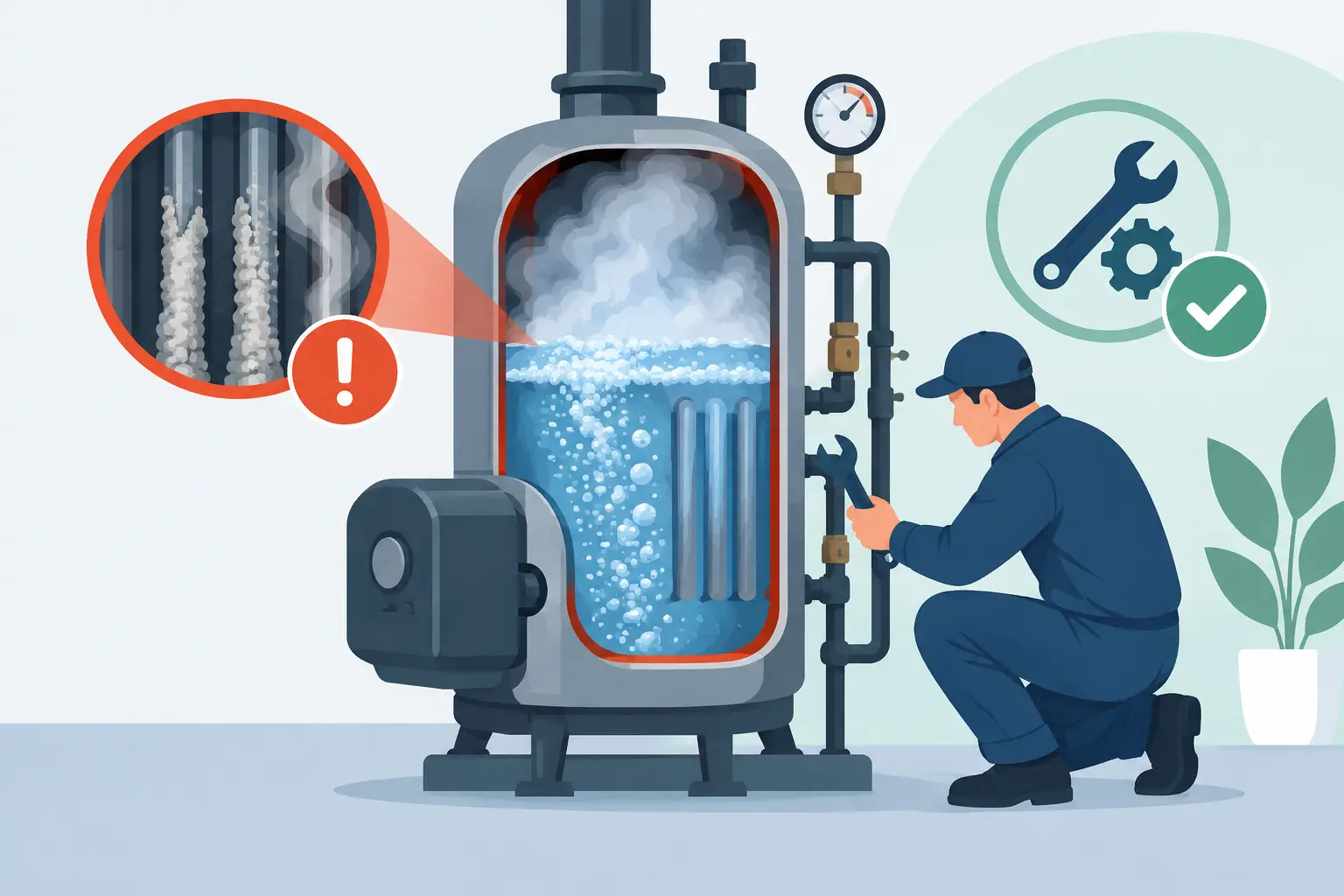
A boiler that suddenly sounds like a boiling kettle can be alarming, particularly when the heating is running normally one day and making a loud rumble the next. If you are asking, why is boiler kettling, the noise is usually a sign that water is overheating or struggling to circulate properly inside the system. It is not a fault to ignore, but it can often be diagnosed and resolved before it develops into a more expensive repair.
Kettling is most common in older heating systems, hard-water areas and boilers that have missed regular servicing. The sound may be a whistle, a low rumble, popping or repeated banging from the boiler casing. Although the name suggests the water is actually boiling, the underlying issue is usually restricted water flow around the boiler’s heat exchanger.
What boiler kettling actually means
Your boiler heats water in a component called the heat exchanger, then sends that heated water around your radiators or through your hot-water system. For this to work safely and efficiently, water needs to move through the boiler at the correct rate.
When flow is restricted, water can become excessively hot in one small area of the heat exchanger. Small pockets of steam may form and collapse, creating the familiar kettling noise. Modern boilers have safety controls designed to reduce the risk of serious overheating, but those controls do not remove the cause of the problem.
A boiler can sometimes make normal operational noises, especially as it starts or stops. Kettling is different because it is usually louder, more persistent and may be accompanied by reduced heating performance, fluctuating hot water or a fault code on the display.
Why is boiler kettling happening in your home?
There is no single answer in every property. A qualified engineer will assess the boiler, pipework and wider heating system before recommending work. However, several faults are regularly responsible.
Limescale in the heat exchanger
Limescale is a common cause of kettling, particularly where the water supply is hard. Minerals in the water can gradually settle inside the heat exchanger. This narrows the passages that water must travel through and creates hot spots.
As the restriction gets worse, the boiler has to work harder to transfer heat into the circulating water. You may notice the noise most clearly when the heating first fires up or when the boiler is producing hot water. Depending on the boiler model and the scale build-up, an engineer may be able to clean the affected component, although a severely damaged heat exchanger may need replacement.
Sludge and debris in the heating system
Black sludge is made up largely of corrosion deposits from inside radiators, pipework and other metal components. Over time, this debris can collect in the heat exchanger, pump or narrow sections of pipework, slowing circulation and causing localised overheating.
Cold patches at the bottom of radiators, frequent bleeding requirements and discoloured water are all possible signs that sludge is present. A powerflush or chemical clean may help in suitable systems, but it is not a one-size-fits-all answer. The system’s age, condition and existing leaks need to be considered first.
A faulty or poorly performing pump
The central-heating pump moves heated water away from the boiler. If it is failing, set incorrectly or partially blocked, the boiler may heat water faster than the pump can circulate it. That imbalance can lead to kettling.
Pump faults can also cause some radiators to remain cool, take a long time to warm up or heat unevenly. In certain boilers, the pump is located within the appliance, so diagnosis and repair should always be carried out by a Gas Safe registered engineer.
Restricted valves, filters or pipework
Partially closed valves, blocked filters and restrictions in the pipework can all reduce circulation. A magnetic filter that has not been cleaned, for example, may no longer collect debris effectively. In older properties, pipework alterations or narrow sections of system pipe can also affect flow.
This is why replacing a visible part without investigating the full system is rarely the right approach. The boiler may be responding to a circulation issue elsewhere.
Incorrect system pressure or trapped air
Low pressure can affect circulation, while trapped air may create noise and prevent water moving efficiently through parts of the system. These issues do not cause every case of kettling, but they are straightforward checks during a professional inspection.
If your boiler pressure is repeatedly dropping, do not simply keep topping it up. Recurring pressure loss can point to a leak, a problem with the expansion vessel or another fault that needs proper attention.
Is a kettling boiler dangerous?
A kettling boiler is not automatically an emergency, but it should be treated as a prompt to arrange a repair. Continued overheating and poor circulation can put unnecessary strain on the heat exchanger, pump and other components. Left unresolved, a relatively manageable fault can turn into a boiler breakdown.
Switch the boiler off and seek urgent professional advice if you notice a burning smell, signs of water leaking from the boiler, a strong smell of gas, repeated lockouts or a carbon monoxide alarm sounding. If you smell gas, do not operate electrical switches or appliances. Leave the property if necessary and contact the gas emergency service from a safe location.
For a boiler that is noisy but otherwise operating, avoid repeatedly resetting it or changing internal settings in an attempt to silence the sound. This can mask useful fault information and may not address the circulation problem.
What you can check before booking a repair
Homeowners can carry out a few simple external checks without removing the boiler case. Look at the pressure gauge when the system is cold and compare it with the manufacturer’s recommended range, which is commonly around 1 to 1.5 bar. Check whether all radiator valves are open and whether radiators are heating evenly.
You can also note when the noise occurs. Does it happen only with central heating, only when running hot water, or during both? Does it start immediately, or after the boiler has been operating for several minutes? These details help an engineer narrow down the likely cause.
Do not take off the boiler casing, interfere with gas components or attempt to clean a heat exchanger yourself. Boiler repairs involve sealed combustion components, electrical parts and safety controls. This work requires the correct testing equipment and a suitably qualified Gas Safe engineer.
How an engineer fixes boiler kettling
A proper diagnosis starts with checking the boiler’s operation, water flow, pressure, pump performance and error history. The engineer may inspect filters, test key components and assess the condition of the system water. They will then recommend the most appropriate repair, rather than assuming every noisy boiler needs a flush.
The solution could be as simple as cleaning a filter, correcting a pump setting or releasing trapped air. Where sludge or scale is the cause, the work may involve a chemical clean, flushing the system or replacing an affected part. In some cases, particularly with an older boiler and a failed heat exchanger, replacement may represent better value than repeated repairs.
Transparent advice matters here. The right option depends on the age and condition of the appliance, its repair history, the quality of the system water and the likely remaining life of major components.
Preventing kettling from returning
Annual boiler servicing gives an engineer the opportunity to identify declining performance before a noisy fault develops. Keeping the system water clean is equally valuable. Where appropriate, a magnetic filter can capture circulating debris, while inhibitor chemical helps protect metal components from internal corrosion.
If you live in a hard-water area, discuss scale prevention with your heating engineer when installing a new boiler or carrying out major system work. The most suitable approach depends on your existing system, local water conditions and the boiler manufacturer’s requirements.
A noisy boiler is asking for attention, not necessarily replacement. Booking a professional inspection promptly can protect your heating, reduce the chance of a winter breakdown and give you a clear answer on the repair that will genuinely solve the problem.