
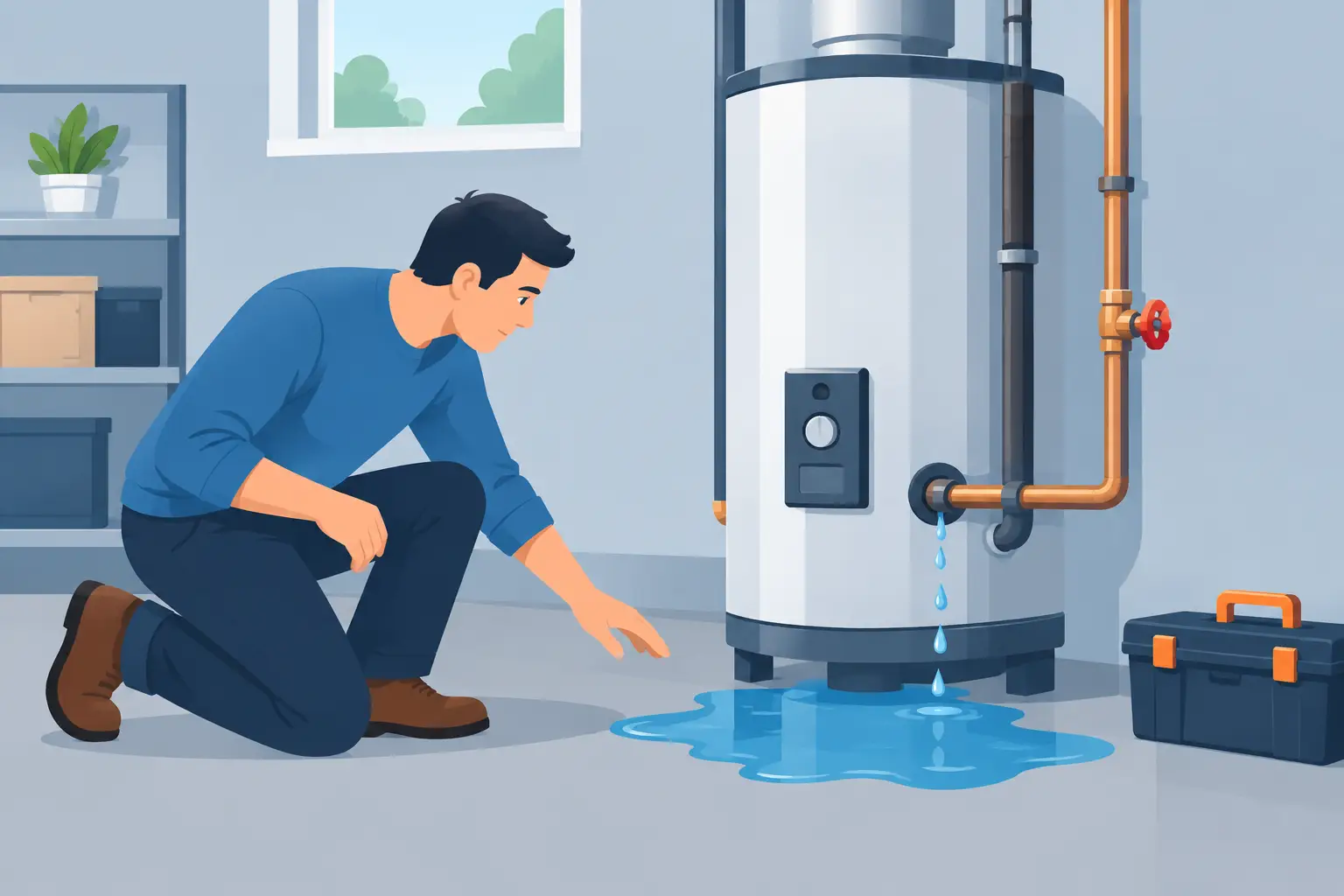
Water beneath a boiler is never something to ignore. A boiler leaking water may be losing pressure, suffering from a failed internal part or, in some cases, simply dripping from pipework nearby. Acting promptly can limit damage to cupboards, flooring and electrics, while helping to prevent a small repair turning into a complete breakdown.
The priority is safety. Do not remove the boiler casing or attempt to repair internal components yourself. Modern boilers contain gas, mains electrics and pressurised water, so the cause should be identified by a Gas Safe registered engineer.
What to do when your boiler is leaking water
First, place a towel, tray or bucket under the drip if you can do so safely. This will protect the area and give you a clearer idea of how quickly water is escaping. Take a photograph of the leak and make a note of whether it occurs constantly, only when the heating is on, or after hot water has been used. These details can help an engineer diagnose the issue more efficiently.
If water is close to electrical sockets, switches or the boiler’s electrical connections, avoid touching anything wet. Switch off the boiler at its electrical isolation point only if it is safe and dry to do so. If you smell gas, leave the property, avoid electrical switches and naked flames, and follow the emergency gas procedure immediately.
Where the leak is clearly coming from the boiler, turn the heating off and arrange a professional inspection. It is also sensible to stop using the filling loop. Adding more water to restore pressure without finding the leak can worsen the problem and may cause the pressure relief valve to discharge again.
A slow drip may not look urgent, but it can still cause corrosion and pressure loss over time. A steady flow, visible staining around the boiler, or repeated loss of heating and hot water calls for faster attention.
Why is a boiler leaking water?
The location of the water often provides the first clue. Water coming from underneath the boiler may be from an internal component, while moisture around exposed pipes could be a loose connection, worn seal or condensation issue. The cause cannot be confirmed without inspection, but several faults are particularly common.
Pressure relief valve discharge
A boiler operates within a set pressure range. If pressure rises too high, the pressure relief valve opens to protect the system, sending water through a discharge pipe – often a small copper pipe that terminates outside. If this pipe drips regularly, the valve may be passing water or the system may be over-pressurising.
An overcharged or failed expansion vessel is often behind this type of fault. The vessel absorbs changes in water volume as the heating warms up. When it no longer works correctly, pressure can rise sharply during operation and force water out through the relief valve. This needs a qualified engineer, rather than repeated topping up of the system.
Worn seals, joints or pump connections
Seals and washers naturally wear over time, particularly in boilers that have seen years of regular use. A small leak from a connection, pump, valve or heat exchanger may begin as an occasional drip and become more obvious when the boiler heats up.
Some external pipe leaks can be straightforward repairs. Internal leaks vary more widely: replacing a seal may be sensible, while a leaking heat exchanger can be a more significant repair. The boiler’s age, service history, condition and availability of parts all influence whether repair remains the best option.
Corrosion within the heating system
Older systems can develop sludge and corrosion. This can affect radiators, pipework and boiler components, eventually creating pinhole leaks or restricting water flow. Brown, black or dirty water around a leak is a useful sign to report, although an engineer will need to assess the whole system before recommending treatment.
A system clean, magnetic filter or inhibitor may form part of the long-term solution, depending on the condition of the heating circuit. Replacing one faulty component without addressing poor water quality can leave a newer part exposed to the same underlying problem.
Condensate pipe problems
Condensing boilers produce water as part of normal operation. This leaves through a condensate pipe, usually plastic, which runs to a suitable drain. A loose joint, blockage or split in this pipe can create a leak that looks alarming but may not originate from the pressurised heating system.
During cold weather, an external condensate pipe can freeze. The boiler may shut down rather than leak, but thawing ice and damaged joints can leave water around the pipework. Do not use boiling water on a frozen pipe, and do not dismantle the connection. A professional can check that the pipe has the correct fall, insulation and termination.
How to tell if the leak is affecting boiler pressure
Check the pressure gauge or digital display without opening the boiler. When the system is cold, many domestic boilers operate at around 1 to 1.5 bar, although the correct setting depends on the manufacturer and installation. If the reading keeps falling and you need to repressurise frequently, water is likely escaping somewhere in the system.
Pressure that rises close to the red zone when the heating is running can point towards an expansion vessel or pressure relief issue. It is helpful to note the pressure when cold and again after the heating has been on for 20 to 30 minutes. Do not keep resetting fault codes or adding water in an attempt to make the problem disappear.
Not every pressure problem means the boiler itself is at fault. A radiator valve, concealed pipe or towel rail can leak slowly elsewhere in the property. Look for damp patches, bubbling paint, marks on ceilings below bathrooms and moisture around radiator valves, but leave any repairs to a competent professional.
When to call an engineer straight away
Arrange urgent assistance if water is coming from inside the boiler casing, the leak is heavy, pressure is falling rapidly, or the boiler has stopped providing heating or hot water. The same applies if water is near electrical components or you can see corrosion around connections.
Landlords should take a report of a leaking boiler seriously. Beyond the risk of property damage, tenants may be left without reliable heating or hot water. Commercial premises face additional disruption, especially where a boiler supports staff welfare, customer areas or essential operations. Prompt, documented repairs help protect the building and reduce downtime.
An engineer should inspect the boiler, its discharge route, visible pipework and system pressure before recommending a repair. Ask for a clear explanation of the fault, the work required and the likely cost. Transparent pricing matters, particularly where the repair may lead to a discussion about replacement.
Can you keep using a leaking boiler?
It depends on the source and severity of the leak, but continuing to run a boiler before it has been assessed is rarely the sensible choice. A minor condensate leak may be less serious than a leak from a heat exchanger, yet both deserve attention. Water and electrical parts are a poor combination, and pressure loss can leave the boiler vulnerable to further faults.
A newer boiler with an isolated, repairable issue will often be worth fixing. With an older appliance, repeated leaks, poor efficiency, unavailable parts or a costly major component can change the calculation. A trusted engineer can set out the practical options without pushing a replacement where a sound repair is available.
Regular servicing gives small signs of wear a better chance of being found before water appears on the floor. It also provides an opportunity to check operating pressure, safety devices and system condition. For homeowners and property managers across Bedfordshire and the surrounding area, LCA Maintenance can provide friendly, fully qualified support to identify the cause and restore your heating safely.
If you notice water under your boiler today, protect the area, avoid DIY inside the appliance and book an inspection before a manageable drip becomes a more disruptive repair.