
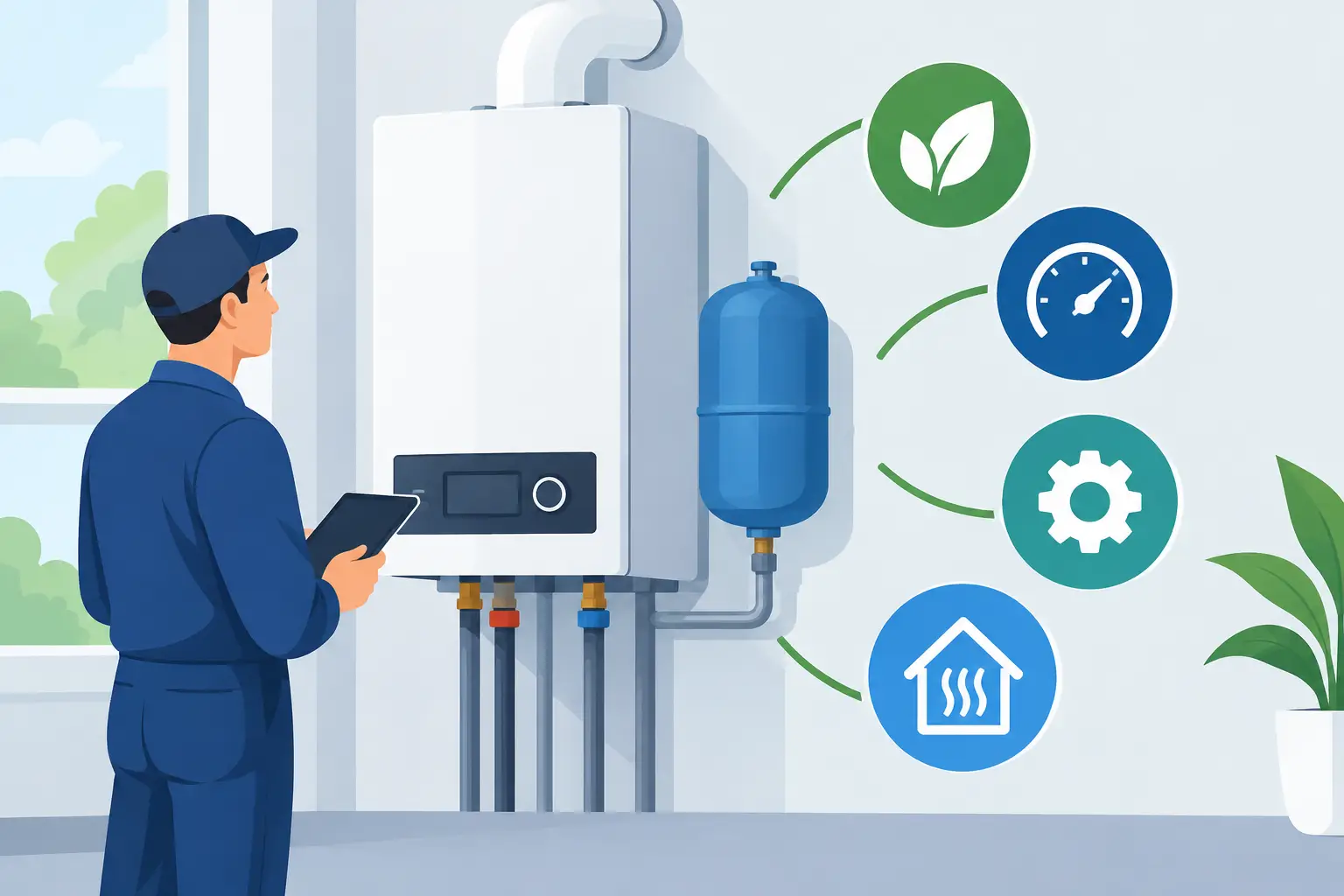
A boiler can be working perfectly and still cost more to run than it should. The most effective top boiler efficiency upgrades do not always mean replacing the appliance itself. Often, the biggest improvements come from how the boiler is controlled, protected and connected to the rest of the heating system.
For homeowners, landlords and property managers, the right choice depends on the boiler’s age, the condition of the system and how the building is used. A fully qualified heating engineer can assess the whole system and recommend improvements that deliver worthwhile comfort and efficiency, rather than simply fitting the newest item available.
Top boiler efficiency upgrades to prioritise
1. Replace an old non-condensing boiler
If a boiler is old, unreliable or non-condensing, replacement is often the most meaningful efficiency upgrade available. Modern condensing boilers recover heat from flue gases that older designs allow to escape. They are designed to run efficiently at lower flow temperatures when paired with suitable controls and correctly sized radiators.
Replacement is not automatically the best first move for every property. A relatively modern condensing boiler that is well maintained may have years of useful life left. In that case, improving controls, cleaning the system and addressing heat loss can be a better use of the budget.
When replacement is needed, correct sizing matters. A boiler that is too large for the property may cycle on and off more frequently, while one that is too small can struggle during periods of high demand. Hot water requirements, number of bathrooms, property size and insulation levels should all be considered before selecting a model.
2. Fit modern heating controls
Controls are one of the most practical upgrades because they help the heating run only when and where it is needed. A basic timer and room thermostat can be improved with programmable controls, smart thermostats, thermostatic radiator valves and, where compatible, weather compensation.
A programmable thermostat lets occupants set heating schedules around their normal routine. Smart controls can add app-based adjustments and learning features, which can be useful in homes with changing schedules or rental properties where heating use needs to be managed sensibly.
The potential saving depends on how the controls are used. Turning the heating up remotely because the house has been empty all day will not reduce bills. The real value is precise scheduling, sensible set temperatures and avoiding unnecessary heating of unused rooms.
Weather compensation is particularly effective on systems designed to operate at lower temperatures. It adjusts the boiler’s flow temperature in response to outside conditions, helping the boiler run more steadily instead of constantly firing at maximum output. Compatibility should always be checked, as not every boiler and control combination supports it.
3. Upgrade thermostatic radiator valves
Thermostatic radiator valves, usually called TRVs, control the temperature of individual rooms by regulating water flow through each radiator. They are a straightforward way to avoid overheating spare bedrooms, hallways or rooms that receive plenty of sunlight.
Traditional TRVs are cost-effective and suitable for many properties. Smart radiator controls offer room-by-room scheduling and greater control, but they are not essential in every home. A well-set conventional TRV system, paired with a reliable main thermostat, can deliver excellent results.
A common issue is fitting TRVs without checking the system design. The room containing the main thermostat often needs at least one radiator valve left fully open, so the thermostat can measure temperature accurately. An engineer can advise on the best arrangement during a heating survey.
4. Clean the system and fit a magnetic filter
Sludge, rust and other debris can build up inside central-heating pipework over time. This can create cold spots in radiators, make the boiler work harder and contribute to component failures. A professional system clean may improve circulation where there is evidence of contamination.
A powerflush is not a cure-all and should not be sold as one. It is most appropriate where there are clear signs of sludge, poor circulation or repeated problems linked to dirty system water. In some cases, a targeted clean and inhibitor top-up may be more suitable.
A magnetic filter is a valuable protective upgrade, particularly when fitting a new boiler to an existing system. It captures magnetic debris before it reaches sensitive boiler components. The filter needs to be cleaned as part of ongoing servicing to remain effective.
5. Balance radiators and improve heat distribution
When some rooms are too warm and others never seem comfortable, the issue may be system balancing rather than boiler output. Balancing adjusts the flow through each radiator so heat reaches the whole property more evenly.
This is especially worthwhile after adding radiators, extending a property or changing the boiler. It can also make a noticeable difference in older homes where pipework layouts have evolved over several years. Efficient heat distribution means occupants are less likely to turn up the thermostat to compensate for one cold room.
Radiator upgrades can help too, but bigger is not always better. Larger or more efficient radiators can allow a boiler to run at lower flow temperatures, which supports condensing operation. However, the calculation should take account of room heat loss, insulation, glazing and the existing pipework.
Reduce heat loss before asking more of the boiler
No boiler upgrade can fully compensate for a building that loses heat quickly. Loft insulation, cavity-wall insulation where suitable, draught-proofing and improved glazing can all reduce demand on the heating system. For many older properties across Bedfordshire and the wider South East, this work can be just as important as the boiler itself.
Hot-water cylinders and exposed heating pipework should not be overlooked. A well-insulated cylinder and properly insulated pipes reduce wasted heat, particularly in airing cupboards, lofts and unheated service areas. If a cylinder is older or poorly insulated, upgrading it may improve stored hot-water performance as well as reduce standing heat loss.
These measures are best planned together. For example, improving insulation may lower the heating requirement enough to influence the correct boiler size when a replacement is due.
Consider the boiler service as part of efficiency planning
Annual servicing is not an upgrade in the usual sense, but it is essential to protecting the value of every upgrade around it. During a service, a qualified engineer checks safe operation, combustion performance, pressure, seals and key components. Small issues can be identified before they become inconvenient breakdowns or expensive repairs.
Boilers and gas appliances should only be worked on by a Gas Safe registered engineer. For landlords, regular gas safety responsibilities also need to be managed correctly, while commercial sites may require a wider planned maintenance programme to support compliance and operational continuity.
Efficiency upgrades for commercial heating systems
Commercial properties need a broader assessment than a typical household. Offices, retail units, warehouses, schools and multi-occupancy buildings can have varied occupancy patterns, multiple heating zones and higher hot-water demands. Replacing plant without reviewing controls, pipework, pumps and usage patterns can leave much of the available saving on the table.
Useful commercial upgrades may include zoning controls, variable-speed pumps, improved insulation to distribution pipework and better time scheduling through a building management system. Where there are multiple boilers, sequencing controls can ensure they operate in the most appropriate order for demand.
The right approach starts with reliable information. Reviewing fuel use, maintenance history, comfort complaints and operating hours will show whether the priority is boiler replacement, control improvements or system refurbishment. This avoids disruptive work that does not address the actual cause of high energy use.
How to choose the right upgrade order
Start with the condition of the existing boiler and system. A boiler that is frequently breaking down, difficult to source parts for or clearly inefficient may justify replacement sooner rather than later. If it is a sound modern boiler, focus first on controls, water quality, balancing and insulation.
It is also worth thinking ahead. If a kitchen extension, loft conversion or additional bathroom is planned, assess the heating and hot-water system before the building work is complete. Planning early makes it easier to size equipment properly and avoid redoing work later.
LCA Maintenance can assess domestic and commercial heating systems, explain the practical options clearly and carry out work with transparent pricing and professional care. The best upgrade is the one that suits the property, protects the system and makes everyday heating simpler to manage.