
A poorly maintained air conditioning unit rarely fails without warning. It may take longer to cool a room, make more noise than usual, leave a musty smell when it starts, or drip water from the indoor unit. Knowing how to maintain air conditioning helps you spot these early signs, keep running costs under control and reduce the chance of losing cooling when you need it most.
For most homeowners and business owners, routine care is straightforward. The key is knowing which checks can be carried out safely and when to call a fully qualified air conditioning engineer. Cleaning a filter is sensible preventative maintenance. Opening sealed refrigerant components or attempting electrical repairs is not.
How to maintain air conditioning between services
The best maintenance routine is regular but uncomplicated. A few minutes every month or two during periods of use can make a noticeable difference to airflow, comfort and energy use.
Clean or replace the filters
Filters catch dust, fibres and airborne particles before they pass through the indoor unit. As they become blocked, the system has to work harder to move air. That can reduce cooling performance, increase electricity use and contribute to unpleasant odours.
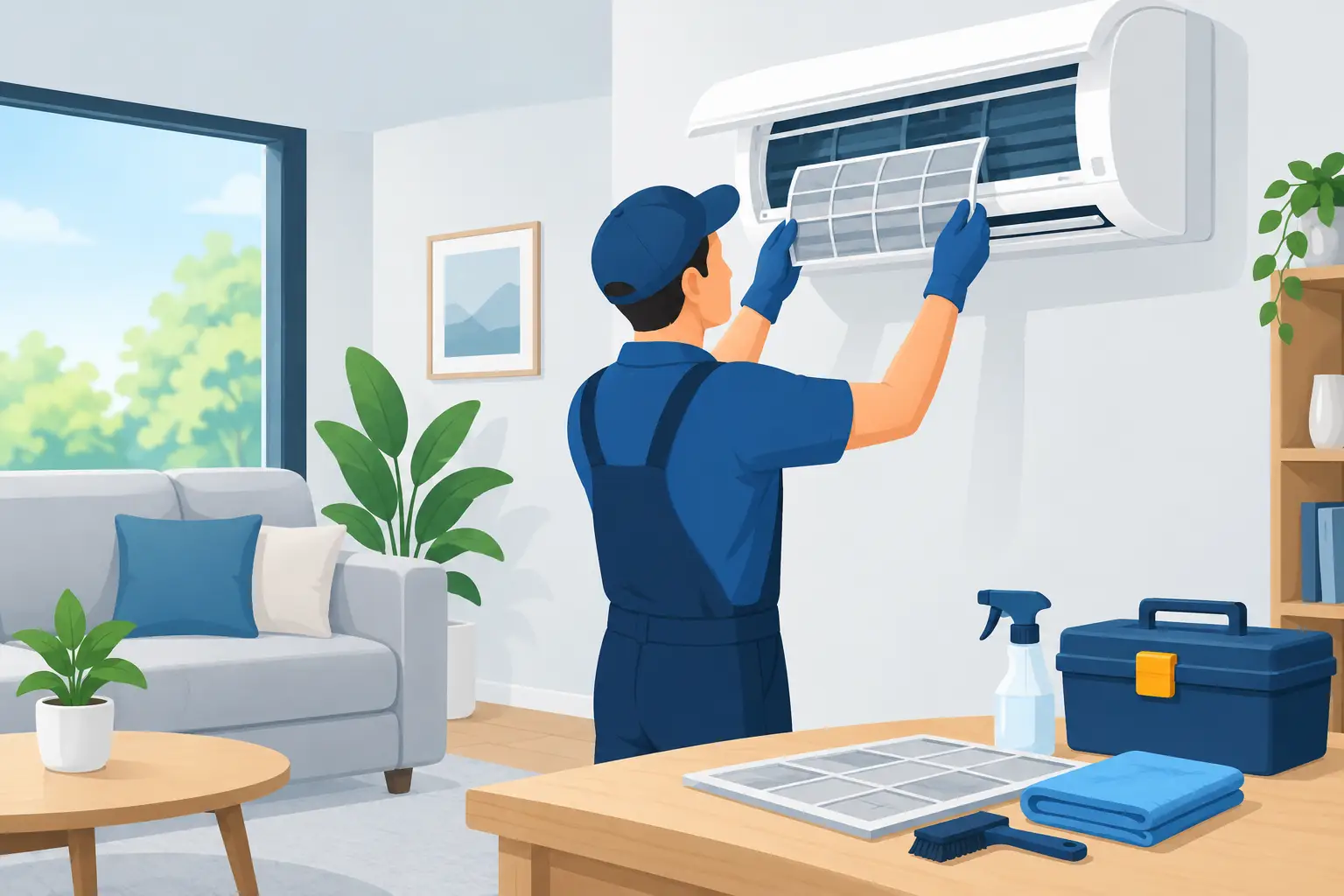
Most wall-mounted split systems have washable mesh filters behind the front panel. Switch the unit off at the isolator or remote control first, then remove the filters in line with the manufacturer’s instructions. Vacuum loose dust or rinse them gently with lukewarm water. Let them dry completely before refitting them. Never run the unit without filters in place.
In a home with pets, smokers, open windows near busy roads or frequent use, filters may need attention every four to six weeks. In a lightly used room, every two to three months may be sufficient. Commercial sites often need more frequent checks because footfall and operating hours are higher.
Keep the outdoor condenser clear
The outdoor unit needs free airflow to release heat. Leaves, grass cuttings, windblown debris and stored items can restrict it, making the system less efficient and placing extra strain on the compressor.
Check the area around the unit regularly, particularly after storms or gardening work. Keep plants, fencing and stored items well away from the grille. Do not cover the condenser while it is operating, and avoid directing a pressure washer at its delicate fins. Bent fins and damaged components can quickly turn a simple clean-up into a repair.
If the outdoor unit is high on a wall, on a roof or otherwise difficult to access, leave the inspection to an engineer. Safe access matters as much as the maintenance itself.
Check for clear drainage
When air conditioning cools air, it also removes moisture. That moisture drains away through a condensate pipe. If the pipe becomes blocked, water can back up into the indoor unit and eventually leak onto walls, ceilings or flooring.
Look for dripping, staining or water around the unit. A slight trickle from an outdoor condensate drain can be normal when the system is cooling, but water escaping indoors is not. Switch the unit off if you see a leak and arrange a professional inspection before using it again. Continuing to run a leaking system risks damage to the property as well as the equipment.
Use sensible settings
Maintenance is not only about cleaning. The way you operate the unit affects wear and efficiency. Setting the temperature extremely low will not cool the room faster – it simply makes the system run for longer. In most occupied spaces, a moderate setting that is comfortably below outdoor temperature is more efficient and avoids an uncomfortable cold blast.
Use timers, schedules and quiet or eco modes where they suit your routine. Keep doors and windows closed while cooling is in use, and use blinds or curtains to reduce strong solar gain. These small measures reduce the load on the system, particularly in south-facing rooms and busy commercial spaces.
What an annual air conditioning service should include
Domestic systems should generally be professionally serviced at least once a year, ideally before warmer weather arrives. Systems used for both cooling and heating, or commercial equipment operating for long hours, may need planned maintenance more often.
A proper service goes beyond wiping down visible surfaces. A qualified engineer will inspect electrical connections, test operation, check airflow and clean relevant internal components. They can examine the evaporator and condenser coils, assess the condition of the fan and drainage arrangement, and identify wear before it becomes a breakdown.
They will also check for refrigerant issues where appropriate. Refrigerant is not something that simply gets used up. If a system is low, it may indicate a leak that needs to be located and repaired. Topping it up without addressing the cause is a short-term fix that can lead to further faults and unnecessary expense.
For commercial premises, planned maintenance should also reflect the building, system type and operational risk. A small office with one split unit has different needs from a restaurant, retail site, server room or multi-zone building. The right schedule depends on how critical cooling is, how often the equipment runs and whether a failure could interrupt trading, affect stock or make working conditions unsuitable.
Signs your air conditioning needs professional attention
Some problems are clear, while others develop gradually. Arrange an inspection if your unit is not cooling or heating as it normally does, repeatedly trips an electrical circuit, gives off a burning or persistent musty smell, makes rattling or grinding noises, or shows ice on pipework or indoor components.
Poor airflow after a filter clean also deserves attention. The cause could be a dirty coil, fan issue, blocked drain, control fault or a problem within the refrigerant circuit. It depends on the system, which is why diagnosis is better than guesswork.
A unit that switches on and off repeatedly may be incorrectly sized, struggling with airflow or experiencing a control issue. Do not keep resetting it in the hope that the fault will clear. Repeated cycling can place additional stress on components and make a minor fault more costly to resolve.
Avoid these common maintenance mistakes
It can be tempting to use strong cleaning sprays, force water through a drain or straighten coil fins with improvised tools. These approaches can damage plastics, electrics and delicate heat-exchanger surfaces. Use only manufacturer-approved cleaning methods for routine tasks.
Avoid blocking the indoor unit with furniture, shelving or heavy curtains. Air needs to circulate freely into and out of the unit. Similarly, do not assume a larger unit is always better. Oversized equipment can cool a room too quickly without managing humidity effectively, while an undersized unit may run constantly. Correct design and installation are part of long-term maintenance because they prevent avoidable strain from the first day of use.
Portable air conditioners need care too. Empty their water container if required, clean filters regularly and make sure the exhaust hose is fitted securely. They are useful for temporary cooling, but they are not maintained in quite the same way as a fixed split system and will not usually deliver the same efficiency or even room temperature control.
A practical maintenance routine for landlords and businesses
For properties with several units, records are as useful as regular cleaning. Keep a simple log of filter cleaning, reported faults, service dates and any repairs. This gives landlords and property managers a clear history of the equipment and helps engineers identify recurring issues.
Businesses should not wait for an outage before arranging support. Planned maintenance can be scheduled around opening hours and quieter periods, reducing disruption for staff, customers and tenants. It also provides a chance to review whether existing equipment still meets the demands of the space.
LCA Maintenance supports domestic and commercial customers with professional air conditioning servicing, repairs and planned maintenance across Bedfordshire and the wider South East. Where a unit needs more than routine care, a qualified engineer can assess the fault clearly and explain the available options with transparent pricing.
A clean filter and clear outdoor unit are good habits, but consistent professional servicing is what protects the system over the long term. Book maintenance before the first hot spell rather than after performance drops, and your air conditioning will be far more likely to deliver quiet, reliable comfort when it matters.