
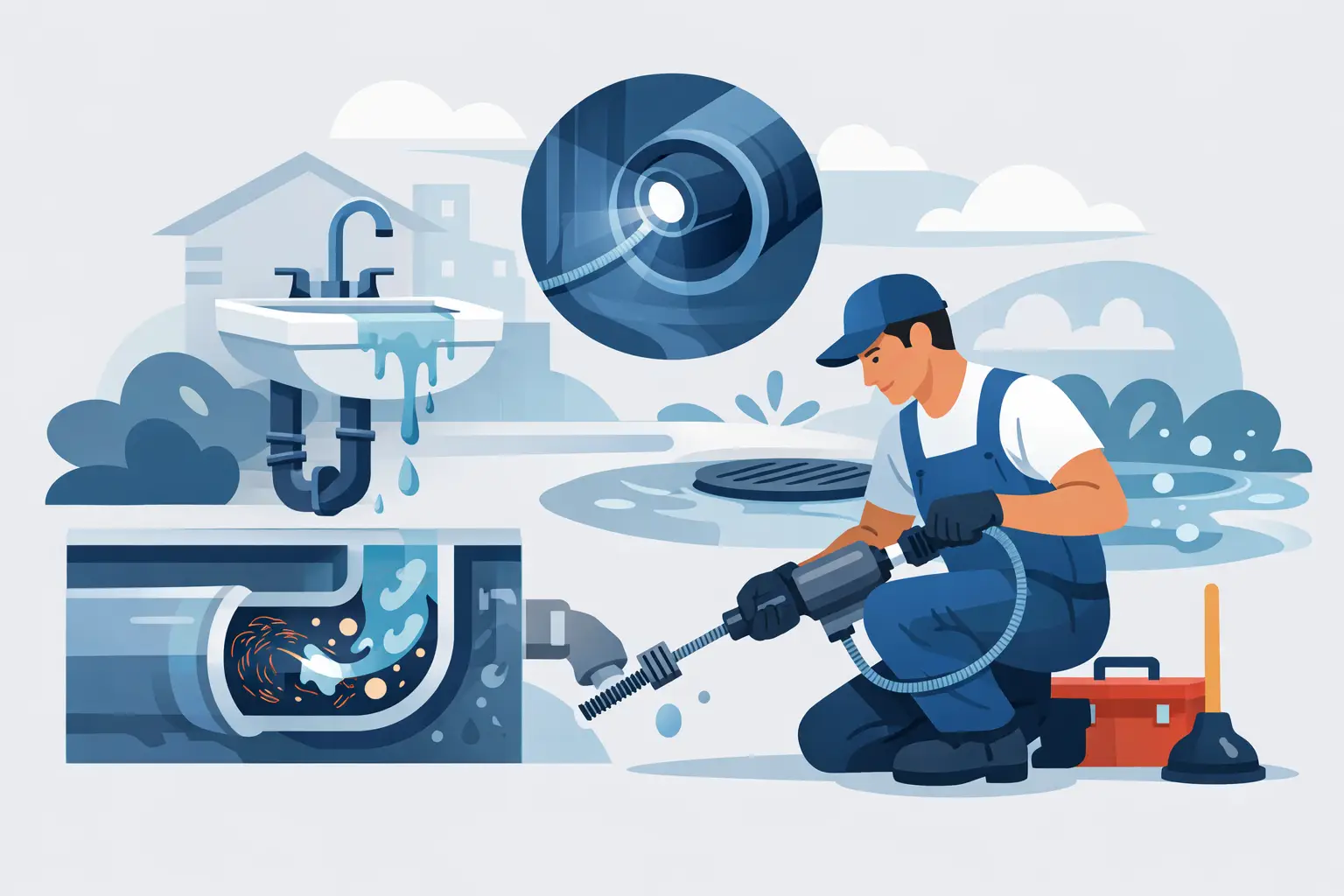
A blocked drain rarely starts as a major emergency. More often, it begins with a slow-draining sink, a shower tray that holds water a little longer than usual, or an outside gully giving off an unpleasant smell after rain. That is usually the point when drain unblocking services make the most difference – before a minor restriction turns into an overflow, property damage, or a complete loss of use.
For homeowners, landlords and commercial sites, the real issue is not only clearing the blockage. It is finding the cause, restoring proper flow, and making sure the problem does not return a week later. A quick fix has its place, but dependable drainage work is about diagnosis as much as speed.
When drain unblocking services are the right call
Not every drainage issue needs urgent attendance, but many do benefit from prompt action. If water is backing up into sinks, toilets are slow to clear, or foul odours are coming from internal waste pipes or external drains, there is usually a restriction somewhere in the system. Left alone, that restriction can worsen as grease, wipes, silt, scale or debris continue to build.
In domestic properties, the first signs are often easy to dismiss. A bathroom basin draining slowly may look like a small inconvenience, and a kitchen sink blockage can seem like something a bottle of drain cleaner might solve. Sometimes it will help temporarily. Just as often, it masks the symptom without dealing with the build-up deeper in the pipework.
On commercial premises, delays can be more costly. A blocked drain in a workplace, retail unit, managed property or hospitality setting can quickly affect hygiene, staff welfare and day-to-day operations. In those cases, speed matters, but so does working with engineers who can identify whether the issue is isolated or part of a wider maintenance concern.
Common causes of blocked drains
The cause depends on where the blockage sits and how the system is used. Kitchen waste pipes commonly suffer from fat, oil, grease and food residue. Bathroom drains are more likely to collect hair, soap scum and limescale. Toilets and soil pipes often block because of wipes, sanitary products or excess paper.
Outside drainage brings a different set of issues. Leaves, mud, broken pipework, root ingress and displaced joints can all restrict flow. Heavy rainfall may expose a drain that was already partially obstructed, while older systems sometimes develop recurring faults because the pipe itself has deteriorated.
This is where experience matters. Two properties can show the same symptom – say, a slow-draining sink or overflowing gully – and have completely different underlying causes. One may need a straightforward mechanical clear. The other may need jetting, repair work or a camera survey to confirm damage within the line.
What a professional drainage visit should involve
Good drain unblocking services should start with a clear assessment. That means understanding which fixtures are affected, how long the issue has been present, whether the problem is internal or external, and whether there are signs of repeated failure. It sounds basic, but proper diagnosis avoids wasted time and unnecessary cost.
Once the likely location of the blockage is identified, the engineer will choose the most suitable method to clear it. That may include manual rodding, mechanical equipment or high-pressure water jetting. The right approach depends on pipe size, access, the nature of the obstruction and the condition of the system.
For straightforward blockages, unblocking may be enough. For recurring or more serious issues, further inspection is often the sensible next step. A CCTV drain survey can reveal cracked pipes, root intrusion, poor falls, collapsed sections or stubborn deposits that keep causing trouble. If those issues are not addressed, the same call-out can repeat itself unnecessarily.
A professional service should also leave the customer with a clear explanation. Was the blockage caused by misuse, wear and tear, external debris or damaged pipework? Is any repair recommended now, or can it be monitored? Straightforward advice helps customers make practical decisions rather than guessing what happens next.
Methods used to clear blocked drains
There is no single method that suits every blockage. Simple internal waste pipe restrictions may respond to mechanical tools designed to remove local build-up safely. More substantial blockages in external drains often need high-pressure jetting to break down compacted debris and flush the line through properly.
Jetting is effective, but it is not always the first choice. On fragile or damaged pipework, pressure must be used carefully. Likewise, if a blockage is caused by a structural defect rather than accumulated waste, clearing it without addressing the defect may only provide temporary relief.
Rodding can still be useful for some external drainage problems, especially when access is straightforward. CCTV inspection becomes particularly valuable where the cause is unclear, where blockages keep returning, or where there is concern about pipe damage. The strongest drainage response is rarely about using the most aggressive method. It is about using the right one.
Why recurring blockages need a closer look
A drain that blocks once may be an isolated issue. A drain that blocks repeatedly usually points to something more. That might be poor disposal habits, such as pouring fat down the sink or flushing unsuitable items. It could also indicate scale build-up, incorrect pipe gradients, tree root ingress or partially collapsed drainage runs.
Recurring issues are where short-term fixes become expensive. Repeated emergency attendance, lost time, disruption to tenants or staff, and potential water damage soon add up. For landlords and property managers, it also raises questions about tenant responsibility, maintenance planning and whether the drainage system is fit for continued use.
In these situations, a more thorough approach often saves money over time. That may mean combining unblocking with a survey, repair recommendations or planned maintenance if the site has a history of drainage problems. For commercial properties in particular, prevention is usually far more cost-effective than repeated reactive call-outs.
Domestic and commercial needs are not always the same
The basics of drainage are the same, but service expectations are different. In a home, the priority is often restoring essential facilities quickly and keeping disruption low. Customers want a friendly, tidy and reliable service that resolves the issue without overcomplicating it.
Commercial clients usually need a broader response. They may require attendance outside standard hours, reporting for maintenance records, coordination with facilities teams, or support across multiple systems on the same site. In those settings, drainage work is often part of wider building maintenance rather than a one-off task.
That is why it helps to work with a contractor used to both reactive and planned work. A blocked drain can be a single event, but it can also be a sign of wider maintenance pressures within a property portfolio or business premises.
How to reduce the risk of future blockages
No drainage system is completely maintenance-free, but sensible habits make a real difference. In kitchens, avoid pouring fats, oils and food waste into sinks. In bathrooms, keep hair and soap residue under control where possible. Toilets should only be used for waste and toilet paper, even if packaging claims certain products are flushable.
Outside, regular checks matter more than many property owners realise. Gullies, covers and surface water drains can collect leaves, silt and general debris over time. If these areas are ignored, the problem may not become obvious until heavy rain tests the system properly.
For sites with a known history of drainage issues, periodic inspection can be worthwhile. That is especially true for older properties, commercial kitchens, managed blocks and buildings with mature trees near underground pipework. A planned approach is not always necessary, but in the right setting it prevents disruption and protects the property.
Choosing a contractor for drain unblocking services
When drainage problems need attention, customers are usually looking for the same things: a fast response, clear pricing, qualified engineers and confidence that the issue will be handled properly. Those are reasonable expectations. Drainage work affects hygiene, day-to-day comfort and, in some cases, the safety of the building environment.
It is worth choosing a provider that can do more than simply attend and clear the immediate blockage. If the issue turns out to involve damaged pipework, related plumbing concerns or ongoing maintenance needs, joined-up technical support is a clear advantage. For customers across Milton Keynes, Luton, Bedfordshire and the wider South East, that often means looking for a contractor with both reactive capability and broader property services experience.
The best outcome is not just a working drain by the end of the visit. It is knowing what caused the issue, whether it is likely to happen again, and what should be done next if the answer is not straightforward.
If a drain is slow, overflowing or producing unpleasant smells, acting early nearly always gives you more options. A prompt professional assessment can turn an inconvenient blockage into a manageable repair, before it becomes the kind of problem that affects the whole property.