
A radiator not heating up properly usually shows itself at the worst possible moment – a cold morning, a tenant complaint, or a room that never quite gets warm no matter how high the thermostat is set. Sometimes the fault is isolated to one radiator. Sometimes it points to a wider heating system issue. Either way, the key is working out whether you are dealing with trapped air, a balancing problem, sludge, a faulty valve or something more serious around the boiler or pump.
Why a radiator is not heating up properly
Radiators heat unevenly for a reason. The pattern of the cold spots often tells you what is going wrong.
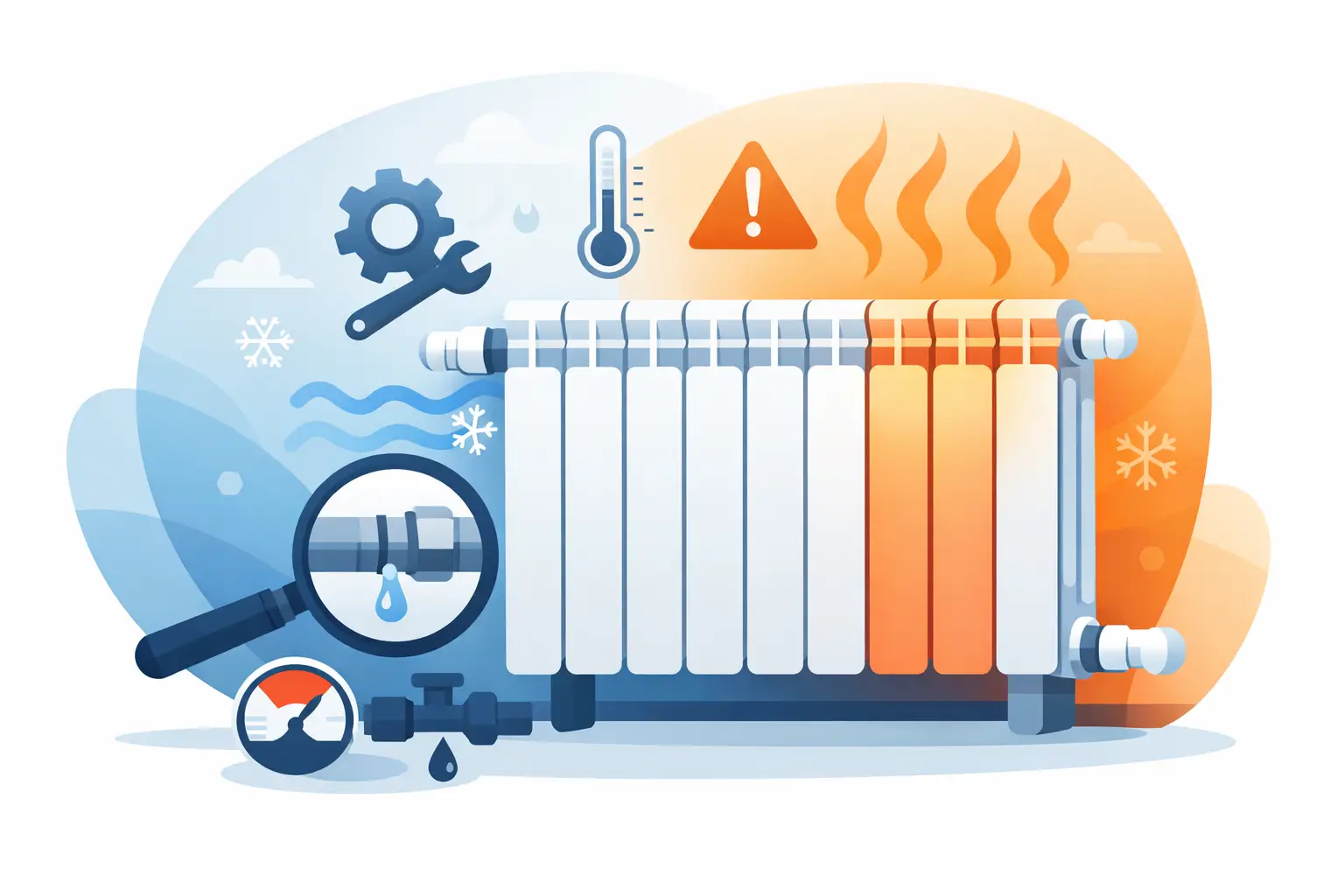
If the radiator is cold at the top but warm at the bottom, trapped air is a common cause. Air collects inside the system and stops hot water from filling the radiator properly. If it is warm at the top but cold at the bottom, sludge and debris are more likely. Over time, corrosion and dirt settle in the lower part of the radiator and restrict water flow.
If one radiator stays cold while others work normally, the issue may be a stuck thermostatic radiator valve, a closed lockshield valve or poor system balancing. If several radiators are underperforming, the problem may sit further back in the system, such as low boiler pressure, a failing pump or circulation issues.
That is why there is no single fix for every radiator not heating up properly. The symptoms matter.
Start with the simple checks
Before assuming the radiator needs replacing, it makes sense to rule out the obvious. First check the thermostat setting and make sure the heating is actually calling for heat. It sounds basic, but it is often the first thing missed in busy homes and managed properties.
Next, feel the pipework leading into the radiator. If the pipes are hot but the radiator remains cold, the problem is usually local to that radiator. If the pipes are also cool, the fault may be elsewhere in the system.
Look at the thermostatic radiator valve head if one is fitted. If it has been turned down, knocked, or left at a frost setting, the radiator will not heat as expected. On some older valves, the internal pin can seize in place after months of little use, especially outside the main heating season.
Also check whether both radiator valves are open. It is not unusual for a lockshield valve to have been closed during previous maintenance and never properly reset.
Bleeding a radiator not heating up properly
A radiator that is cold at the top often needs bleeding. This releases trapped air and allows hot water to circulate fully again.
With the heating off and the system cooled slightly, place a cloth under the bleed valve and open it carefully with a radiator key. You should hear air escaping. Once water begins to come through steadily, close the valve. The radiator may then heat more evenly when the system is turned back on.
After bleeding, check the boiler pressure. On many sealed systems, releasing air can reduce pressure enough to affect performance. If the pressure has dropped below the recommended range, the system may need repressurising in line with the boiler manufacturer’s guidance.
If air returns regularly, that points to a bigger issue. Repeated bleeding is not really a solution. It can suggest corrosion, small leaks, or ongoing problems with system water quality.
When the bottom of the radiator stays cold
If the radiator is hot across the top but cold lower down, sludge is a likely culprit. This build-up restricts circulation and reduces heat output, so the radiator may feel lukewarm even when the boiler is working hard.
Sludge tends to develop gradually. You may notice some rooms taking much longer to heat, certain radiators needing frequent bleeding, or discoloured water when the system is drained. In more advanced cases, the issue affects boiler efficiency too, because poor circulation forces the system to work harder for less result.
Flushing may resolve the problem, but it depends on the condition of the system. A single radiator can sometimes be removed and cleaned through. In other cases, a wider chemical flush or powerflush is more appropriate. The right option depends on the age of the installation, the level of contamination and whether there are signs of damage elsewhere.
Valves, balancing and circulation issues
Not every radiator problem is caused by air or sludge. Sometimes the radiator itself is fine, but the system is distributing heat unevenly.
Stuck thermostatic radiator valves
A TRV can stick closed, especially after sitting in the same position for months. When this happens, turning the head up and down does not actually open the valve inside. An engineer can usually confirm this quickly and free or replace the faulty part if needed.
Poorly balanced radiators
Balancing is the process of adjusting radiators so hot water is shared properly around the property. If radiators nearest the boiler heat quickly while those further away stay cool, balancing may be the issue. This is common after new radiators are fitted, pipework is altered, or other heating work has been carried out without a full recommission.
Pump or flow problems
If several radiators are not heating well, especially on upper floors or at the far end of the building, the circulation pump may be struggling. There may also be restrictions in the pipework, low system pressure or faults with motorised valves. At that stage, a professional diagnosis is usually the quickest route to the right repair.
Could the boiler be responsible?
Yes – particularly if the radiator fault is not isolated.
A boiler with low pressure, air in the system, pump issues or controls problems can lead to radiators heating poorly. In some properties, the heating comes on but never reaches full temperature because the boiler cycles incorrectly or cannot maintain proper circulation.
Combi boilers and system boilers can both show these symptoms, although the causes vary. In commercial or larger domestic properties, zoning controls and multiple circuits add another layer. One cold radiator may be straightforward. Several underperforming emitters across different areas often need a more technical assessment.
If you also have unusual boiler noises, fluctuating pressure, or intermittent hot water problems, do not treat the radiator as a standalone issue.
When to call a heating engineer
There is a sensible line between basic checks and work that should be left to a qualified professional. Bleeding a radiator and checking valve settings are reasonable first steps. Beyond that, it depends on what you find.
If the radiator stays cold after bleeding, if the valve appears stuck, if the boiler pressure keeps dropping, or if multiple radiators are not heating up properly, it is time to get the system checked. The same applies if you suspect sludge, circulation faults or a hidden leak.
For landlords and property managers, a recurring radiator issue is also a maintenance issue. Delaying it can lead to larger repair costs, tenant dissatisfaction and higher energy use. A system that is only partly working rarely fixes itself.
A fully qualified heating engineer can test circulation, inspect valves, assess boiler performance and advise whether the answer is a small repair, system balancing, flushing or a component replacement. That is usually faster and more cost-effective than trial and error.
Preventing radiator heating problems in future
The best prevention is regular heating system care. Annual boiler servicing helps identify pressure, pump and control issues early. Keeping inhibitor levels correct helps reduce corrosion and sludge build-up. If radiators need frequent bleeding, that should be investigated rather than accepted as normal.
It also helps to pay attention after any heating upgrades. Replacing a boiler, adding radiators or altering pipe runs can change system behaviour. Without proper balancing and commissioning, some rooms may heat well while others never feel comfortable.
In older properties, especially those with a mixed heating history, uneven radiator performance can be a sign that the system has outgrown piecemeal repairs. At that point, a planned upgrade may offer better comfort and lower running costs than repeated call-outs.
For homes and businesses across places such as Milton Keynes, Bedfordshire and the wider South East, winter heating demand tends to expose weak points quickly. Getting them sorted early is far easier than waiting for a full breakdown in colder weather.
If your radiator is not heating up properly, treat it as useful early warning rather than a minor annoyance. A small issue with air or a valve can often be resolved quickly. A bigger fault, caught early, is usually simpler and less disruptive to put right.