
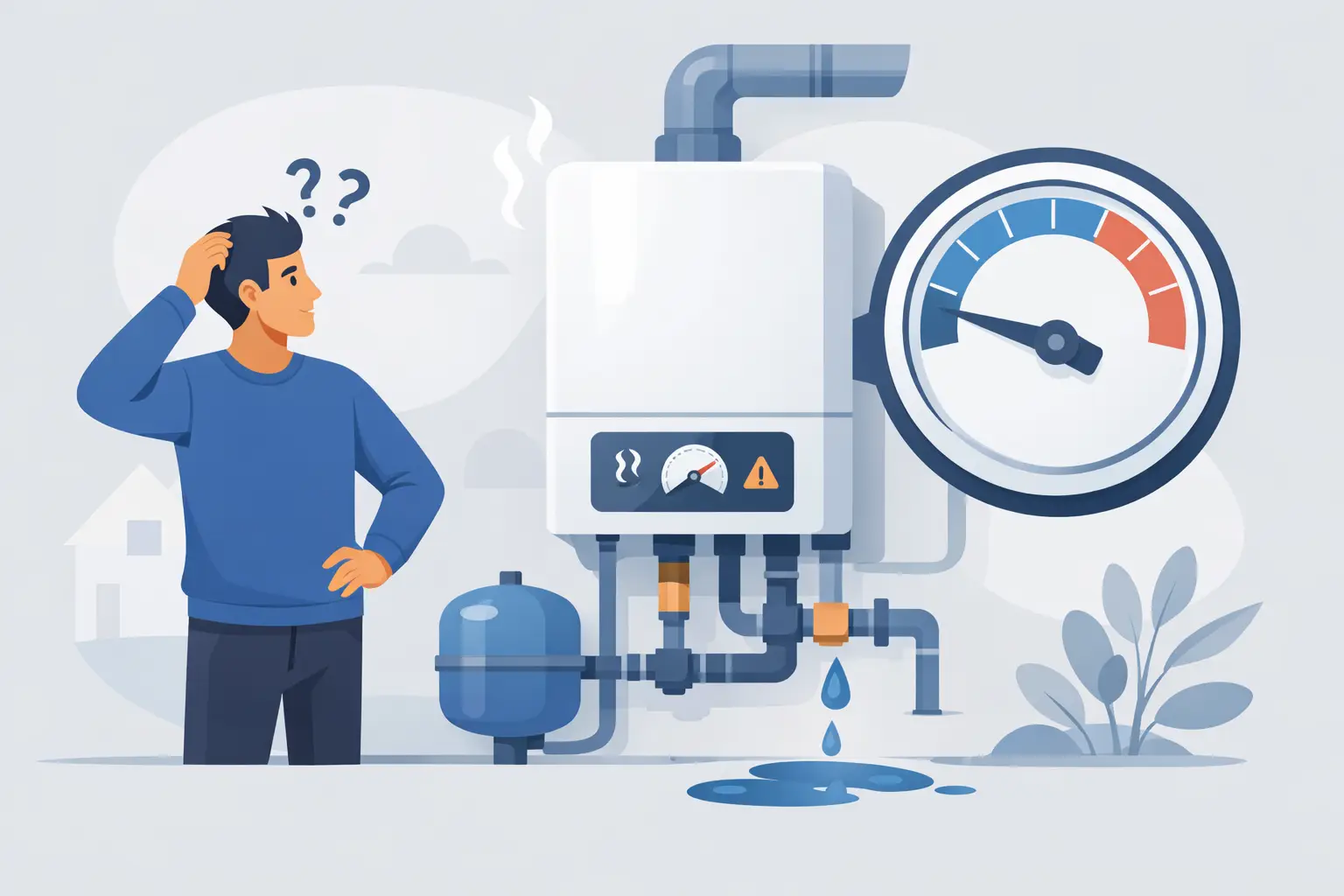
You top the boiler pressure up, the heating comes back on, and a day or two later the gauge has dropped again. If you are asking why is my boiler losing pressure, the short answer is that water is escaping somewhere from a sealed heating system, or the system is releasing pressure when it should not.
That does not always mean a major fault, but it does mean something needs attention. A small leak, a failing expansion vessel, a problem with the pressure relief valve, or air being bled from radiators can all bring pressure down. The right response depends on how quickly the pressure is falling and whether there are any other signs, such as drips, cold radiators, or boiler fault codes.
Why is my boiler losing pressure in the first place?
Most modern boilers in UK homes are sealed systems. That means the water circulating around your radiators and pipework is kept under pressure so the heating system can operate properly. On most domestic systems, the normal cold pressure sits around 1 to 1.5 bar, although the exact figure depends on the manufacturer.
If the pressure keeps dropping below the recommended range, the boiler may lock out or stop working efficiently. You might notice the heating cutting out, the hot water becoming unreliable, or an error message appearing on the display. The pressure gauge itself is useful, but it only tells you there is a problem – not exactly where the fault sits.
A small drop is not always a crisis
It is normal for pressure to move slightly as the system heats up and cools down. A minor change on the gauge is usually nothing to worry about. What is not normal is needing to repressurise the system regularly, or seeing the gauge fall back to zero over a short period.
If you have topped it up once after bleeding radiators, that can be perfectly routine. If you are doing it every week, there is almost certainly an underlying issue.
The most common reasons a boiler loses pressure
In practice, the cause is usually one of a handful of faults. Some are easy to spot, while others need a qualified heating engineer to test properly.
Water is leaking from the heating system
This is one of the most common causes. Even a very small leak from a radiator valve, pipe joint, towel rail, or under-floor heating circuit can gradually reduce system pressure. The difficulty is that not every leak is obvious. Water can evaporate from hot pipework or soak into flooring before you notice any visible damage.
Check around radiators, especially at the valves and bleed points. Look for staining on ceilings, marks on skirting boards, damp patches on carpets, or corrosion on exposed pipework. If the leak is under floorboards or in concealed pipework, the only visible clue may be repeated pressure loss.
The expansion vessel has lost its charge
The expansion vessel helps absorb the extra volume created when water heats up. If it loses its air charge or the internal diaphragm fails, the system pressure can rise too high when the boiler is running and then drop too low once it cools. That often leads to pressure swings rather than a steady, stable reading.
A faulty expansion vessel is not usually something a homeowner can confirm without the right tools. It needs testing and, in some cases, recharging or replacing.
The pressure relief valve is passing water
The pressure relief valve is a safety device designed to release water if pressure climbs too high. If it has lifted due to a fault, or if debris stops it sealing properly afterwards, it may continue to let water out through the discharge pipe. That can slowly drain pressure from the system.
You may notice water dripping outside from a copper pipe on an external wall, often near the boiler. If that pipe is wet when the heating has been running, the pressure relief valve could be involved.
Bleeding radiators has reduced system pressure
If you have recently bled radiators to remove trapped air, the pressure may need topping up afterwards. That is because releasing air can reduce the system pressure enough to bring the reading below the boiler’s operating range.
This is usually a one-off adjustment. If air keeps building up in radiators and the pressure keeps dropping, there may be a deeper issue, such as a leak drawing air into the system or corrosion gases forming in older pipework.
A fault inside the boiler
Sometimes the pressure loss comes from an internal boiler component rather than the wider heating system. Plate heat exchangers, internal seals, automatic air vents, and other parts can all develop faults over time. Because these components sit inside the case, diagnosis should be left to a Gas Safe registered engineer.
What you can safely check yourself
There are a few sensible checks you can carry out before booking a repair. The key is to stick to basic external observations rather than opening the boiler case or attempting repairs yourself.
Start with the pressure gauge. If it is below the recommended range, note where it sits when the boiler is cold and check whether it drops further over the next 24 to 48 hours. If pressure falls quickly, that points more strongly to a fault than a one-off fluctuation.
Next, inspect visible radiators, valves, and exposed pipework. Run a dry tissue around valve connections and underneath joints to see if there is moisture. Check around the boiler for drips, and if there is a discharge pipe outside, see whether water is coming from it.
If you have recently bled radiators, you may simply need to top the pressure up once using the filling loop, following the manufacturer instructions. Do not overfill the system. Too much pressure can create a different set of problems.
When repressurising is fine – and when it is not
A lot of homeowners want to know whether they can just keep topping the pressure up. Occasionally, yes. Regularly, no.
If you have bled the radiators, or the pressure has dropped slightly over a long period, a one-time top-up can be perfectly reasonable. If the pressure then stays stable, there may be nothing more to worry about.
If the boiler loses pressure again soon after, repeatedly repressurising is only masking the fault. Fresh water entering the system again and again can also increase corrosion over time, which is bad news for radiators, valves, and heat exchangers. In rental properties and commercial buildings, repeated pressure loss can also become a wider maintenance issue if heating reliability is affected.
Signs you should call an engineer promptly
Pressure loss is not always an emergency, but there are times when it should be treated as urgent. If the boiler is locking out, if water is leaking through the ceiling, if you can see active dripping from pipework, or if the pressure drops to zero shortly after topping up, it is best to get it checked without delay.
The same applies if the boiler pressure rises sharply into the red when the heating is on and then falls back once it cools. That pattern often suggests an expansion vessel or pressure relief problem rather than a simple external leak.
For landlords and property managers, quick action matters for another reason. A boiler that keeps losing pressure can turn into a no-heating or no-hot-water callout at the worst possible time, especially in colder weather. Early diagnosis is usually cheaper and less disruptive than waiting for a complete breakdown.
How a heating engineer diagnoses boiler pressure loss
A proper diagnosis is more than a quick top-up. A qualified engineer will usually check the system pressure behaviour cold and hot, inspect visible pipework and radiators, test the expansion vessel, assess the pressure relief valve, and look for internal leaks within the boiler.
In some cases, the fault is straightforward and repaired during the same visit. In others, especially where leaks are hidden in floors or walls, further investigation may be needed. That is where using a trusted, fully qualified company matters. You want a clear explanation of the fault, transparent pricing, and a repair that solves the cause rather than just resetting the symptom.
Can boiler pressure loss be prevented?
Sometimes yes, sometimes no. Components do wear out, especially on older systems, but regular boiler servicing gives you a better chance of catching early signs before they turn into repeat pressure issues. Small drips, weakening valves, and expansion vessel problems are often easier to deal with when spotted early.
It also helps to keep an eye on the pressure gauge from time to time, particularly after radiator bleeding, heating works, or long periods when the system has been off. If you manage multiple properties across places such as Milton Keynes, Luton or Cambridge, routine checks can prevent avoidable tenant complaints and last-minute emergencies.
If you are still wondering why is my boiler losing pressure, the answer is usually simple in principle but not always obvious in practice: pressure only drops when something in the system is letting water out or failing to control it properly. The sooner that is identified, the sooner your heating returns to being what it should be – reliable, safe, and one less thing to worry about.