
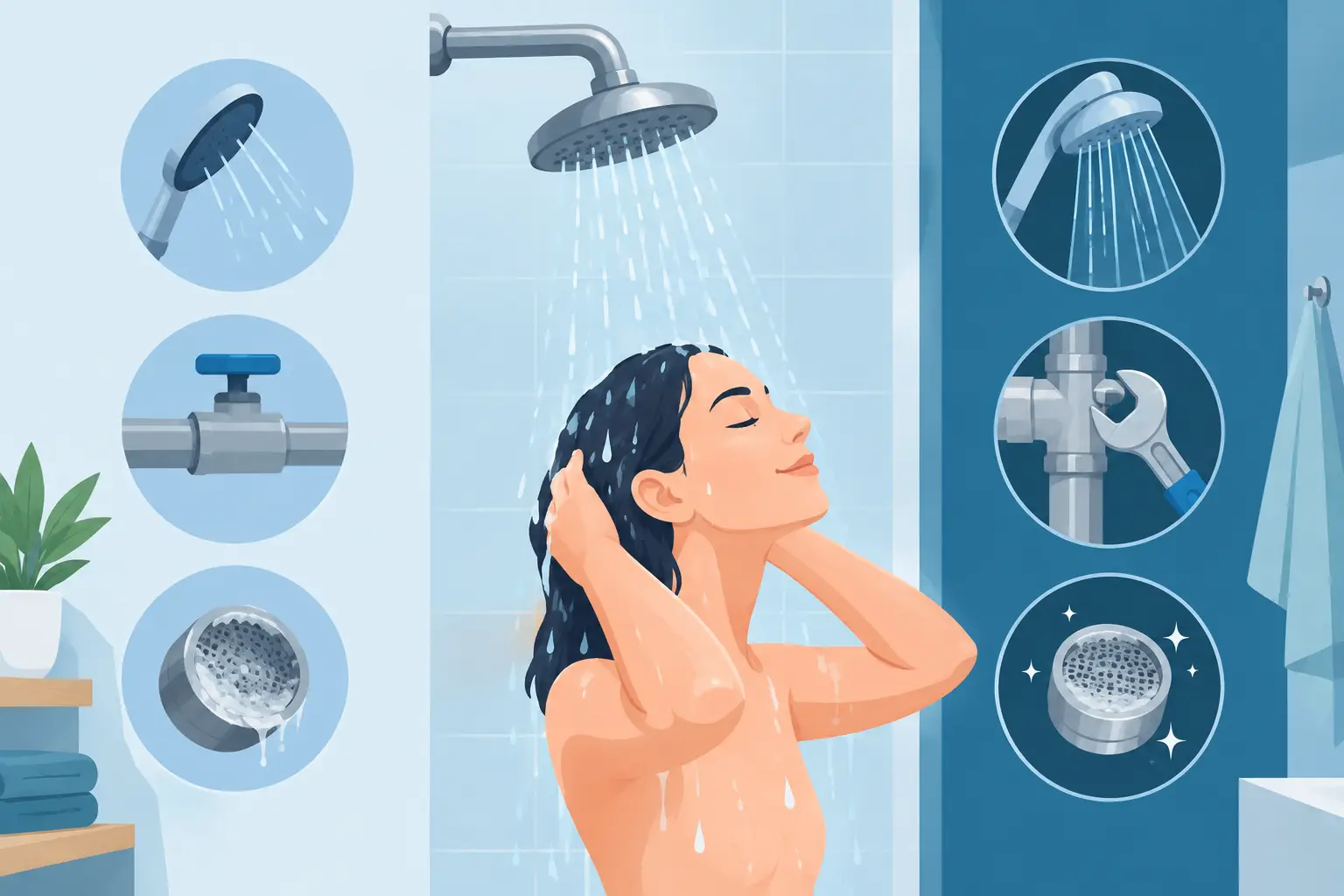
A shower that drops from a proper rinse to a weak trickle can make a normal morning feel unnecessarily difficult. If you are asking, why is shower pressure low, the answer is not always a fault with the shower itself. The cause could be as simple as a scaled shower head, or it may point to a wider issue with your plumbing, boiler, water supply or pressure-boosting equipment.
The quickest way to get to the right solution is to notice when the problem happens. Is every tap affected, or only the shower? Is the flow poor on hot water, cold water, or both? These details help a qualified plumber identify the issue without wasting time or money on the wrong repair.
Why is shower pressure low in one bathroom?
When the kitchen tap and other bathrooms have a normal flow, but one shower feels weak, the problem is often local to that shower. A blocked shower head is one of the most common causes, particularly in hard-water areas. Limescale builds up inside the nozzles and restricts the water passing through them, even when the pipework behind the wall is working correctly.
Remove the shower head if it is easy and safe to do so, then inspect the spray plate for white or chalky deposits. Soaking it in a suitable descaling solution can help, followed by gently clearing the individual nozzles. Avoid forcing sharp objects into them, as this can damage the finish or widen the holes unevenly.
A clogged shower hose can cause the same symptoms. Internal hose linings can deteriorate, twist or become restricted over time. If the flow improves noticeably with the shower head removed, the head or hose is a likely culprit rather than the valve or supply pipe.
A partially closed valve or a shower cartridge fault
Isolation valves may be fitted close to the shower, in an airing cupboard or beneath a bath. If one has been knocked, partially closed during previous work, or has started to fail internally, it can reduce flow to the shower. These valves should not be adjusted unless you know exactly what they serve, as closing the wrong one can interrupt supplies elsewhere in the property.
Mixer showers also contain cartridges that control temperature and flow. Sediment, limescale and worn internal seals can affect their operation. A failing cartridge may produce poor pressure on one temperature setting, inconsistent water temperature, or a noticeable reduction in flow whenever the handle is moved. Cartridge replacement needs the correct part for the shower model and should be completed carefully to prevent leaks inside the wall or enclosure.
Check whether the issue affects hot, cold or both
A simple comparison gives useful clues. Run the shower on fully cold, then fully hot, where safe to do so, and compare the flow. Do the same at nearby basin taps.
If the cold flow is strong but the hot flow is poor throughout the house, the issue may be related to the boiler, hot water cylinder, pump, pipework or a valve on the hot supply. For combi boiler systems, low incoming mains flow or a restriction inside the appliance can affect shower performance. A boiler fault should always be assessed by a Gas Safe registered engineer.
If hot and cold water are both weak at the shower but other outlets are fine, focus first on the shower head, hose, mixer valve or shower filter. If every outlet is weak, however, it is more likely to be a property-wide supply or pressure problem.
Low water pressure across the property
Mains water pressure can vary by location, time of day and demand on the local network. It is not unusual to notice a lower flow at busy periods, particularly in larger households when several taps, appliances and showers are running at once. A shower may struggle if someone starts the washing machine, runs a bath or uses another bathroom.
Older properties can also have undersized or corroded pipework. Internal deposits reduce the effective diameter of pipes over many years, restricting the amount of water reaching outlets. This is not something that a new shower head will resolve. Depending on the condition and layout of the system, a plumber may recommend targeted pipework alterations, replacement sections or a different shower arrangement.
Before assuming the mains supply is at fault, check that the internal stopcock is fully open. It is commonly located under the kitchen sink, in a utility area or near the point where the water supply enters the property. Stopcocks can stiffen with age, so do not force one that has not been operated for years. If it is seized, leaking or difficult to move, arrange for a plumber to inspect it.
Could there be a leak?
A hidden leak can lower available pressure and cause damage long before it becomes obvious. Warning signs include unexplained damp patches, a constantly moving water meter when no water is being used, mouldy smells, higher-than-expected bills, or a boiler pressure gauge that repeatedly falls.
Not all pressure loss means there is a leak, but it should be investigated promptly if the drop is sudden or accompanied by any of these signs. Water escaping under floors, behind walls or in ceilings can quickly become a more costly repair.
Gravity-fed systems and shower pumps
Some homes have gravity-fed hot and cold supplies, typically with a cold-water storage tank in the loft and a hot water cylinder. These systems can provide lower shower pressure than a mains-fed combi boiler arrangement, especially if the shower is positioned close to the level of the tank or is supplied from unsuitable pipework.
A shower pump can improve performance in the right circumstances, but it is not a universal answer. The pump must be suitable for the plumbing layout, the shower type and the available water supply. It must also be installed correctly, with appropriate pipe sizing and electrical safety considerations. Fitting a pump to a mains-fed supply where it is not permitted can create problems rather than solve them.
Similarly, a high-pressure shower head may make a modest improvement by changing the spray pattern, but it cannot create water pressure that is not present. It is a useful finishing touch after the underlying cause has been resolved, not a substitute for proper diagnosis.
Electric showers need a different approach
An electric shower heats cold water as it passes through the unit. Its apparent pressure depends on both the incoming cold-water flow and the temperature setting. In colder weather, the unit has to heat the water more, so reducing the flow setting may be necessary to maintain a comfortable temperature. This can make the shower feel weaker even though there is no fault.
Blocked inlet filters, limescale, failing solenoid valves or issues with the water supply can also reduce an electric shower’s flow. Never remove the cover or attempt internal repairs unless you are competent and the electrical supply has been safely isolated. Electric showers combine water and electricity, so faults should be handled by an appropriately qualified professional.
What you can safely do before booking a repair
Start with the straightforward checks: test other taps, try hot and cold settings separately, inspect the shower head for limescale, and make a note of whether the problem is constant or intermittent. If your boiler has a pressure gauge, record the reading, but do not repeatedly repressurise a system that keeps losing pressure.
Avoid dismantling concealed valves, boiler components or electrical shower units. A small restriction is often simple to fix, but guessing can lead to damaged seals, hidden leaks or unsafe work. Clear observations allow an engineer to arrive prepared with the right parts and investigate efficiently.
When to call a qualified plumber
Arrange professional help if cleaning the shower head does not improve the flow, the problem affects multiple outlets, or pressure has dropped suddenly. You should also call for assistance if you can see a leak, hear water running when everything is turned off, experience repeated boiler pressure loss, or have erratic hot water temperatures.
For homeowners, landlords and property managers, a reliable shower is about more than comfort. It can indicate whether the water and heating systems are operating as they should. LCA Maintenance can assess shower pressure problems across Bedfordshire and the surrounding areas, explain the cause clearly and provide transparent recommendations for repair or improvement.
A weak shower does not always require major work, but it does deserve the right diagnosis. Deal with the simple checks first, then bring in a trusted, fully qualified engineer when the evidence points beyond the shower head.