
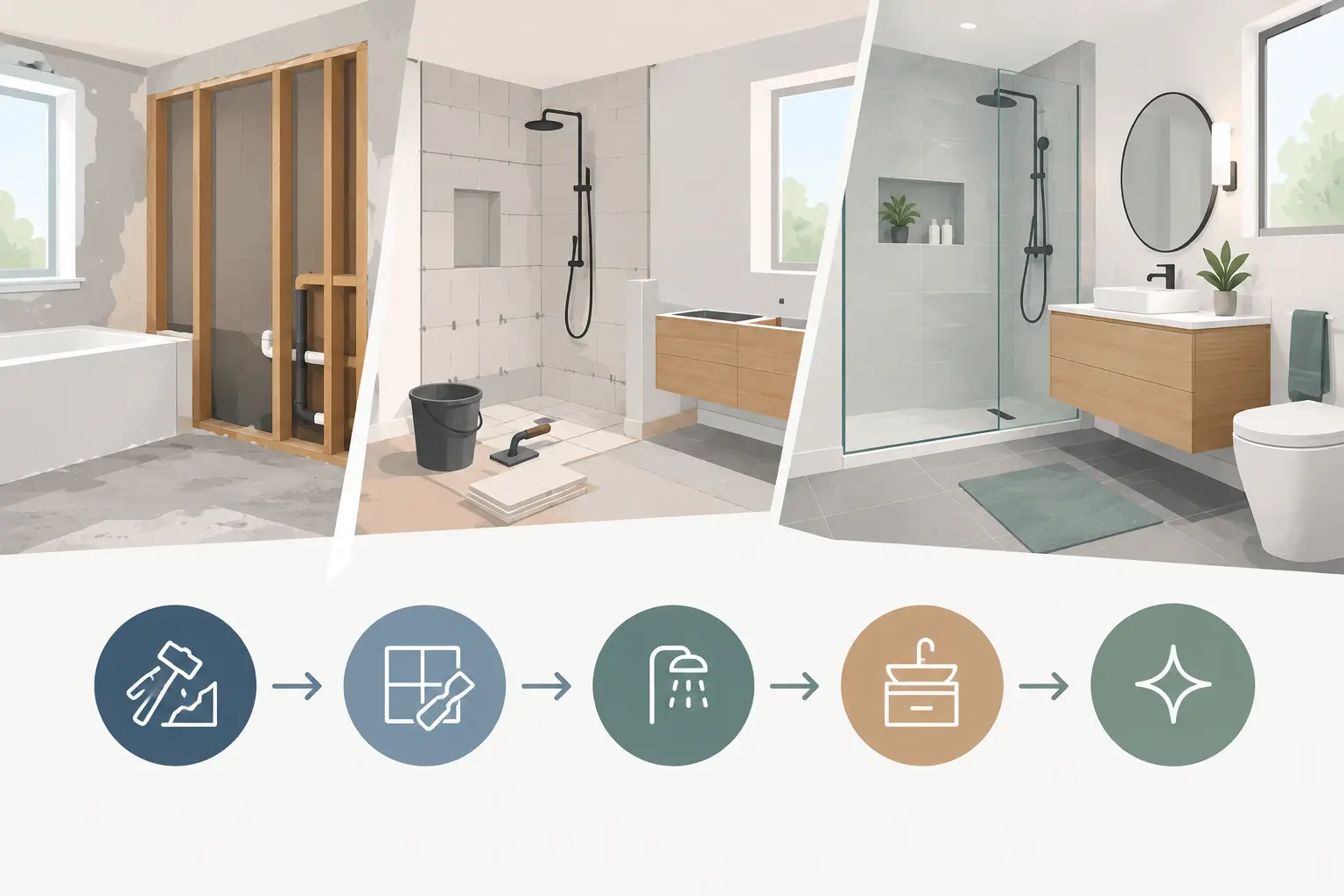
A bathroom may be one of the smallest rooms in your property, but it involves several skilled trades working in the right order. This guide to bathroom renovation timeline planning sets realistic expectations, helping you make decisions early, avoid unnecessary delays and prepare for a short period without your usual facilities.
Most standard bathroom renovations take around two to three weeks on site once materials are available. A straightforward replacement in a similar layout can be quicker, while a full redesign involving structural work, drainage changes, bespoke furniture or extensive tiling can take four weeks or longer. The key is not simply how long the fitting takes. Design choices, surveys and product lead times often determine when work can begin.
Before Your Bathroom Renovation Timeline Starts
A reliable programme starts with a detailed survey. The installer needs to assess the existing plumbing, drainage, ventilation, electrics, room dimensions and condition of the walls and floor. This is the point where hidden risks can be identified, such as ageing pipework, poor previous work, water damage or inadequate ventilation.
Allow one to two weeks for the initial consultation, survey and quotation. For a bathroom with a new layout, it is sensible to allow longer. Moving a toilet, shower or basin may be possible, but it can affect drainage falls, floor levels and the amount of work required. An experienced installer will explain what is practical before work is booked, rather than making promises that create problems later.
The design and specification stage commonly takes two to six weeks, depending on how quickly choices are made. This includes deciding on the suite, shower enclosure, brassware, tiles, flooring, lighting, extractor fan, storage and heating. If you are retaining the existing layout, the process is usually more straightforward. If you are creating a walk-in shower, fitting concealed valves or choosing large-format tiles, allow more time for planning.
It helps to confirm every visible finish before installation starts. A missing tile trim or delayed shower valve may seem minor, but it can hold up several later stages.
Ordering Materials and Booking the Work
Once the scope is agreed, materials need to be ordered and checked. Many standard sanitaryware items are available quickly, but some baths, vanity units, shower screens and specialist finishes have lead times of several weeks. Bespoke units can take longer still.
A good bathroom renovation timeline allows for delivery before the installation date, wherever practical. This gives time to check that the bath, basin, tiles and fittings have arrived in the correct quantities and without damage. It is far easier to resolve a supplier issue before the room has been stripped out.
For landlords and property managers, ordering early is especially useful where a bathroom needs to be returned to service between tenancies. For busy households, consider the practical arrangements too. If there is only one bathroom, plan how the family will manage washing and toilet facilities while work is underway. A separate cloakroom can make a significant difference.
Week One: Removal, First Fix and Preparation
The first days are usually the noisiest and messiest part of the project. Existing sanitaryware, tiles, flooring and wall finishes are removed. Floors and access routes should be protected, and waste needs to be removed safely. The room can look worse before it starts to look better, which is entirely normal.
Once the old bathroom is out, the installer can see the true condition of the room. This may reveal issues that were not visible during the survey, including rotten floorboards, damaged plaster, corrosion on pipework or leaks around a shower tray. A contingency in both time and budget is sensible, particularly in older properties.
The first-fix stage follows. This is when new hot and cold water supplies, waste pipes and electrical cables are installed behind walls, under floors or within boxing. If you are changing the layout, this is where the extra time is often spent. Drainage needs correct falls, pipework must remain accessible where required, and electrical work should be completed by a suitably qualified professional.
Ventilation should not be treated as an afterthought. A properly specified extractor fan helps control condensation, protects finishes and reduces the likelihood of mould. In many bathrooms, it is one of the most valuable upgrades you can make.
Week Two: Walls, Floors and Tiling
After first fix, the room is prepared for finishes. Walls may be boarded, plastered or tanked, particularly around shower areas. Waterproofing behind tiles is essential in wet zones. Tiles are a finish, not a waterproofing system on their own.
Tiling can take anywhere from a few days to more than a week. The difference depends on the room size, tile format, layout, cuts, niches and the amount of wall and floor coverage. Large tiles can look clean and contemporary, but they may require more preparation to achieve a level result. Patterned or small mosaic tiles involve more setting out and grouting time.
Drying and curing periods matter. Adhesives, grout, sealants and levelling compounds need appropriate time before the next stage. Rushing this part of the programme can compromise the finish and lead to avoidable remedial work later.
If the room is being decorated rather than fully tiled, painting is normally completed once the surface preparation is finished and before final fittings are installed. Moisture-resistant finishes are generally the sensible choice for bathroom walls and ceilings.
Week Three: Second Fix, Testing and Finishing
The final installation stage is known as second fix. The bath, shower tray, toilet, basin, taps, shower controls, enclosure, towel rail, lights and accessories are fitted. This is the stage where the design begins to feel like a functioning bathroom rather than a building site.
Each connection should be tested carefully. Water supplies are checked for leaks, wastes are run to confirm they drain correctly, the shower is tested, and sealant is applied around sanitaryware and enclosures. Electrical items, including lighting and extractor fans, should also be tested before handover.
A professional installation includes time for snagging. Small adjustments, such as aligning a door, cleaning silicone lines, checking a flush plate or making good a trim, are part of achieving a tidy result. Do not plan to use a newly tiled shower immediately unless your installer confirms it is ready. Sealants and grout often need a curing period before regular use.
What Can Delay a Bathroom Renovation?
Some delays are outside anyone’s control, but many can be reduced through preparation. Late decisions, unavailable products and changes once work has started are common causes. A concealed problem, such as a leaking soil pipe or unsuitable floor structure, may also require additional work before installation can safely continue.
It is worth keeping contingency in the programme rather than booking an important event for the day after completion. If you need the room finished by a fixed date, tell your installer during the quotation stage. They can advise whether the scope, lead times and access arrangements make that date realistic.
For properties across Bedfordshire and the wider South East, working with a qualified bathroom installer also helps coordinate the plumbing, heating and electrical elements properly. LCA Maintenance can assess the practical details early, provide transparent advice and help you plan work around your household or property requirements.
A Better Way to Plan the Work
The most successful bathroom projects are decided before the first tile is removed. Choose your layout, confirm all key products, agree who is supplying each item and make sure delivery dates are checked. Be clear about access, parking, waste removal and whether the property will be occupied during the work.
A realistic timeline protects quality. Giving each trade enough time to complete their part properly is far more valuable than rushing a bathroom into use a few days early. With careful planning and qualified workmanship, the disruption is temporary, while a well-finished bathroom should serve your property comfortably for years to come.