
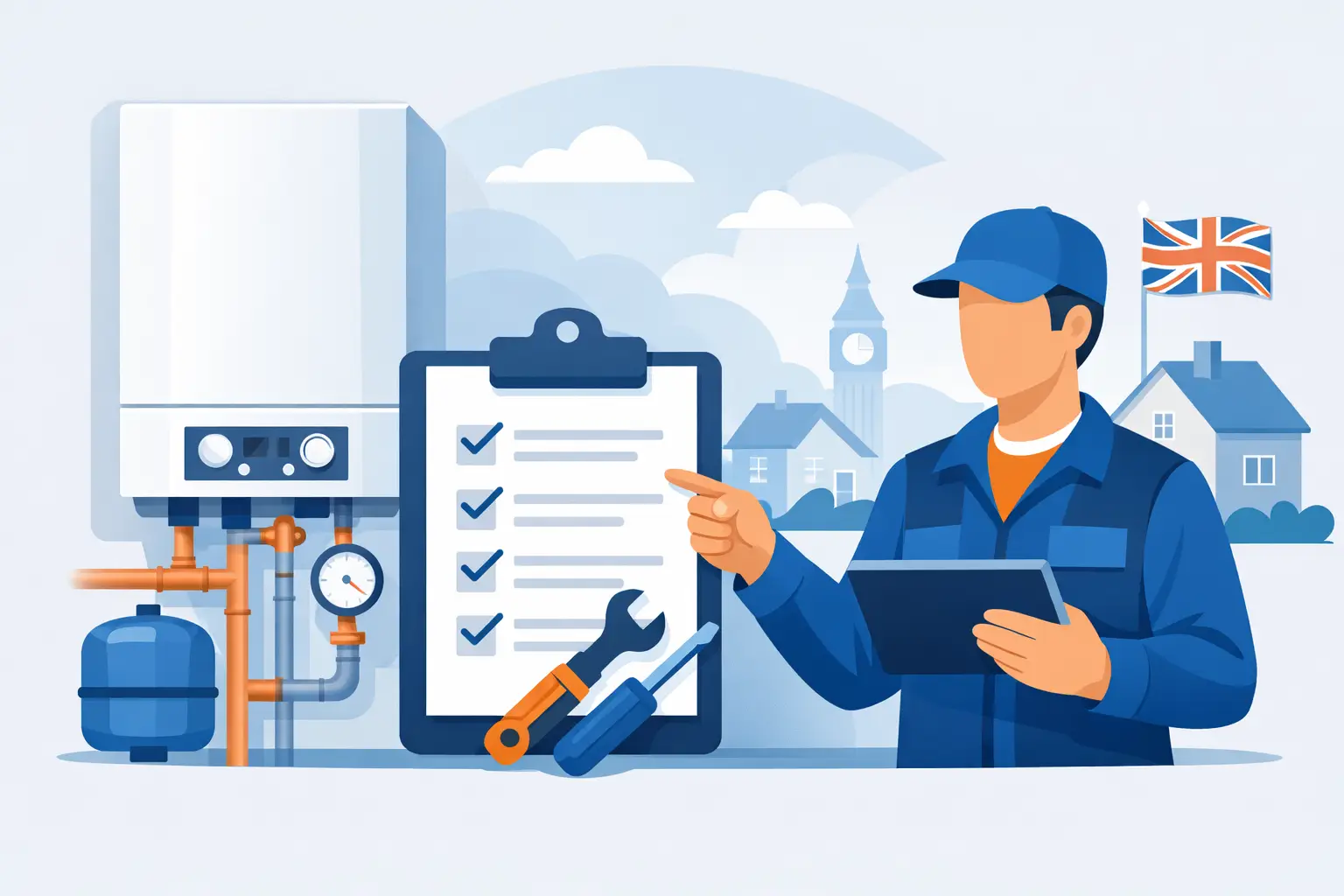
A boiler can appear to be working perfectly right up until the morning the heating fails or the hot water runs cold. Using the best boiler service checklist gives you a clear idea of what an annual visit should involve, what you can prepare beforehand, and when an engineer may need to investigate further.
For homeowners, landlords and businesses, an annual boiler service is a sensible way to protect comfort, efficiency and safety. It is not simply a quick look at the boiler. A properly completed service involves safety checks, performance checks and cleaning where required, all carried out by a suitably qualified Gas Safe registered engineer.
Why an annual boiler service is worth arranging
Your boiler works hard throughout the year, even if its busiest period is autumn and winter. Over time, components can wear, seals can deteriorate and debris can affect combustion or circulation. Catching an issue while it is minor can reduce the chance of a disruptive breakdown when you need heating most.
A service can also help your boiler operate as efficiently as possible. This does not mean every service will produce a dramatic fall in energy bills. The age of the boiler, its condition, your controls and the insulation of the property all matter. However, confirming that the appliance is burning gas correctly and operating within the manufacturer’s specifications is a sensible part of looking after the system.
Many boiler warranties also require evidence of annual servicing. Check the terms supplied by the manufacturer, as missing a service can affect a future warranty claim. Landlords have a separate legal responsibility to arrange an annual gas safety check for relevant gas appliances and flues, with the appropriate record provided to tenants. A boiler service and a landlord gas safety inspection can be completed during the same appointment in many cases, but they are not automatically the same thing.
The best boiler service checklist: what an engineer should cover
The exact process varies by boiler type, fuel, age and manufacturer guidance. A modern condensing combi boiler will not be serviced in exactly the same way as an older conventional boiler with a hot water cylinder. That said, a thorough visit should normally cover the following areas.
1. Confirming the boiler and installation are safe
The engineer should begin by visually inspecting the boiler, its pipework, flue and surrounding area. They will look for signs of damage, corrosion, leaks, poor ventilation or unsafe alterations. The boiler casing, controls and safety devices should be checked for condition and correct operation.
The flue is particularly important. It carries combustion products safely outside the property, so the engineer will assess its condition, route and terminal where accessible. Any signs that the flue may be compromised need prompt attention. Never block or cover a flue terminal, even in cold weather.
2. Checking gas pressure and combustion
For a gas boiler, the engineer will test that the gas supply and operating pressures are suitable. They may use a flue gas analyser to check combustion readings. These readings help confirm that the boiler is burning fuel correctly and that the combustion products are being discharged safely.
If readings are outside the acceptable range, further investigation is needed. The right repair could be a straightforward adjustment or replacement part, but it may also reveal a more significant fault. A professional engineer should explain what has been found, what work is recommended and any associated costs before proceeding, except where immediate action is necessary to make the appliance safe.
3. Inspecting and cleaning key components
A boiler service often includes inspection of internal components such as the burner, main heat exchanger, fan, electrodes, condensate trap and seals. Some parts may require cleaning, while others are checked for wear or deterioration. The level of strip-down required depends on the manufacturer’s service instructions and the condition of the appliance.
The condensate pipework deserves attention during colder months. Condensing boilers produce acidic condensate that drains away through a pipe. If an external condensate pipe freezes, the boiler may shut down. An engineer can check the route and condition of the pipework, although protecting it from severe weather may require additional work.
4. Testing controls, heating and hot water performance
A boiler does not work alone. Your thermostat, programmer, thermostatic radiator valves and pressure system all influence comfort and energy use. During a service, the engineer should check that the boiler responds correctly to heating and hot water demand.
They may test system pressure, inspect for visible leaks and assess whether radiators are heating evenly. Cold spots, frequent pressure loss or noisy operation can point to a wider heating-system issue rather than a fault inside the boiler. In those cases, you may benefit from a separate diagnosis, such as checking the expansion vessel, circulating pump, radiator balancing or system water quality.
5. Providing the service record and clear advice
At the end of the appointment, ask for confirmation of the work completed and any findings. This record is useful for warranty purposes, future fault diagnosis and property maintenance records. If the engineer identifies advisory work, make sure you understand the priority: whether it is a safety concern, a repair to arrange soon, or an improvement to consider later.
Clear communication matters. You should not be left guessing whether the boiler is safe to use, what was repaired or what the next step should be.
What to do before the engineer arrives
A little preparation helps the appointment run smoothly. Make sure the boiler and any controls are accessible, moving stored items away from the cupboard or utility area. If the boiler is boxed in, the engineer will need suitable access to the appliance and its controls.
Have details of recent issues ready, even if they seem minor. Mention error codes, pressure drops, banging noises, inconsistent hot water, dripping pipework or radiators that do not heat properly. Note when the problem happens, as intermittent faults can be harder to trace than a constant issue.
It is also useful to have your boiler make and model to hand, particularly if you are arranging the appointment on behalf of a tenant, family member or business site. If you have the previous service record or warranty documents, keep them available. Do not remove the boiler case yourself or attempt to adjust gas components before the visit.
Signs you should not wait for the annual service
An annual service is planned maintenance, not a reason to ignore warning signs. Arrange professional advice sooner if you smell gas, see soot or staining around the boiler, notice a yellow or irregular flame on an older visible-flame appliance, or repeatedly lose boiler pressure.
Other concerns include frequent lockouts, water leaks, unusual noises, a carbon monoxide alarm sounding or occupants experiencing unexplained headaches, nausea or dizziness. If you suspect a gas leak, turn off the gas supply at the emergency control valve if it is safe to do so, open doors and windows, avoid switches and naked flames, leave the building, and call the relevant emergency service from outside.
Carbon monoxide has no smell or colour, which is why a working audible carbon monoxide alarm is a sensible safeguard in rooms containing fuel-burning appliances. An alarm does not replace annual servicing, but it provides an extra warning if dangerous combustion gases are present.
Choosing the right time to book
Late summer or early autumn is often a practical time for a boiler service. Demand is usually lower than during the first cold spell, and any non-urgent repairs can be dealt with before the heating is needed every day. That said, the best time is the time you can reliably repeat each year. Setting a reminder around the previous service date is more useful than waiting for the weather to change.
For landlords and commercial property managers, planned maintenance dates should be tracked carefully. A missed gas safety deadline can create compliance problems as well as inconvenience for tenants or staff. Larger sites may need a maintenance schedule that covers boilers, plant rooms, controls and associated mechanical equipment rather than treating each issue as a separate call-out.
A trusted, fully qualified engineer will take the time to assess the appliance properly, explain any concerns in plain language and leave the work area tidy. For homes and businesses across Bedfordshire and the surrounding area, LCA Maintenance can provide professional boiler servicing alongside responsive repairs when a fault needs attention.
The most useful outcome from a boiler service is confidence: you know the appliance has been checked, you have a record of its condition, and you have acted before a small issue becomes a cold and costly emergency.