
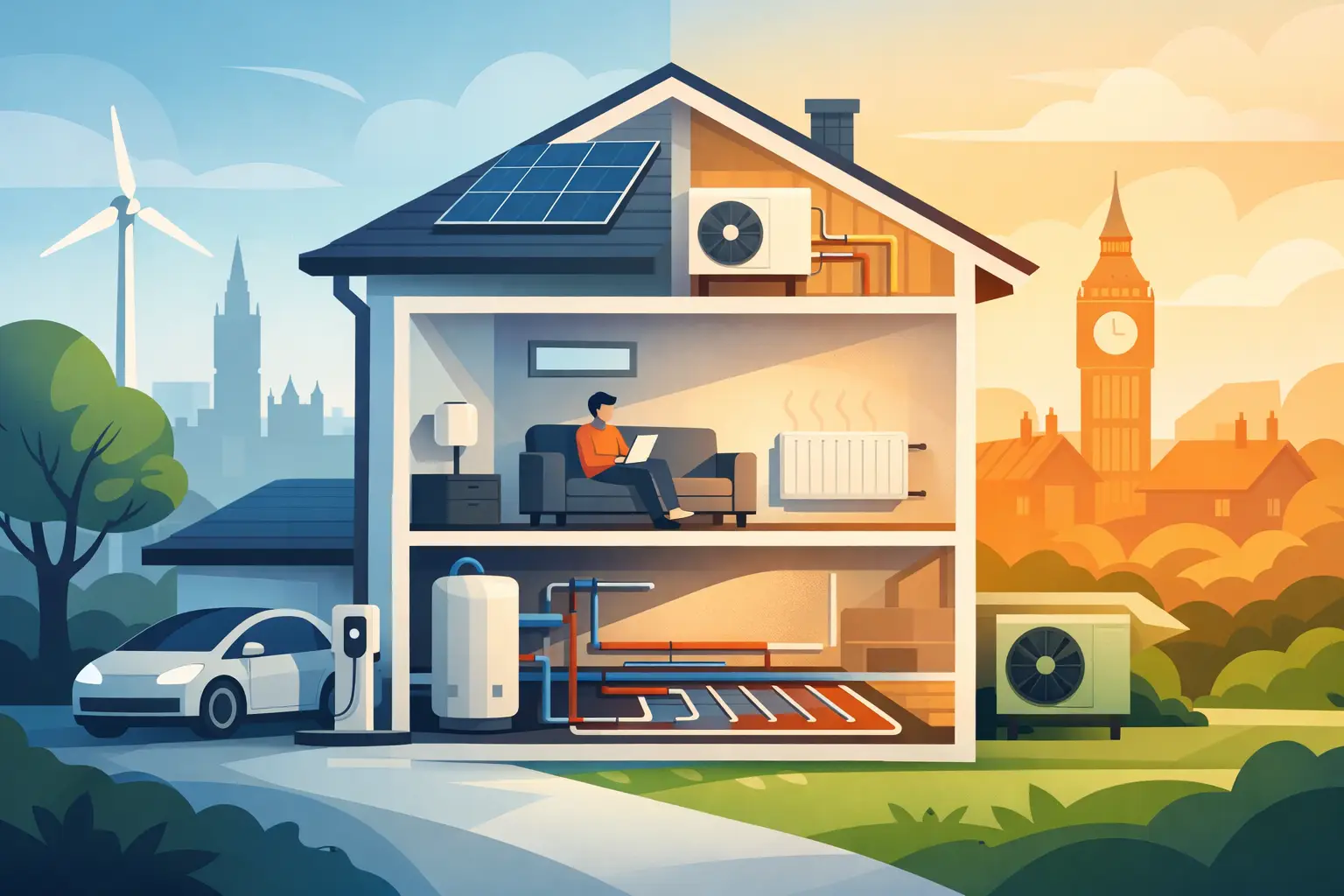
A cold morning is when the future of home heating stops being a policy discussion and becomes personal. Homeowners want warmth that is affordable, dependable and suited to the property they already own – not a complicated system that leaves them second-guessing the thermostat. For most UK households, the next heating decision will be about improving what is there while preparing sensibly for lower-carbon options.
The future of home heating is not one appliance
There is no single replacement for every gas boiler. A well-insulated modern house, a Victorian terrace, a rural property and a commercial premises can have very different heating needs. The right answer depends on heat loss, radiator size, available space, hot water demand, electrical capacity and the household budget.
Gas boilers will remain in many homes for years to come. Existing systems can still be serviced, repaired and replaced where appropriate, and a modern efficient boiler can be a sensible choice for a property that is not yet ready for a heat pump. Regular servicing remains essential for safety, reliability and efficiency.
At the same time, heating is moving towards lower-carbon electricity and better control. Air source heat pumps are becoming more common, electricity grids are changing, and homeowners are paying more attention to insulation and running costs. The practical future is likely to be mixed rather than sudden: some homes will move fully to heat pumps, while others will improve their current boiler system first or use a hybrid arrangement.
Heat pumps: effective when the whole system is ready
Air source heat pumps collect heat from outside air and transfer it into the home. They work at lower flow temperatures than a traditional boiler, so they perform best in properties that can retain heat well and have sufficient heat-emitting surface area.
That does not mean every home needs underfloor heating before a heat pump can work. Larger radiators may be enough in certain rooms, and a detailed heat-loss assessment will show what the property requires. It is far better to assess the building properly than to choose a system based on a neighbour’s experience or a headline about savings.
A heat pump also needs suitable external space, an indoor location for a hot water cylinder in many installations, and careful pipework design. The unit produces a gentle operating sound, so its position needs planning with neighbours and boundaries in mind. In a smaller property, lack of cylinder space may be the deciding factor.
The trade-off is that a correctly designed heat pump can provide steady, efficient warmth and hot water with lower direct carbon emissions. It is not usually operated in the same way as an older boiler system. Instead of short bursts of high-temperature heat, it often works best by maintaining a stable indoor temperature over longer periods.
Insulation comes before expensive equipment
The cheapest unit of heat is the one a home does not lose. Loft insulation, draught proofing, cavity wall insulation where suitable, improved glazing and sensible ventilation can all reduce heat demand. They can also make a future heat pump smaller and less expensive to run.
This should be approached carefully. Older homes need to manage moisture as well as warmth. Blocking every source of airflow without considering ventilation can lead to condensation and mould. A property-specific assessment helps avoid solving one problem while creating another.
Smarter controls will change daily heating habits
Heating controls are becoming more useful, but only when they are set up well. Smart thermostats can learn patterns, allow adjustments from a phone and prevent an empty house being heated unnecessarily. Zoned controls can give different areas of a larger home or commercial building their own schedules.
However, technology cannot correct a poorly balanced system. If upstairs rooms overheat while a living room remains cold, the answer may be radiator balancing, a faulty valve, poor circulation or an incorrect boiler setting. These issues should be resolved before relying on a new control to reduce bills.
Weather compensation is another important development. This allows a boiler or heat pump to adjust the heating water temperature as outside conditions change. Rather than sending unnecessarily hot water around the system, it can provide only what is needed to maintain comfort. That can improve efficiency, particularly in a well-controlled system.
For landlords and property managers, controls also support more consistent comfort across a portfolio. Clear instructions matter just as much as the equipment itself. Tenants should know how to use the heating without being tempted to switch off settings that have been designed for efficient operation.
Better boiler systems still have a place
For many households, a replacement condensing boiler remains the most practical immediate upgrade. Older, inefficient boilers can be costly to run and more prone to breakdowns, particularly where spare parts are becoming difficult to source. A new boiler, correctly sized and commissioned, can improve reliability and work well with modern controls.
It is worth looking beyond the boiler itself. System cleansing, magnetic filters, correctly sized radiators, thermostatic radiator valves and annual servicing all contribute to performance. Sludge and debris can restrict circulation, create cold spots and place unnecessary strain on components.
Some properties may suit a hybrid system, where a heat pump handles much of the routine heating demand and a boiler supports hot water or periods of very cold weather. This approach can reduce gas use without requiring every part of the home to be changed at once. It is not right for everyone, but it illustrates the direction of travel: flexible systems designed around real buildings and real usage.
Hydrogen is possible, but not a plan to rely on yet
Hydrogen is often mentioned as a future fuel for domestic heating because it could, in theory, be used through parts of the existing gas network. There are ongoing trials and significant questions around supply, cost, safety arrangements and how hydrogen would be prioritised across industry, transport and homes.
For a homeowner deciding what to do now, hydrogen should not be the sole reason to delay essential work. If a boiler is unsafe, unreliable or beyond economical repair, it needs a practical solution today. If the home has poor insulation, improving the fabric will be valuable regardless of the fuel used in ten years’ time.
How to make a sensible heating plan
A good plan starts with evidence, not pressure to buy the newest technology. Arrange an assessment of the existing system, including boiler condition, radiator output, hot water requirements and likely heat loss. Review recent energy use, but remember that bills are shaped by how a household lives as well as by the building.
Then prioritise improvements in the right order. Address obvious heat loss and system faults first. Consider controls and radiator upgrades next. From there, compare the likely cost, disruption and running profile of a new boiler, heat pump or hybrid system.
Homeowners should also consider maintenance from the outset. Every system needs professional attention, whether that means annual boiler servicing, checking heat pump performance, cleaning filters or inspecting safety components. A lower-carbon system should still be a dependable system when temperatures drop.
For homes across Bedfordshire and the wider South East, local property types vary considerably, from compact newer-build homes to larger period properties. A fully qualified heating engineer can explain the options in plain terms and identify the work needed for an upgrade to perform as expected.
The best next step is not to wait for a perfect future technology. Start with a clear assessment of your home, fix what is wasting heat now, and choose a heating system that keeps your household comfortable for the years ahead. LCA Maintenance can help homeowners make that decision with professional advice, transparent pricing and qualified installation or maintenance support.