
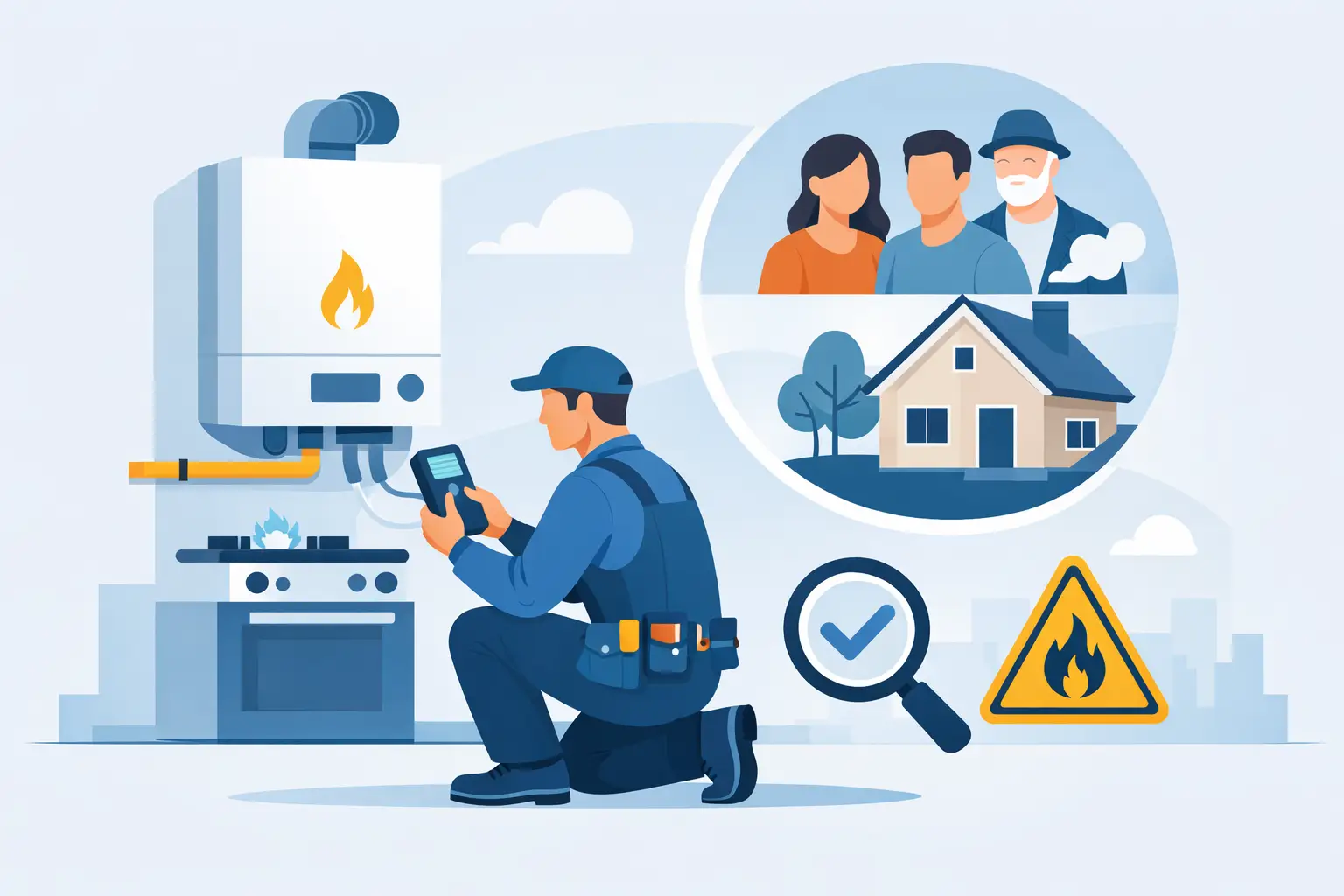
A boiler that appears to be working normally can still present a risk if it is not burning gas correctly or venting fumes safely. So, what is a gas safety check? It is a professional inspection of gas appliances, pipework and flues by a suitably qualified Gas Safe registered engineer, carried out to confirm that they are operating safely.
For landlords and many commercial property operators, this check is a legal compliance requirement. For homeowners, it is one of the most sensible ways to protect the household, reduce the chance of an unexpected breakdown and spot developing faults before they become expensive repairs. It is not simply a quick look at the boiler – a proper check involves a series of safety tests and clear action where an appliance does not meet the required standard.
What does a gas safety check involve?
The engineer will assess each gas appliance included in the visit, which may include a boiler, gas fire, cooker, hob or warm air unit. They will confirm that the appliance is installed correctly, suitable for its location and connected safely to the gas supply.
They will also check that the appliance is burning gas properly. Incomplete combustion can create carbon monoxide, a colourless and odourless gas that can cause serious illness and, in severe cases, be fatal. Testing combustion and examining the flue are therefore central parts of a gas safety inspection.
A thorough check normally covers whether the appliance is stable and secure, whether there are signs of gas leaks or unsafe connections, and whether the controls operate correctly. The engineer will check the flue route and terminal, making sure combustion gases can leave the property safely. They will also assess the ventilation around the appliance where required, particularly for older installations and certain types of gas fire.
The precise scope depends on the appliances at the property and how they are installed. For example, a modern room-sealed boiler has different testing requirements from an open-flued gas fire. An experienced engineer will explain what has been checked and flag anything that needs attention in straightforward terms.
Gas safety check versus a boiler service
A gas safety check and a boiler service are closely related, but they are not exactly the same thing. This distinction matters, especially for landlords arranging annual compliance or homeowners looking after a boiler warranty.
A gas safety check is primarily concerned with safe operation. It establishes whether the relevant gas appliances and fittings are safe to use at the time of inspection. Where required, the result is recorded on a Gas Safety Record.
A boiler service goes further into the boiler’s condition and performance. Depending on the manufacturer and appliance, this may include cleaning key components, checking seals and electrodes, inspecting the condensate system, reviewing water pressure and identifying wear that could affect reliability or efficiency. An annual service can help maintain the boiler manufacturer’s warranty, provided its terms are met.
In many homes, arranging both at the same time is practical. In a rented property, however, landlords should be clear that a boiler service alone is not automatically a substitute for the legally required gas safety check and record.
Who is responsible for arranging a gas safety check?
Landlords must arrange an annual gas safety check for gas appliances and flues they provide in rented accommodation. They must use a Gas Safe registered engineer who is qualified for the work, give new tenants a valid Gas Safety Record before they move in, and provide existing tenants with the updated record within the required timeframe after the check.
This duty generally covers appliances in the property, such as a supplied boiler or gas fire, as well as associated flues and pipework. Tenants are normally responsible for appliances that they own themselves, although landlords still have wider duties to ensure the property is safe. Shared areas and communal heating arrangements can create additional responsibilities, so property managers should seek advice where the set-up is not straightforward.
Homeowners are not generally under the same legal annual certification requirement for their own gas appliances. Nevertheless, booking a yearly service and safety inspection is strongly recommended. It offers reassurance that the boiler and other appliances are operating as they should, particularly before winter places greater demand on the heating system.
Commercial premises also have duties under gas safety and workplace health and safety rules. The responsible person must make sure gas installations, appliances and associated systems are maintained in a safe condition. Offices, shops, schools, hospitality venues and managed blocks may require planned inspections that take account of multiple appliances, plant rooms and tenant areas.
What happens if an appliance is unsafe?
If an engineer finds a fault, they will assess the level of danger and explain what needs to happen next. Some issues may be advisory, such as improving access for future servicing or replacing a component that is beginning to wear. Others require prompt repair.
Where an appliance is immediately dangerous or could become dangerous if used, the engineer may need to turn it off, disconnect it or attach a warning label to prevent it being used. This can be inconvenient, particularly if it affects heating or hot water, but it is the right action when there is a risk of a gas leak, carbon monoxide exposure or fire.
Do not reconnect or use an appliance that has been labelled unsafe. Ask a suitably qualified Gas Safe engineer to diagnose the fault, provide clear options and complete any necessary repair or replacement. Transparent advice is particularly valuable where a repair is possible but a replacement may offer better long-term reliability or efficiency.
How to prepare for a gas safety inspection
A little preparation helps the appointment run smoothly. Make sure the engineer can reach the boiler, gas meter, appliances and any cupboards or panels that contain pipework. Keep pets safely out of the working area and, if possible, have details of previous services or faults to hand.
If the property is tenanted, give the occupant reasonable notice and make practical arrangements for access. Landlords should keep records of appointments and attempts to gain entry if a tenant cannot be present. Safety duties do not disappear because access is difficult, but a respectful, well-organised approach usually avoids delays.
It is also worth checking that your carbon monoxide alarms are fitted in the appropriate places and tested regularly. An alarm is an essential extra safeguard, not a replacement for proper maintenance or an annual gas safety check.
Choosing the right engineer
Always check that the engineer is on the Gas Safe Register and qualified for the type of appliance being inspected. Gas work should never be treated as a job for a general handyman or an unqualified installer. The right engineer will carry the appropriate registration identification, use calibrated test equipment and provide clear documentation after the visit.
For homeowners, landlords and businesses across Bedfordshire and the surrounding areas, planned maintenance makes this process far easier to manage. Booking before the colder months gives time to deal with repairs without the pressure of a heating emergency. LCA Maintenance provides friendly, fully qualified support for gas safety checks, boiler servicing and repairs, with clear communication from inspection through to any recommended work.
A gas safety check is ultimately a simple piece of property care with a serious purpose: it helps make sure the appliances people rely on for heating, hot water and cooking are safe to use. Arrange it regularly, act quickly on any faults identified and keep the record somewhere easy to find when you need it.