
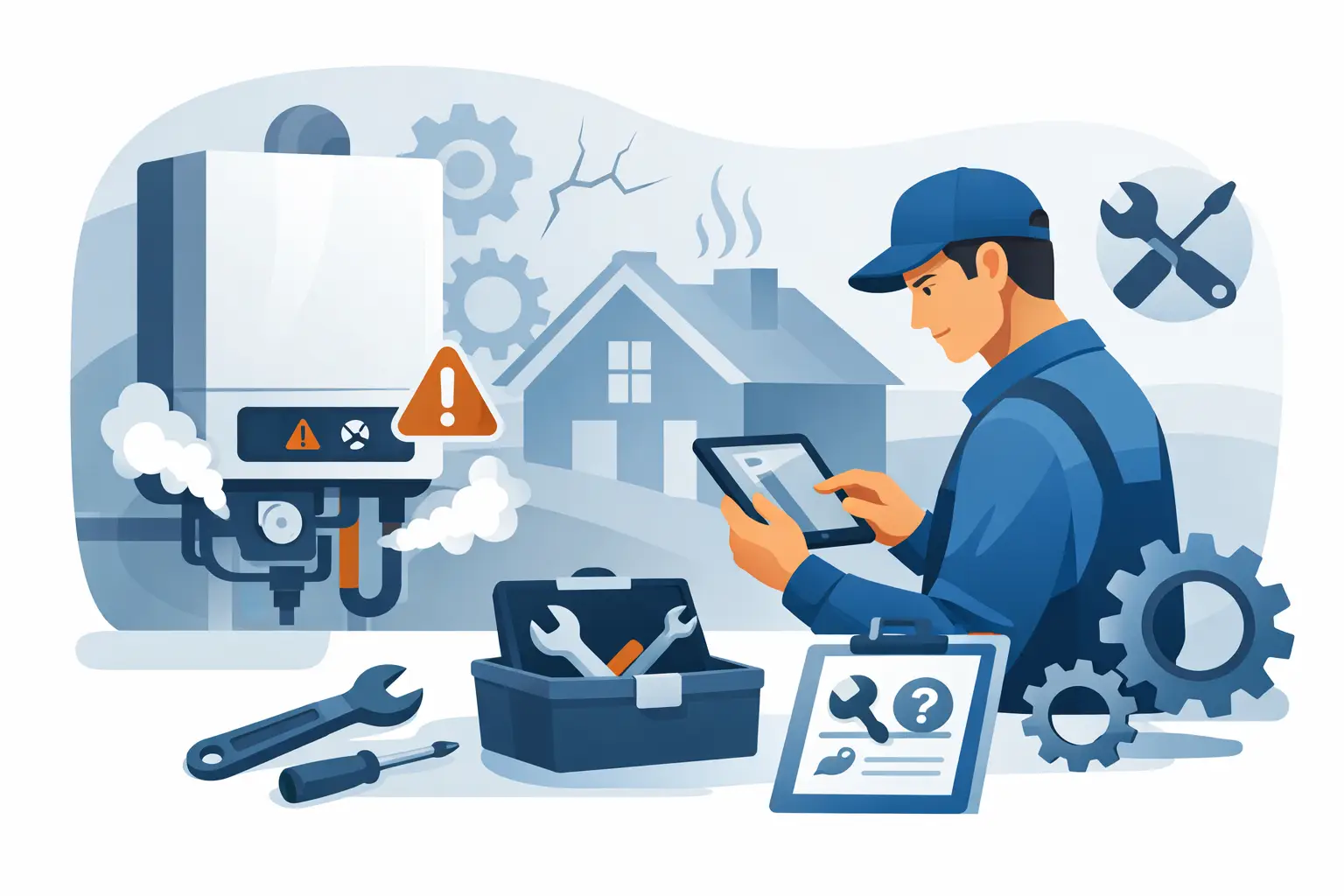
A boiler breakdown rarely happens at a convenient time. It is often noticed on a cold morning, before guests arrive, or when a tenant reports there is no hot water. This guide to boiler breakdowns explains the sensible checks you can make, the warning signs that need professional attention, and how planned servicing reduces the risk of being left without heating.
For homeowners, landlords and businesses, the priority is the same: keep people safe, limit disruption and get the system assessed by a suitably qualified engineer when needed. Trying to force a boiler back into operation can turn a straightforward repair into a more costly fault.
What counts as a boiler breakdown?
A breakdown is not always a complete loss of heating and hot water. Some faults are intermittent, such as radiators that only warm at the top, a boiler that loses pressure every few weeks, or hot water that runs hot and cold. These symptoms still deserve attention, particularly if they are becoming more frequent.
A complete breakdown may show as a fault code, warning light, blank display, repeated lockout or a boiler that simply will not fire. The cause could be relatively minor, such as low system pressure or a frozen condensate pipe. It could also involve a failed component, circulation issue, gas supply problem or a fault within the controls.
Modern boilers are designed to shut down when they detect an unsafe or abnormal condition. Although inconvenient, this safety response should not be bypassed. The fault code displayed on the boiler can give an engineer a useful starting point, so make a note of it before arranging a visit.
Guide to boiler breakdowns: safe checks first
Before calling an engineer, there are a few non-invasive checks that may identify a simple issue. Only carry these out if you feel comfortable doing so. Do not remove the boiler casing, interfere with internal parts or attempt any gas work.
Check whether your energy supply is working elsewhere in the property. A prepayment meter may need topping up, or a tripped consumer unit may have interrupted power to the boiler. Next, confirm that the thermostat is set above the current room temperature and that the programmer is set correctly. It is surprisingly common for controls to be in holiday mode or for the clock to have changed after a power cut.
Look at the pressure gauge if your boiler has one. Many sealed central heating systems operate at around 1 to 1.5 bar when cold, but always follow the manufacturer guidance for your appliance. Pressure below the recommended range can prevent the boiler from firing. If you have been shown how to repressurise your own system and the manufacturer instructions allow it, this may resolve a one-off low-pressure issue. If pressure repeatedly drops, however, there may be a leak or expansion vessel fault that requires professional investigation.
In freezing weather, a condensate pipe can become blocked by ice. This is usually the plastic pipe leading from the boiler to an outside drain. A qualified engineer can advise on the correct next step. Avoid using boiling water or striking the pipe, as both can cause damage.
Signs that mean stop and seek urgent help
Some situations are not suitable for troubleshooting. Take immediate precautions and contact the appropriate emergency service or qualified professional if you notice any of the following:
- A smell of gas, hissing near a gas appliance, or a suspected gas leak.
- A carbon monoxide alarm sounding, or symptoms such as headaches, dizziness, nausea or unusual tiredness.
- Soot marks, yellow or lazy flames on a visible gas fire, or staining around an appliance.
- Water leaking onto electrical parts, significant flooding, or a boiler casing that is hot, scorched or damaged.
If you suspect a gas leak, do not use electrical switches, naked flames or mobile phones near the affected area. Turn off the gas supply at the emergency control valve only if it is safe to do so, open doors and windows, leave the building, and contact the National Gas Emergency Service on 0800 111 999. For a carbon monoxide alarm, move everyone into fresh air and seek urgent advice.
Common boiler faults and what they can indicate
Low pressure is one of the most common calls. A single pressure drop may be resolved by repressurising, but recurring loss points to an underlying issue. A small leak may be hidden beneath floorboards or around radiator valves, while a fault within the boiler may also be responsible. Regularly adding water without finding the cause is not a long-term fix.
No heating but normal hot water often indicates a problem with heating controls, a motorised valve, a circulation pump or air and sludge within the system. No hot water but functioning heating can be linked to a diverter valve or a sensor fault on a combi boiler. The exact diagnosis depends on the boiler type and the wider system layout.
Banging, whistling or gurgling noises should not be ignored. Some sounds are caused by air in radiators, but persistent kettling noises can indicate restricted water flow, limescale or sludge. Left untreated, poor water quality can reduce efficiency and put extra strain on key components.
A boiler that repeatedly resets or locks out may have an ignition, fan, flue, condensate, pressure or circulation fault. Resetting it once in line with the appliance instructions is reasonable. Repeated resets are a signal to stop and arrange an inspection rather than continually restarting the boiler.
Why annual servicing makes a difference
A boiler service does not guarantee that a part will never fail, particularly on an older appliance. It does provide the best opportunity to spot wear, check safe operation, inspect the flue and combustion performance, and identify issues before they cause a full breakdown.
For landlords, an annual Gas Safety Record is a legal requirement for relevant gas appliances. Beyond compliance, a planned service can help prevent avoidable tenant disruption and make maintenance costs easier to manage. Commercial sites may need a more tailored planned maintenance schedule depending on the equipment, operating hours and building use.
During servicing, an engineer can also advise whether the system would benefit from cleaning, inhibitor, magnetic filtration or control upgrades. These measures have a cost, so they are not necessary in every property. They can be worthwhile where there is evidence of sludge, poor circulation, repeated component failures or uneven heating.
Repair or replacement: making the right call
When a boiler fails, replacement is not automatically the right answer. A well-maintained boiler with a clear, economical repair may have several useful years left. Equally, repeated faults, unavailable parts and poor efficiency can make continued repairs a false economy.
Age matters, but condition matters more. Consider the repair cost alongside the boiler’s service history, reliability, energy performance and the condition of the rest of the heating system. If a replacement is recommended, ask what work is included: controls, system flushing, filter installation, warranty registration and any alterations to pipework or flueing can all affect the final scope.
A fully qualified Gas Safe engineer should explain the fault in plain language and give transparent pricing before work proceeds. At LCA Maintenance, the focus is on restoring safe, dependable heating while giving customers a clear view of the available options.
Reducing disruption when heating fails
If you are waiting for a repair, keep the property warm safely by closing internal doors, using blankets and wearing extra layers. Portable electric heaters can help in a single occupied room, provided they are used on a stable surface, kept clear of fabrics and never left unattended. Do not use ovens, hobs or outdoor heaters to warm indoor spaces.
Landlords and property managers should maintain clear records of reported faults, attendance, repairs and servicing. Quick communication with occupants is as valuable as a fast repair, especially where there are young children, older residents or vulnerable people in the property.
The most useful habit is to act on small changes before they become a cold-weather emergency. A pressure gauge that keeps dropping, an unfamiliar noise or a radiator that never heats properly is worth checking now, while there is time to arrange the right repair.