
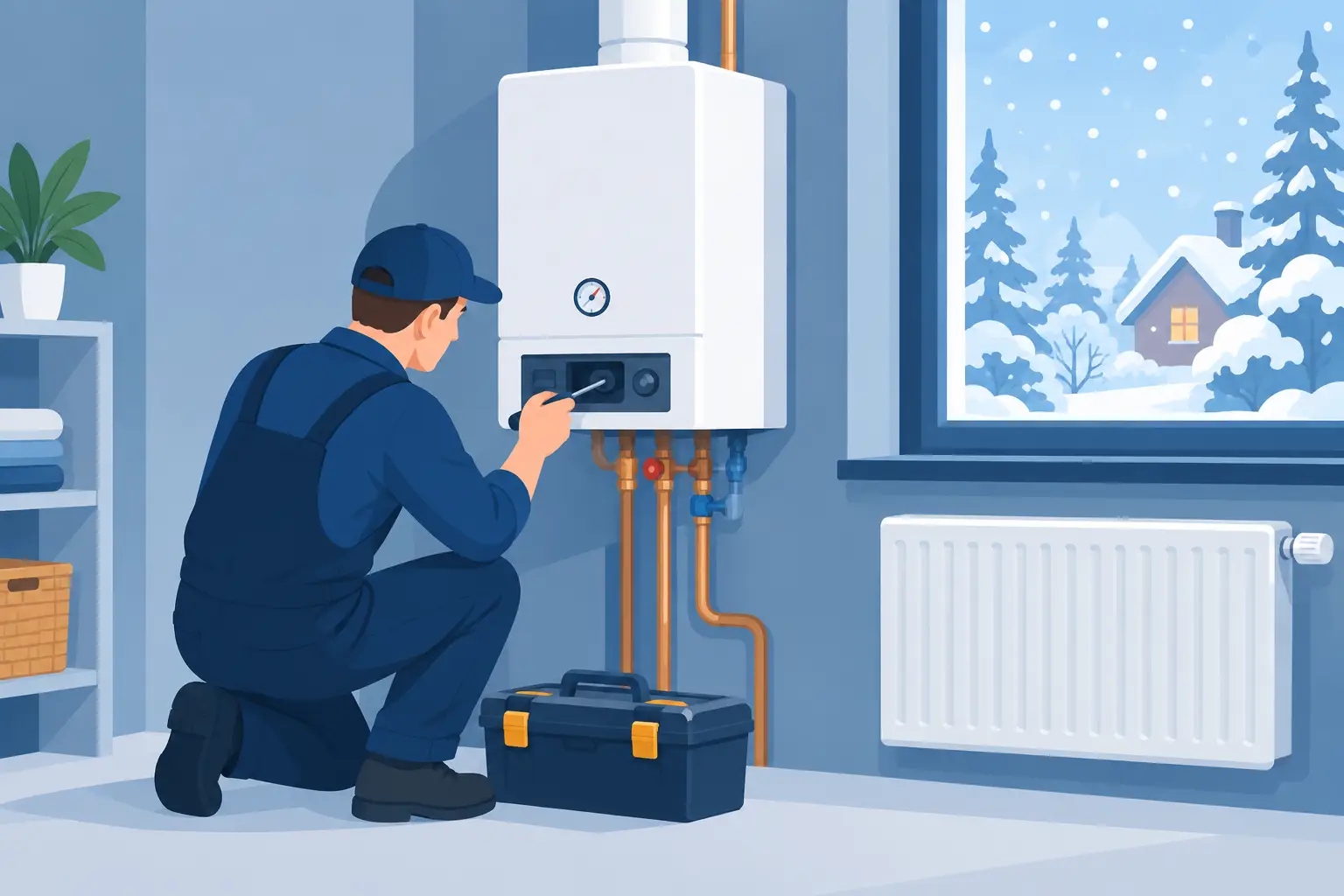
The first genuinely cold morning is a poor time to find out that a radiator will not heat up or your boiler pressure has dropped. Knowing how to prepare a boiler for winter before the weather turns gives you time to spot small issues, arrange a repair and make sure your heating is ready when your household needs it most.
For most homes, preparation is not about taking the boiler apart or making complicated adjustments. It is about using the heating system early, checking a few visible signs and booking qualified help where it is needed. A little planned attention can reduce the risk of an inconvenient breakdown, improve comfort and help avoid wasting energy.
How to prepare your boiler for winter
Start by turning your central heating on for a short period, even if the weather is still mild. Run it for 15 to 30 minutes and walk around the property while it is operating. Check that every radiator begins to warm up, that the boiler fires without repeated attempts and that there are no unfamiliar banging, whistling or gurgling sounds.
Pay attention to rooms that have been cooler in previous winters. A radiator that is cold at the top may need bleeding, while one that stays cold at the bottom can indicate a build-up of sludge in the system. Neither necessarily means the boiler is faulty, but both can make your home harder and more expensive to heat.
If you have thermostatic radiator valves, turn them gently to make sure they are not stuck after months of little use. Keep furniture, curtains and radiator covers away from radiators where possible. Blocking heat from reaching the room often leads people to increase the thermostat unnecessarily.
Check the boiler pressure
Most modern sealed heating systems have a pressure gauge or digital display. When the system is cold, the pressure commonly sits around 1 to 1.5 bar, although the correct range for your boiler is set out in its manufacturer instructions.
Low pressure can stop a boiler working properly, while pressure that rises unusually high when the heating is on can point to a fault that needs professional attention. If your boiler has lost pressure once, you may be able to repressurise it by following the manufacturer guidance. If it keeps happening, do not simply top it up again and again. A recurring pressure loss may be caused by a leak, a problem with the expansion vessel or another issue within the heating system.
Look around exposed pipework, radiator valves and beneath the boiler for signs of dripping or staining. Even a small leak can become more noticeable when the heating is used every day.
Set controls for comfort, not guesswork
Your thermostat and timer have as much influence on comfort and fuel use as the boiler itself. Before winter, check the clock on the programmer is correct and set heating periods around when the property is occupied. There is rarely a benefit in heating an empty home at full temperature for long periods.
For many households, a room thermostat around 18 to 21°C is a sensible starting point, then adjusted for comfort and the needs of anyone elderly, very young or medically vulnerable. Turning the thermostat up high does not make rooms warm faster. It tells the boiler to run for longer until that higher temperature is reached.
If your system has separate heating and hot water controls, test both. Hot water that takes a long time to heat, fluctuates in temperature or produces unusual noises is worth investigating before winter demand increases. Smart controls can be useful, particularly for busy households or properties with variable occupancy, but they work best when the heating system itself is in good order.
Book a boiler service before demand peaks
An annual boiler service is one of the most useful preparations you can make. A Gas Safe registered engineer will inspect the appliance, check its safe operation, assess key components, test for combustion issues and identify wear that could lead to a breakdown. Servicing also helps maintain many manufacturer warranties, provided it is carried out at the required intervals.
Autumn is often the best time to arrange it. Once a prolonged cold spell arrives, engineers are rightly focused on households and businesses without heating or hot water. Booking before that rush gives you more flexibility and allows repairs to be completed without urgency.
A service is not the same as a repair. Your boiler may appear to be working yet still have a developing issue, which is why planned servicing matters. Equally, a service cannot guarantee that no component will ever fail. It does, however, give a qualified engineer the opportunity to find concerns before they become more disruptive.
LCA Maintenance provides boiler servicing and heating support for homeowners, landlords and commercial clients who want a trusted, fully qualified team to keep systems operating safely through winter.
Protect pipework from frost
Frozen condensate pipes are a common winter issue with condensing boilers. The condensate pipe carries mildly acidic water away from the boiler, often through an external section of pipework. In severe cold, it can freeze and prevent the boiler from operating.
Check that external pipework is securely fixed and that insulation is intact. Do not use boiling water to thaw a frozen condensate pipe, as the sudden heat can damage pipework. Warm water is the safer option if you can safely identify and access the pipe, but if you are uncertain or the boiler displays a fault code, contact a qualified engineer.
Inside the property, protect pipes in unheated areas such as lofts, garages, utility rooms and cupboards against external walls. Insulation can reduce the risk of freezing, but it is also wise to keep the property at a low background temperature during a winter holiday. Switching the heating entirely off for several days in freezing weather may save a little energy, but it can create a far more costly problem if pipes freeze or burst.
Know which warning signs need prompt help
Some faults can wait for a convenient appointment. Others should be treated more urgently. Arrange professional advice promptly if your boiler repeatedly locks out, the pressure continually falls, radiators will not heat despite bleeding, or you notice water around the appliance.
A smell of gas, a suspected carbon monoxide issue or a carbon monoxide alarm sounding requires immediate action. Turn off the gas supply if it is safe to do so, open doors and windows, leave the property and contact the appropriate emergency service or gas emergency line. Do not try to diagnose a gas leak yourself, and never remove a boiler casing.
It is also worth checking that your carbon monoxide alarms are fitted in suitable locations and tested regularly. An alarm is not a substitute for a properly maintained appliance, but it is an essential additional safeguard.
Extra responsibilities for landlords and commercial properties
Landlords must arrange an annual gas safety check for relevant gas appliances and provide tenants with the required documentation. Winter preparation is a good opportunity to make sure records are up to date, tenants know how to use the heating controls and any reported concerns have been addressed.
For commercial premises, the priority may extend beyond one boiler. Zoned heating, plant rooms, circulation pumps, pressurisation equipment and building management controls all need appropriate planned maintenance. A small control fault can leave an entire office, retail space or managed building cold, so testing systems before the busiest period is a practical investment.
A warm home starts with an early check
Do not wait for the first frosty week to test a heating system that has been quiet since spring. Run it, check the basics, arrange a service and act on changes before they become an emergency. If something does not look or sound right, a qualified engineer can give you clear advice and help your property stay warm when winter arrives.