
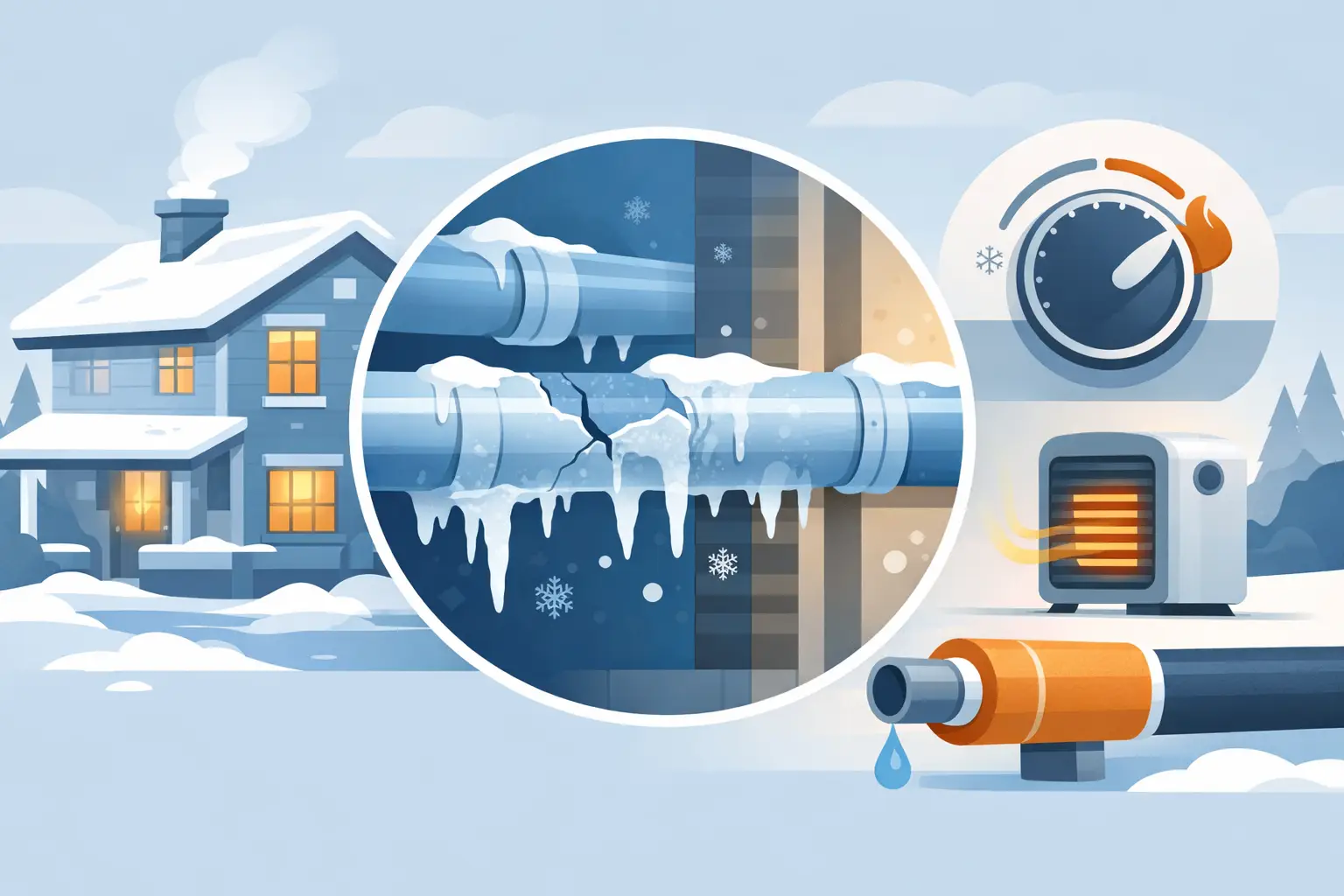
A frozen pipe rarely gives much warning. One very cold night can stop water flowing, split a vulnerable pipe and leave a homeowner, landlord or business dealing with serious water damage once temperatures rise. Knowing how to prevent frozen pipes before a cold spell arrives is far less costly and disruptive than arranging an emergency repair afterwards.
Pipes freeze when the water inside them drops below zero and expands. The pressure created by that expansion can crack copper, plastic or older pipework, often at a joint or weak point. The pipe may not leak while it is frozen, but when it thaws, water can escape quickly into cupboards, ceilings, walls or plant rooms.
Why some pipes are more likely to freeze
Any pipe exposed to cold air is at greater risk, but problems usually begin in the less obvious parts of a property. Lofts, garages, underfloor voids, external walls, unused rooms and cupboards against outside walls can all become cold enough for pipework to freeze.
Properties that are empty for several days, have been recently renovated, or have older insulation can be particularly vulnerable. In commercial premises, risk can increase where areas are shut down outside working hours, such as storage spaces, workshops, vacant units or little-used washrooms.
A boiler working normally does not guarantee that every pipe is protected. Central heating may keep occupied rooms comfortable while pipework in a cold loft or outbuilding remains exposed. Prevention needs to consider the whole water system, not only the rooms you use every day.
How to prevent frozen pipes before cold weather arrives
The most effective approach combines insulation, sensible heating controls and a few straightforward checks. Begin before a forecasted freeze where possible, rather than waiting until temperatures have already dropped.
Insulate exposed pipework properly
Foam pipe insulation, often called lagging, is one of the simplest ways to reduce heat loss from pipes. Fit it around water pipes in lofts, garages, cellars, utility rooms and other unheated areas. Pay close attention to bends, valves and joins, as gaps in insulation can leave small sections exposed.
Use insulation suitable for the pipe diameter and the location. Outdoor pipework and pipes in very cold spaces may need more durable weather-resistant protection than standard indoor foam sleeves. Insulating a cold water pipe helps prevent freezing, while insulating hot water pipework also reduces wasted heat.
Do not cover flues, boiler components or safety devices with unsuitable materials. If access is awkward, pipework is close to electrical equipment, or you are unsure what should be insulated, a qualified heating and plumbing engineer can assess the installation safely.
Keep a background level of heat
Turning heating off completely during winter is a common cause of frozen pipes. If the property will be occupied, maintain a low, steady temperature rather than allowing it to become very cold overnight. A thermostat setting of around 12°C to 14°C is often appropriate for an occupied property, although the right setting depends on insulation, layout and how exposed the building is.
For an empty home, rental property or commercial site, use frost protection settings where available and keep the heating operational. Many boilers have a frost protection function, but it only protects the boiler and nearby pipework if there is power, gas supply and water pressure. It may not protect pipes in a distant loft, garage or separate building.
Keep internal doors open where practical so warmer air can circulate, particularly around kitchens, bathrooms and utility cupboards. If pipes run inside a kitchen unit against an external wall, leaving cupboard doors ajar during a severe cold spell can help warmer room air reach them.
Protect outside taps and garden pipework
External taps are especially exposed. Disconnect hoses before winter, drain them and store them away. A hose left connected can hold water against the tap and increase the chance of frost damage.
If your outside tap has an internal isolation valve, turn off the supply and open the external tap to drain any remaining water. Fit an insulated tap cover for extra protection. For properties with irrigation systems, outdoor kitchens or water-fed equipment, make sure these are drained down in line with the manufacturer’s guidance.
Find your stopcock before you need it
Every homeowner, tenant, landlord and responsible site manager should know where the internal stopcock is and check that it can be turned off. It is commonly located under the kitchen sink, near the water meter, in a utility room or where the mains water enters the property.
Turn it carefully from time to time to make sure it has not seized. Do not force an old or corroded valve, as this can cause a leak. If it is difficult to operate, arrange for it to be checked or replaced before winter. In a burst-pipe emergency, being able to shut off the water quickly can significantly limit damage.
Checks for landlords and commercial property managers
Vacant or partly occupied buildings need a clear winter plan. A burst pipe can go unnoticed for hours or days, especially during weekends and holiday closures. Arrange regular checks during cold weather, confirm who holds keys and make sure the person responsible knows the location of stopcocks, boilers and electrical isolators.
For larger sites, planned maintenance is usually more reliable than relying on ad-hoc checks. Review pipe insulation in plant rooms and service risers, test frost protection controls, inspect roofs and external doors for draughts, and identify areas with poor heat circulation. Remote temperature monitoring can be worthwhile for high-risk buildings, but it does not replace physical inspection and properly maintained heating systems.
If a property will be vacant for a longer period, the safest option may be to isolate and drain down sections of the water system. This is not suitable for every building, particularly where fire suppression, specialist equipment or occupied areas are involved. A qualified engineer can advise on the right approach without compromising essential services or compliance requirements.
What to do if you think a pipe has frozen
A frozen pipe may show itself through no water, reduced flow from a tap, unusual noises, or frost visible on exposed pipework. Do not ignore the issue and hope it will resolve itself. Check for leaks around the suspected area and, if there is any sign of water escaping, turn off the mains supply at the stopcock.
Never use a blowtorch, naked flame or high-powered heat gun to thaw a pipe. Sudden intense heat can damage pipework, create a fire risk and cause steam burns. Instead, warm the area gradually using the central heating, a warm cloth or a hairdryer on a low setting, keeping electrical equipment well away from water.
Open the affected tap so melting water has somewhere to go, but stop if you find a leak. If the pipe is inaccessible, visibly damaged, or you cannot restore the water supply safely, contact a qualified plumber. It is also sensible to have the pipe inspected after thawing, as a small crack can become a larger leak later.
Do not overlook boiler health
A reliable boiler is central to winter protection. Arrange regular servicing, keep boiler pressure within the recommended range and deal with warning lights or repeated pressure loss promptly. A boiler breakdown during freezing weather can quickly turn a minor insulation issue into a widespread plumbing problem.
Frozen condensate pipes are another common winter fault. These pipes carry wastewater from modern condensing boilers to a drain, often outside. They should be correctly sized, insulated where appropriate and routed to reduce the risk of freezing. If your boiler stops working during very cold weather and displays a fault code, avoid repeatedly resetting it. A heating engineer can identify whether the condensate pipe or another issue is responsible.
For homes and businesses across Bedfordshire and the wider South East, LCA Maintenance can help with winter plumbing checks, insulation improvements, boiler servicing and urgent repairs. Acting before the next hard frost gives you more options, less disruption and a far better chance of keeping water where it belongs: inside the pipes.