
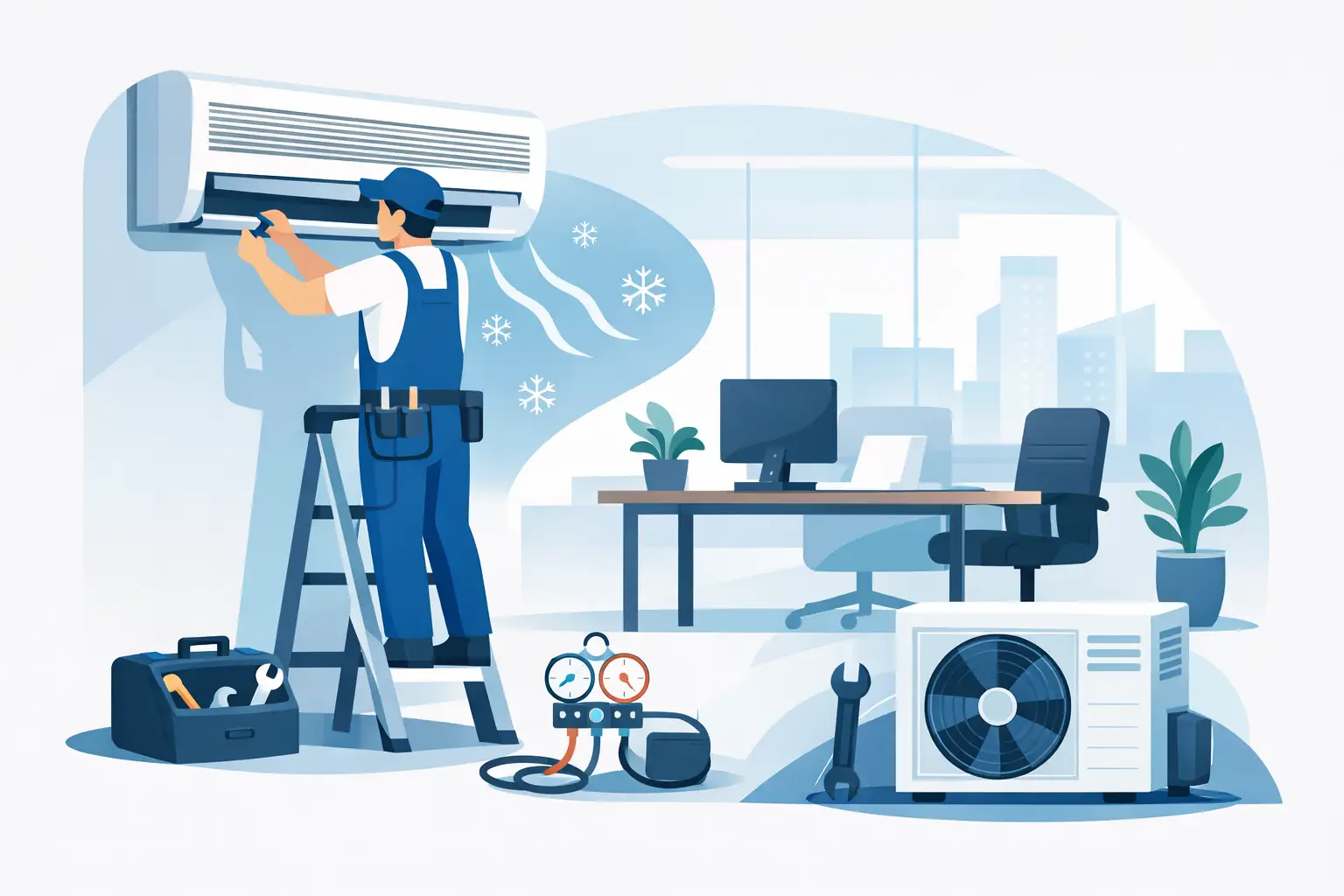
A meeting room that feels stuffy by 10am, persistent hot and cold spots across the office, or an air conditioning unit that suddenly stops cooling can all affect far more than comfort. Office air conditioning maintenance helps prevent these issues before they disrupt staff, visitors, IT equipment and day-to-day operations. For business owners and facilities managers, planned servicing is usually simpler and less costly than dealing with an unexpected failure during a warm spell.
Why Office Air Conditioning Maintenance Matters
Air conditioning systems work hard in commercial settings. Even a modest office unit may run for long periods to maintain a steady temperature, remove humidity and circulate treated air. Over time, filters collect dust, condensate drains can become blocked, electrical connections can deteriorate and moving components can wear.
Left unchecked, small faults tend to become operational problems. A dirty filter restricts airflow, forcing the system to work harder for less cooling. A blocked condensate drain can lead to leaks and water damage. Low refrigerant may indicate a leak, reducing performance and increasing running costs. These are not always obvious until occupants start complaining or the unit fails altogether.
Regular servicing protects comfort, but it also supports sensible cost control. A well-maintained system can operate more efficiently, with less strain on compressors and fans. That matters when energy use is under close scrutiny and every unnecessary running cost affects the business.
What a Professional Air Conditioning Service Should Include
The exact scope depends on the system type, its age, how heavily it is used and the environment it serves. An office with a small wall-mounted split system has different needs from a multi-floor building with several indoor units, ventilation equipment and central controls. However, a thorough maintenance visit should look beyond whether the unit simply turns on.
Cleaning and airflow checks
Engineers inspect and clean filters, indoor coils, outdoor coils and fan components where required. Clean parts allow air to move properly through the system and help maintain cooling output. In offices near busy roads, workshops, kitchens or construction activity, filters may need attention more frequently because airborne dust and debris build up quickly.
Airflow checks can also reveal whether grilles are obstructed, settings have been changed or indoor units are struggling to distribute conditioned air. These issues can explain why one desk feels cold while another area remains uncomfortable.
Condensate and drainage inspection
Air conditioning removes moisture from the air. That moisture needs to drain away safely. A professional service checks trays, pumps and drainage routes for blockages, leaks or signs of microbial growth.
This is particularly valuable for ceiling cassette units, where a leak may not be noticed until it stains a ceiling tile or damages equipment below. Early attention is far preferable to an emergency visit and a disrupted office.
Electrical, controls and component checks
A qualified engineer will inspect electrical connections, isolators, controls and key mechanical components. They can identify worn parts, unusual noise, vibration and performance concerns that point to a developing fault.
Controls deserve proper attention. Incorrect timers, unsuitable temperature set points and conflicting heating and cooling settings can waste energy and create complaints that appear to be equipment faults. A maintenance visit is a good opportunity to confirm that the system is programmed around actual occupancy, not the way the building was used several years ago.
Refrigerant and compliance checks
Refrigerant should not be treated as a routine top-up. If levels are low, the cause needs investigating because the system may have a leak. Refrigerant work must be carried out by appropriately qualified engineers, using the correct procedures and records.
Some air conditioning equipment is also subject to F-Gas obligations. The requirement for leak checks depends on the refrigerant charge and its CO2 equivalent, so it is best to have each system assessed individually. A planned maintenance provider can advise on the required frequency, keep records in order and flag equipment that may need closer monitoring.
How Often Should an Office System Be Serviced?
For many offices, a professional service at least once a year is a sensible starting point. Systems used throughout the year, sites with high occupancy or equipment that provides cooling to server rooms may need servicing twice yearly. Spring and autumn are often practical times, allowing checks before heavier summer cooling demand and before winter operation if the system also provides heating.
There is no single schedule that suits every building. A lightly used system in a small office may be fine with annual servicing, while a busy medical practice, retail space or shared workplace may need more frequent visits. The condition of the equipment and the consequences of downtime should guide the plan.
A server room is a clear example. The air conditioning unit may be small, but its failure can place valuable IT equipment at risk. In that setting, more frequent checks and a clear response plan make good commercial sense.
Signs Your Office Air Conditioning Needs Attention
Do not wait for a complete breakdown to arrange a visit. Reduced cooling, inconsistent temperatures, weak airflow and unusual sounds are all worth investigating. So are water marks around indoor units, unpleasant smells when the system starts, repeated tripping, higher electricity use and staff regularly adjusting controls without improving comfort.
Poor air quality complaints can also point towards overdue maintenance, although the cause may be wider than the air conditioning unit itself. Ventilation arrangements, occupancy levels, open windows, cleaning products and external pollution can all play a part. A proper inspection helps separate a system fault from a building-use issue.
Maintenance Is Not the Same as Repair
Planned maintenance is designed to identify wear, clean critical components and reduce the likelihood of failure. It cannot guarantee that an older part will never fail, and it does not always include replacement components or major remedial works. Clear reporting is important, so the business knows what has been serviced, what needs monitoring and what requires approval.
Where a fault is found, prompt repair can prevent greater damage. For example, replacing a worn fan motor may be more economical than allowing the system to overheat and damage other components. Equally, repeatedly repairing an ageing unit is not always the best option. If parts are difficult to source, efficiency is poor or downtime is becoming frequent, replacement may offer better value over the long term.
Helping Staff Use the System Properly
The way an office uses its air conditioning has a direct effect on performance. Keep vents clear of filing cabinets, displays and furniture, and avoid leaving windows open for long periods while cooling is operating. If staff have access to local controls, agree sensible temperature settings rather than allowing constant adjustments throughout the day.
A moderate, stable setting is usually more comfortable and efficient than trying to make the office very cold. Consider sun exposure, meeting room occupancy and heat from computers when reviewing settings. Sometimes a perceived air conditioning problem is better addressed by adjusting controls, adding shading or improving airflow within the room.
It also helps to give one person responsibility for reporting issues and keeping service records. This prevents repeated minor concerns from being lost between teams and gives engineers useful history when they attend.
Choosing a Maintenance Provider
A dependable provider should be able to explain the proposed service scope in plain language, provide transparent pricing and supply clear reports after each visit. For refrigerant work, check that engineers hold the appropriate qualifications and that the contractor understands commercial maintenance and compliance requirements.
Responsiveness matters too. Planned servicing reduces risk, but a business still needs support when an unexpected fault occurs. For offices across Bedfordshire and the wider South East, LCA Maintenance can provide professional air conditioning servicing, repairs and planned maintenance support tailored to the equipment and the site.
The most useful maintenance plan is one that reflects how your office actually operates. Start with a clear record of the systems you have, how often they run and which areas cannot afford to lose cooling. That simple information makes it easier to prevent avoidable disruption and keep the workplace comfortable when it matters most.