
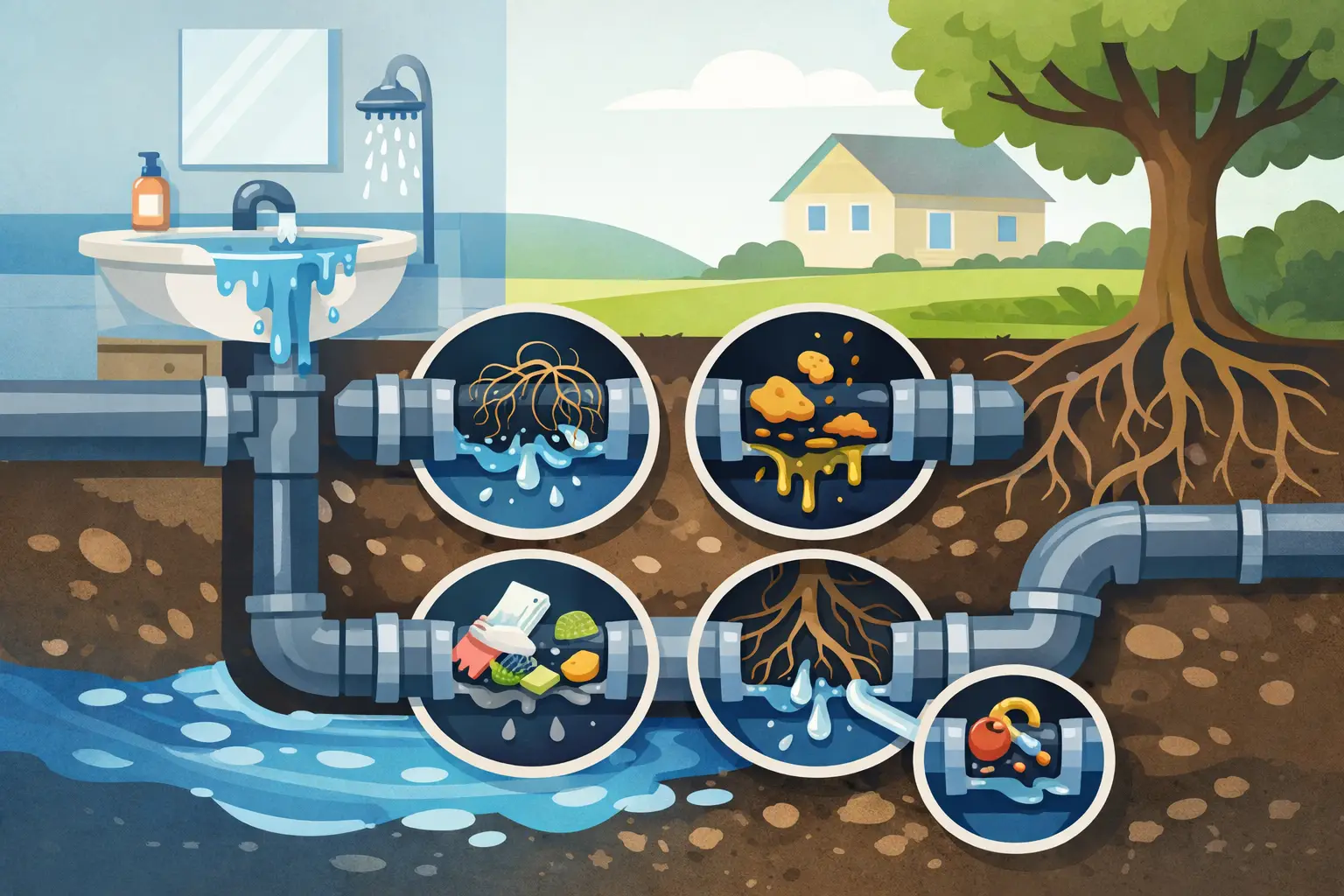
A drain rarely blocks without warning. Water taking longer to disappear, a gurgling plughole, unpleasant smells or a toilet that rises before it clears are all signs that something is restricting the pipe. Understanding what causes blocked drains can help homeowners, landlords and business owners act early, before a slow drain becomes a messy and disruptive problem.
What causes blocked drains most often?
Most blockages build up gradually. A small amount of grease, soap residue or hair may pass through the waste pipe at first, but it can catch on rough joints, scale or existing debris. Over time, the opening narrows until wastewater can no longer flow freely.
The source depends on the drain, how the property is used and the condition of the pipework. A blocked kitchen sink has different likely causes from a blocked toilet or an outdoor drain. Older properties may also have ageing pipework, root ingress or damaged sections that make repeat blockages more likely.
Fat, oil and food waste in kitchen drains
Cooking fat, oil and grease are among the most common causes of kitchen drain blockages. They may look harmless when poured away warm, but they cool and solidify inside the pipe. Food particles then stick to the fatty coating, forming a stubborn restriction.
Coffee grounds, rice, pasta, flour, eggshells and vegetable peelings can also cause trouble. Even where a sink appears to be draining normally, regular disposal of these materials can create a blockage further along the pipework. Wipe greasy pans with kitchen roll and place food waste in the bin rather than washing it down the sink.
Hair, soap and bathroom products
Bathroom drains commonly block because of hair. Long hair binds with soap scum, shampoo residue and limescale, creating a dense mass around the plughole or in the trap beneath the basin, bath or shower.
Cotton buds, dental floss, wipes and sanitary products are also frequent causes of toilet and bathroom blockages. Products labelled as flushable can still fail to break down as readily as toilet tissue and may catch in bends or combine with other debris. Only toilet tissue and human waste should be flushed.
Scale and hard-water deposits
Hard water is common across many parts of Bedfordshire and the surrounding area. Minerals in the water can form limescale inside pipes, especially where the flow is already reduced. Scale alone does not always cause a sudden blockage, but it creates a rough internal surface that catches grease, hair and paper more easily.
This is one reason recurring slow drainage should not be ignored. Repeatedly treating the symptom may not resolve a developing restriction deeper in the system.
Outdoor drain blockages and hidden pipe problems
External drains deal with rainwater, wastewater or both, depending on the property and its drainage layout. Leaves, moss, mud and litter can collect in gullies, particularly after heavy rain or windy weather. A blocked gully may cause water to pool near the building, overflow across paths or back up into lower-level drainage points.
In commercial premises, car parks, yards and shared access areas can introduce extra debris, including silt, packaging and surface run-off. Regular checks and planned drainage maintenance are often more practical than waiting for a closure, flooding issue or customer complaint.
Tree roots entering the drain
Tree roots naturally seek moisture. If an underground pipe has a cracked joint, displaced section or small opening, roots can grow towards it and eventually enter the drain. Once inside, they trap paper, fats and other material until flow is severely restricted.
Root ingress is more common in older drainage systems and properties with mature trees nearby. It cannot be properly resolved by simply pouring a chemical product down the drain. A professional inspection can identify the affected section and determine whether clearing, repair or replacement is the appropriate option.
Cracked, collapsed or poorly installed pipes
A drain can block because the pipe itself is damaged. Ground movement, age, vehicle loading, poor installation or previous building work can cause pipes to crack, sag, become misaligned or collapse. Waste then catches at the damaged point, leading to repeated backups.
If several fittings are draining slowly at once, or a blockage returns shortly after being cleared, the issue may be in the main drain rather than a local waste pipe. Drainage engineers can use specialist equipment, including CCTV surveys where needed, to locate the fault without unnecessary excavation.
Early signs that should not be ignored
A complete blockage is usually obvious, but the earlier signs are easier and less disruptive to deal with. Look out for water draining slowly from a sink, bath or shower; gurgling noises from plugholes or toilets; unpleasant smells indoors or near an outside drain; water backing up when another fitting is used; and overflowing gullies after rainfall.
A single slow basin may be caused by a simple local build-up. However, a toilet bubbling when the bath is emptied, or wastewater appearing in a shower tray, suggests a more significant restriction. In that situation, avoid using further water until the problem has been assessed. Running taps, flushing toilets or using appliances can force wastewater back into the property.
Can chemical drain cleaners solve the problem?
Chemical drain cleaners may shift a minor build-up in some circumstances, but they are not a dependable answer to every blockage. They can be hazardous to handle, may damage certain pipe materials or seals, and are unlikely to clear roots, compacted wipes, damaged pipes or a blockage beyond the local trap.
A plunger can sometimes help with a light blockage close to a plughole. Remove visible hair and debris first, and use the correct type of plunger for the fitting. Avoid mixing cleaning chemicals, and do not use excessive force with improvised tools, as this can damage pipework or push the blockage further along.
For landlords and commercial operators, there is an added consideration. Recurring drainage issues can affect tenant safety, hygiene standards and business continuity. A proper diagnosis is generally better value than repeated temporary fixes.
How to reduce the risk of blocked drains
Good habits make a real difference. Use sink strainers to catch food waste and hair, empty them regularly, and dispose of oil and grease in a sealed container once cooled. Keep leaves and debris clear of external gullies, particularly during autumn and before periods of heavy rain.
It also helps to know where inspection chambers and outside drain covers are located. Do not cover them permanently with decking, landscaping or stored items. Clear access allows a drainage engineer to investigate and clear a problem much more quickly if one occurs.
Properties with a history of blockages, older pipework, mature trees or high usage may benefit from planned maintenance. This is especially relevant for rented homes, restaurants, offices, schools and sites with shared drainage. The right frequency depends on the system, its use and previous issues – annual checks may be sufficient for one property, while a busy commercial kitchen may need more regular attention.
When to call a drainage professional
Call for professional help if wastewater is backing up, a toilet will not clear, an outside drain is overflowing, bad odours persist, or the same blockage keeps returning. These signs can point to an issue beyond what can safely be dealt with using household tools.
A qualified, experienced engineer can clear the obstruction, assess the condition of the drainage system and explain the findings in straightforward terms. For homes and businesses across Bedfordshire and the wider South East, LCA Maintenance provides a responsive, friendly service focused on restoring safe, reliable drainage with transparent advice.
If you have noticed a drain slowing down, deal with it while it is still a small problem. A timely inspection can prevent wastewater damage, avoid unnecessary disruption and give you confidence that the cause has been properly addressed.