
The moment you see water rising in the pan, you do not need a complicated fix – you need a calm, quick response. If you are wondering how to stop overflowing toilet issues before they damage flooring, ceilings or adjoining rooms, the first few seconds matter most. Acting in the right order can stop the mess, limit repair costs and help you decide whether this is a simple blockage or a job for a qualified plumber.
How to stop overflowing toilet in the first minute
Start by stopping more water from entering the bowl. If the toilet is still flushing or refilling, take the lid off the cistern and push the float down so the fill valve stops running. In many toilets, lifting the float arm or holding the valve closed is enough to halt the incoming water temporarily.
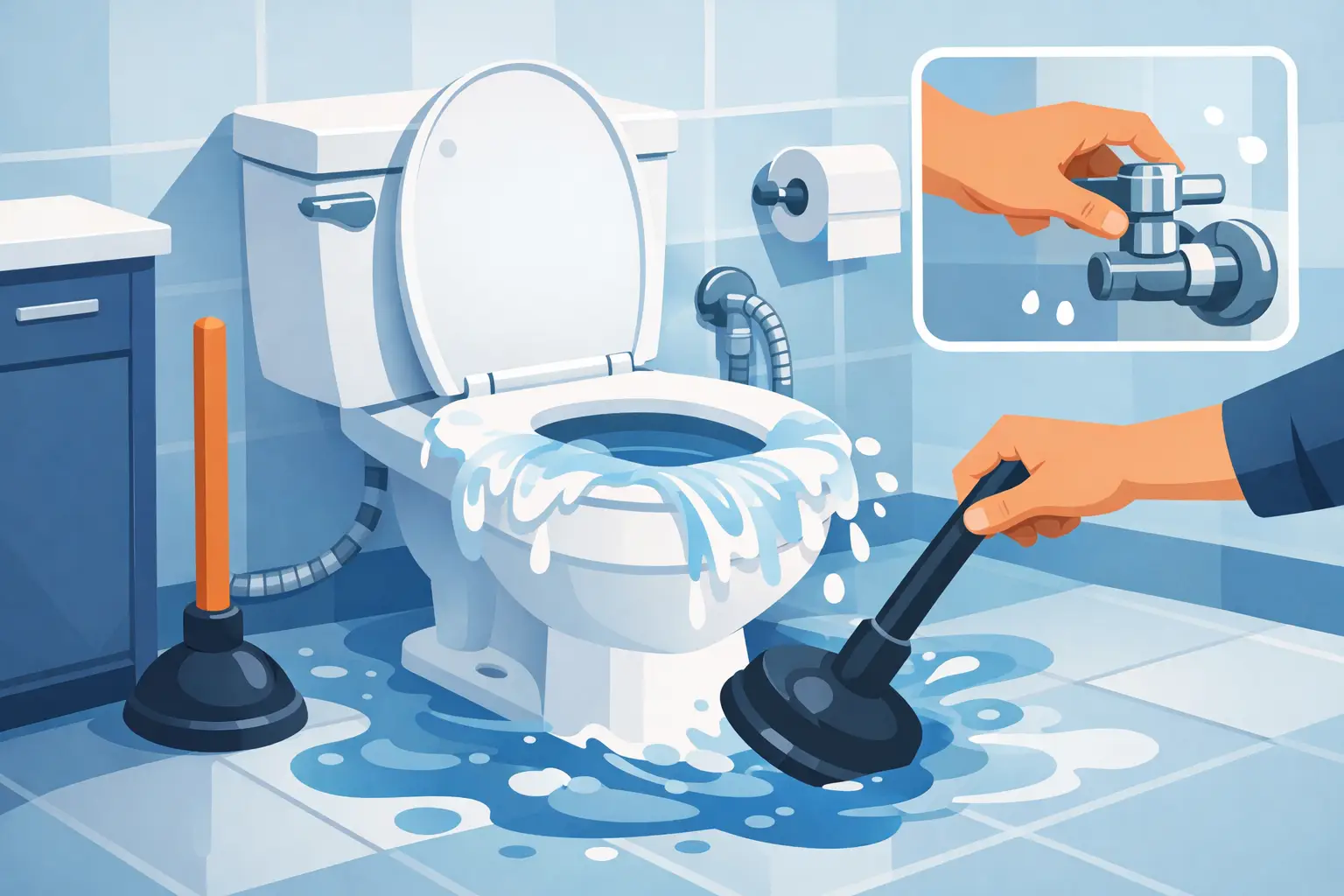
Next, find the isolation valve on the supply pipe behind or beside the toilet. Turn it clockwise until it stops. If there is no local valve, shut off the mains water supply to the property. That may feel drastic, but it is far better than allowing dirty water to spill across a bathroom floor.
Do not flush again to see if it has “sorted itself out”. That is one of the most common reasons a near-overflow turns into a proper flood. Once the water level has stabilised, lay down old towels around the base of the toilet and move any bath mats, toiletries or electrical items out of the way.
If water has already spilled onto the floor, treat it as contaminated. Wear gloves, clean up promptly and avoid spreading it into hallways or other rooms.
Why toilets overflow in the first place
Most overflows happen because the waste cannot leave the pan quickly enough. The usual cause is a blockage in the toilet trap or soil pipe. Too much toilet paper is a regular culprit, but wipes, sanitary products, cotton pads, children’s toys and excessive paper towels are also common.
Sometimes the issue is not in the pan itself. A blockage further down the drainage run can cause slow flushing, gurgling sounds and rising water in more than one fixture. In those cases, the toilet is really just the first place the problem shows up.
There is another possibility too. If the cistern filling mechanism has failed, water may continue running into the toilet or overflow internally. That type of fault can look less dramatic than a blocked toilet, but it still wastes water and can point to worn internal parts.
The safest way to clear a blocked toilet
Once the water is no longer rising, give the toilet a few minutes. Sometimes the level drops on its own as water slowly moves through the blockage. If it does, that gives you room to try clearing it without creating another overflow.
A toilet plunger is usually the best first tool. It needs to be the right type – ideally a flange plunger designed for toilets rather than a flat sink plunger. Place it firmly over the outlet in the pan so you get a proper seal. Use controlled, steady plunges rather than frantic stabbing motions. The aim is to create pressure and suction to shift the blockage, not to splash contaminated water around the room.
After several plunges, wait and see whether the water drains away. If it does, add only a small amount of water to test the flow. Do not carry out a full flush straight away. If it drains normally, you can then flush once with caution.
If plunging does not work, a toilet auger can help break up or retrieve a blockage lodged further into the trap. This tool is more suitable than makeshift items such as coat hangers, which can crack the pan or scratch the ceramic. A damaged toilet can turn a blockage into a replacement job very quickly.
What not to do when a toilet is overflowing
People often make the situation worse by reaching for the nearest “solution”. Chemical drain cleaners are a good example. Many are not designed for toilets, and even when they are, they may not clear a solid blockage effectively. They can also leave harsh chemicals sitting in the pan, which is unpleasant and potentially dangerous if a plumber then needs to work on it.
Hot or boiling water is another risky choice. Very hot water can crack porcelain, particularly if the toilet is cold to begin with. Dish soap and warm water sometimes help with minor paper blockages, but this is not a guaranteed fix and it should never be used while the water level is close to overflowing.
It is also worth resisting the temptation to keep flushing repeatedly. One flush may create a problem. Three more will almost certainly make it worse.
Signs the blockage is deeper in the system
A single blocked toilet is often local to that fixture. But if several drainage points are behaving oddly, the problem may be further down the line. Watch for water backing up into the shower tray, slow-draining sinks, gurgling noises after flushing or unpleasant smells coming from more than one outlet.
If you notice those signs, the issue may sit in the main waste pipe or even outside in the drains. In that situation, household plunging may do little good. The right approach depends on the layout of the property, whether it is a house or commercial premises, and whether the blockage is internal or external.
For landlords and property managers, recurring toilet overflows in the same unit should not be ignored as tenant misuse alone. Repeated incidents can point to partial drain obstruction, poor fall on pipework or a ventilation problem that needs a proper inspection.
When to call a plumber straight away
There are times when the sensible move is to stop trying DIY measures and get professional help. If the toilet is overflowing and you cannot isolate the water supply, call a plumber immediately. The same applies if sewage is backing up into multiple fixtures, if the blockage will not clear with a plunger, or if the overflow has affected ceilings, electrics or adjoining rooms.
Commercial sites, rental properties and homes with only one working toilet often need a faster decision. Waiting half a day to see if the problem settles is rarely practical. A qualified engineer can identify whether the fault is in the toilet itself, the internal pipework or the broader drainage system, and deal with it safely.
In areas such as Milton Keynes, Luton, Bedfordshire and the wider South East, a rapid plumbing response can make the difference between a straightforward call-out and avoidable water damage repairs. Speed matters, but so does diagnosis. Clearing the symptom without finding the cause only invites the same problem back.
How to prevent another overflowing toilet
Prevention is usually simpler than people expect. The first rule is to flush only toilet paper and human waste. Despite the marketing on some packaging, “flushable” wipes are a frequent cause of drainage problems. They do not break down in the same way as toilet paper and can catch inside bends, joins and older pipework.
It also helps to be realistic about volume. Large wads of paper can block even a healthy toilet, especially in older properties or systems with less aggressive flushing performance. If needed, use two lighter flushes rather than forcing everything through in one go.
Keep an eye on early warning signs. A toilet that drains slowly, bubbles, fills unusually high or needs a second flush is telling you something. Sorting out a minor restriction early is far preferable to dealing with an overflow later.
For commercial premises, schools, rental portfolios and busy family homes, planned maintenance can be worthwhile. Drain checks and prompt repairs to worn cistern parts reduce the chance of emergency call-outs and the disruption that follows them.
A final word on protecting your property
Knowing how to stop overflowing toilet problems is less about plumbing expertise and more about acting in the right order – stop the water, avoid another flush, clear the blockage carefully and recognise when it is beyond a simple fix. A quick, measured response protects your bathroom, your flooring and, in some cases, the rooms below. And if the signs point to a deeper drainage issue, getting it handled properly early on is usually the most cost-effective decision.